Too many bonsai varieties to choose from? Japanese red pine bonsai is worth a try
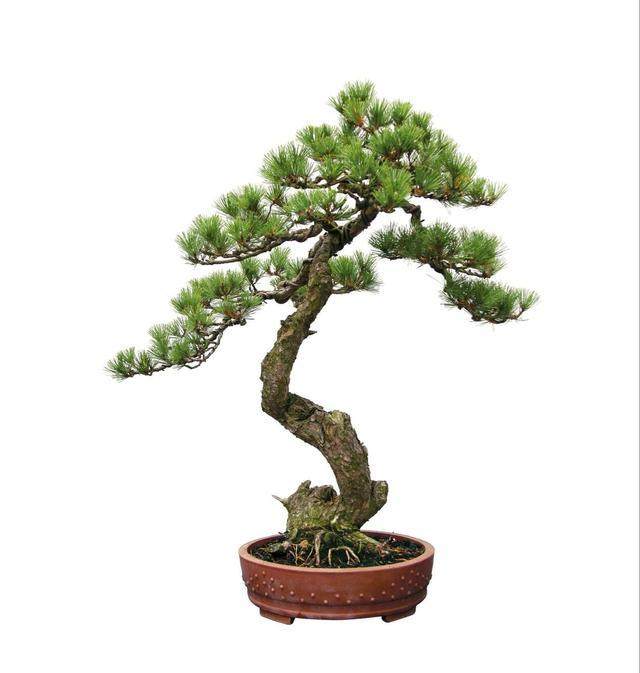
Japanese red pine bonsai is a type of pine, and it also has many varieties, such as globe-crown Japanese red pine, thousand-head Japanese red pine, and so on. If we are talking about the three northeastern provinces, it is relatively common there, and it is also found in places like Jiangsu. One of our current specimen collections mainly comes from Japan, so Japanese red pine also has another name, Japanese akamatsu.
Japanese red pine is very suitable for making stump bonsai. Why is that? Because it has extremely high ornamental value. It is very suitable for planting at gates or along both sides of roads for people to admire, or it can also be planted in gardens.
Japanese red pine is a tree species that relatively likes light. Without sufficient sunlight, it is even more conducive to the various reactions it participates in and its growth. Its adaptability to the environment is also relatively strong, so even in some poor soil, it can still grow quite well under such conditions.
Compared with a moist environment, Japanese red pine may prefer a slightly drier one. So when watering it, you must not give too much. It is best if you can see that in a very dry situation, when it especially needs water, then you water it again. In this way, it will not cause problems such as water accumulation. Water and fertilizer go together, so let us also talk about its fertilizing. Earlier we mentioned that it has strong adaptability to the environment and can grow even in poor soil, which indirectly shows that it does not value some nutrients so much, so it does not need frequent fertilizing and can still grow even when lacking fertilizer. But if it is in the peak growing season, you also must not forget to fertilize it, as this is more conducive to its growth and increases its resistance to pests and diseases. It is like how people supplement nutrition to enhance immunity.
In order to bring out the graceful and classical posture of Japanese red pine bonsai, it needs to be carefully pruned. Cut off some unnecessary branches, as well as some diseased and residual branches, and deal with them in time. In order not to affect its growth and beauty, we will choose to prune during its dormant period. And this pruning is actually also meant to prevent possible pest and disease problems in the future. Once pest and disease problems appear, choose pesticides to solve them in time, otherwise if they pile up, they will directly affect its survival. Of course, in the case of a small area, there is no need to worry so much; just remove them by hand.
The above are some methods for the care and management of Japanese red pine bonsai. Growing bonsai is a very self-cultivating activity. Do not be eager for quick success and instant benefit; you must relax body and mind and take it slowly. If you put in care and patience and give it careful attention, then you do not need to worry that it will die young. If there is more about Japanese red pine bonsai that you want to know, you can tell the editor through a message or comment.