8 common succulents that are easy to grow, beautiful, flavorful, and can even be used as medicine
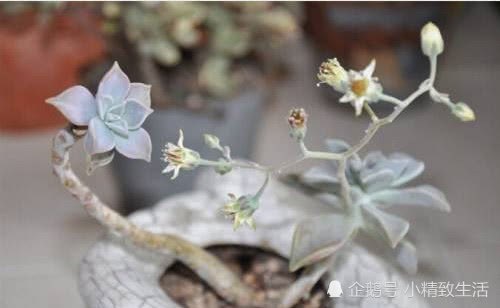
Everyone loves cute and silly succulents, but did you know that succulents are not only for ornamental purposes? Some succulents are quite tasty, and some can even be used as medicine. Below, Xiao Jingzhi Life will give you a rundown of succulents that are both beautiful and can be used as medicine.
1. Orostachys japonica (Chinese stonecrop)
In our rural hometown, we all call it "roof grass" - as the name suggests, it grows mostly on rooftops, and is also very common on mountains. Wild Orostachys japonica blooms collectively every autumn, and after leaving seeds, the plants all die, then sprout and grow again the following year. You can pick off the leaves, wash them, and eat them raw - they taste sweet and sour. However, the plant contains a large amount of oxalic acid and is mildly toxic, so those with weak and cold stomachs and spleens should not try it. Orostachys japonica has the effects of stopping bleeding and healing sores, clearing heat and detoxifying. When used as medicine, it mainly treats irregular menstruation, blood in the stool, hemorrhoidal bleeding, and wounds that are difficult to heal.
2. Sedum lineare (stringy stonecrop)
Sedum lineare is mainly used as a pot-covering grass when arranging planters, but of course it can also be grown on its own, and its speed of filling a pot is simply terrifying. Nowadays, Sedum lineare is also widely used for rooftop greening. Sedum lineare can be stir-fried or served as a cold dish, and most people use it to treat toothache. Its effects are reducing swelling, relieving pain, clearing heat, and detoxifying. When used as medicine, it can treat jaundice, dysentery, scalds, erysipelas, and sore swollen throat.
3. Hylotelephium erythrostictum (showy stonecrop)
Wild Hylotelephium erythrostictum is mainly distributed in Northeast China and the Korean Peninsula, and is cultivated all over the country. In our local countryside, we call it "scorpion grass." In summer, if you get bitten by a mosquito, just pick a leaf of scorpion grass and rub it on - the itch stops immediately. I never knew that Hylotelephium erythrostictum could be steeped in water, and that the leaves could also be used for stir-frying. Moreover, Hylotelephium erythrostictum has the effects of invigorating blood and dispersing stasis, dispelling wind and promoting diuresis, and stopping bleeding and relieving pain. When used as medicine, it can treat mastitis, laryngitis, and hives; when applied externally, it can treat poisonous insect bites, athlete's foot, and burns and scalds.
4. Plectranthus amboinicus (Cuban oregano)
Plectranthus amboinicus - as the name suggests, it gives off fragrance as soon as you touch it. In fact, it releases fragrance even if you don't touch it. Plectranthus amboinicus can be brewed as tea, and can also be served as a cold dish or stir-fried with eggs. Keeping one at home in summer can also repel mosquitoes and flies. Plectranthus amboinicus has the effects of refreshing the mind and clearing heat and relieving summer heat, and when mashed and applied externally, it can also reduce inflammation and swelling.
5. Aloe
Aloe's fame is something everyone knows. By rough calculation, there are no fewer than a hundred ways to eat aloe. But remember, aloe cannot be eaten raw - eating it raw will cause diarrhea. Aloe also has effects such as repelling mosquitoes and relieving itching, moisturizing and beautifying, sterilizing and fighting inflammation, and protecting against sun and aging - truly combining ornamental, cosmetic, medicinal, and culinary uses in one.
6. Graptopetalum paraguayense (ghost plant)
Graptopetalum paraguayense - just its name is very poetic. It has a high popularity rate in the succulent community, with extremely strong adaptability and reproductive ability, so it is the first love of many succulent lovers. However, as you fall in love with it, you may very well end up picking its leaves for a cold dish or stir-frying them... Graptopetalum paraguayense has the effects of beautifying and nourishing the face, protecting and nourishing the liver, and lowering blood pressure.
7. Cactus
When I was little, I thought cacti were very ugly, but I remember that whenever a child in any family got mumps (epidemic parotitis), people would find a cactus, remove the spines, mash it up, wrap it in cloth, and stick it on the cheek - and it would soon get better. I also remember that when a family's sheep ate something poisonous, they mashed up a cactus and fed it to the sheep, and it survived - which shows how magical the cactus is. Cactus has effects such as clearing heat and detoxifying, beautifying and caring for the skin, and clearing the throat and moistening the lungs, and it even has obvious effects on liver cancer, bronchitis, and diabetes.
8. Dragon fruit
The seedlings of dragon fruit are furry and extremely cute. And dragon fruit, as a fruit, is also well known to everyone - it is rich in water-soluble dietary fiber and has effects such as aiding weight loss and lowering cholesterol.
Notice: The above was collected and compiled by Xiao Jingzhi Life from the internet and may not be suitable for everyone. Due to individual differences in constitution, pregnant women, those with allergic constitutions, and diabetic patients, etc., please do not try these lightly. Chinese herbal medicines are not completely free of toxic side effects, so be sure to follow a doctor's advice when taking them.