Detailed Explanation of Softwood Cutting Propagation Techniques for Golden-Leaf Forsythia
Softwood Cutting Propagation Techniques for Golden-Leaf Forsythia
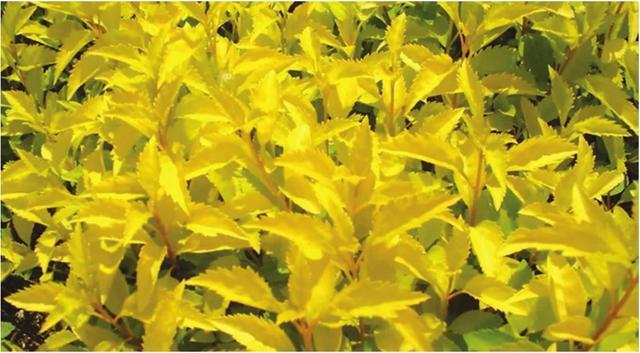
Golden-leaf Northeast Forsythia is a deciduous shrub, up to 2 m tall, with clustered and spreading branches, yellow branchlets, opposite ovate leaves 3-9 cm long, and leaves gradually turning from pale green to golden yellow. In the Shenyang area, it blooms in early to mid-April, with yellow flowers borne 1-3 per leaf axil. The capsule is ovate, and the fruit ripens from late July to early September. The yellow flowers in early to mid-April and the golden-yellow leaves from May to September are very beautiful. When planted for landscaping beside houses, in courtyards, at scenic spots and in green areas, the ornamental effect is excellent.
I. Hardwood Cutting Propagation
1. Preparation of Cuttings
In early to mid-April, select a relatively high and level plot, and make low beds 10-15 m long, 1.0-1.2 m wide and 5-6 cm deep in a north-south direction or another bed orientation. The substrate in the bed is coarse river sand or the original sandy soil or sandy loam of the bed, 8-10 cm thick, and the ridges at both ends are trampled firm. The working path is 30-35 cm wide.
2. Selection and Storage of Cuttings
In January-February, in combination with shaping and pruning, cut from 4-6-year-old plants one-year-old branches that are fully lignified and free of freeze damage, selected from the base with a thickness of more than 3 mm. Store the cuttings in cool places such as mountain caves or vegetable cellars, at a suitable temperature of -10 to 5°C, and at the same time bury and seal the cuttings with wet sand.
3. Cutting and Rooting Treatment of Cuttings
In early to mid-April, take out the cuttings and cut them into sections 8-10 cm long, with the terminal bud 1.0-1.2 cm from the upper cut, and the terminal bud must be plump; whether the middle and lower ends have buds or not does not matter. Prepare an indolebutyric acid solution at a concentration of 50-100 mg/L, place it in a flat-bottomed plastic basin with a solution depth of 3-5 cm, dip the base of the cuttings 2-3 cm long into the solution, and soak for 48 hours. Forsythia roots relatively easily and can also be propagated without rooting hormone treatment, but both the rooting time and the number and length of roots are inferior to those treated with rooting hormone.
4. Mulching with Agricultural Film
Press black agricultural film onto the substrate on the bed surface. Its function is to rapidly raise and maintain the substrate temperature after cutting, and it also helps maintain humidity and is more conducive to rooting at the base of the cuttings; in addition, the black film can also reduce the number of weeds occurring on the bed surface during the growing season.
5. Cutting
In mid-April, use a sharpened hard bamboo stick to make upright holes in the agricultural film substrate at a spacing of 8-10 cm, insert the treated cuttings into the holes, and press the substrate firm with the hands to prevent the cuttings from leaning. The plant spacing is 5-6 cm, and the cutting depth is such that the terminal bud is 2-3 cm above the plastic film.
6. Management After Cutting
Immediately after cutting, water the bed surface to keep the substrate moist. From June to July, if there is excessively dry weather, water the bed surface. Remove weeds promptly during the growing season. In mid-to-late July, spray the seedlings 1-2 times with urea at a concentration of 0.4%; from late August to early September, spray the leaves once with a 0.5% potassium dihydrogen phosphate solution.
In early November, if the seedlings are not going to be lifted for heeling-in or transplanting, water the bed once with overwintering drought-prevention water, wetting the substrate to a depth greater than 10 cm. The survival rate of hardwood cuttings can generally reach about 85%, with roots 8-10 cm long, 6-8 roots, an average aboveground stem height of 40 cm, and a ground diameter of 2-4 mm.
II. Large Seedling Cultivation
Because softwood cutting propagation seedlings are small, they generally cannot be used directly for landscaping. They should be transplanted and managed in the nursery for about 3 years before they can leave the nursery for landscape beautification.
1. Selection of Transplanting Site
The transplanting site can be flat land or gently sloping land. The soil texture is required to be sandy loam to heavy loam; seedlings grow poorly on overly clayey or sandy land, and a soil layer thickness greater than 30 cm is sufficient. If it is sloping land, south-facing slopes and east-west slopes are better, and the north slope should be a gentle slope. The soil organic matter content should reach more than 0.5%. Forsythia land should not be continuously cropped.
2. Land Preparation and Fertilization
Remove debris, evenly spread humus soil or semi-decomposed farmyard manure over the ground surface, with an application rate of no less than 3 cubic m per mu, rotary till 20 cm deep with a tractor, and form ridges at a ridge spacing of 70 cm and a ridge height of 20 cm. The land preparation time is from the end of October to mid-November or from the end of March to mid-April.
3. Lifting and Treatment of Seedlings
Lift the seedlings 2-3 days before transplanting, and roughly grade them into 2-3 grades according to seedling size, so that when planting the seedlings they can be planted separately by size. Trim and retain the root system at a length of about 10 cm. Soak the seedling roots or the whole seedlings in cold water at 10-20°C for 20 hours.
4. Transplanting
For the first transplanting, dig pits 15-20 cm deep and wide at a plant spacing and row spacing of 40 cm x 70 cm, place the seedling roots into the pits, and put 4-6 small seedlings in each pit. Putting in more seedlings helps to form a clump and take shape quickly (each pit can also have 1-2 seedlings, but clump formation is slower). After placing the seedlings, fill with soil and trample firm. The planting depth should be such that the root crown is 5-10 cm below the ridge surface. After the seedlings have grown for 2-3 years, retain seedlings and lift seedlings for replanting at a plant spacing and row spacing of 80 cm x 70 cm, that is, keep every other clump of the initially planted seedlings and dig out the other clump of seedlings and plant them again at a plant and row spacing of 70-80 cm. The suitable time for transplanting seedlings is April or October-November.
5. Watering
After the first transplanting or the second transplanting of seedlings, sufficient water should be poured into the planting pits or ridge furrows within 3 days after planting, wetting the surface soil to a depth of 20-30 cm.
6. Topdressing
In the 3rd to 5th years after planting, in mid-April, at a distance of 8-10 cm from the root crown of the seedlings, dig pits 3-5 cm deep on the ridge surface and apply fertilizers such as urea or diammonium phosphate, with 50-100 g per plant.
7. Pruning and Pest Control
In the 3rd to 5th years after planting, when the seedlings have grown to a certain height and crown width, in order to promote more branching and obtain a fuller plant shape, cut off the upper branch tips in a spherical or other shape in February-March before the tender buds sprout, with a pruning length of 3-6 cm.
From May to August, if leaf-eating or sap-sucking pests such as caterpillars and aphids are found, spray a 40% omethoate-fenvalerate 1500-2000 times solution for control.
When the seedling growth height and crown width reach more than 70 cm, they can leave the nursery for landscaping use. [Jishan Huayao]