Datura Cultivation Techniques: Propagation Methods and Pest and Disease Control
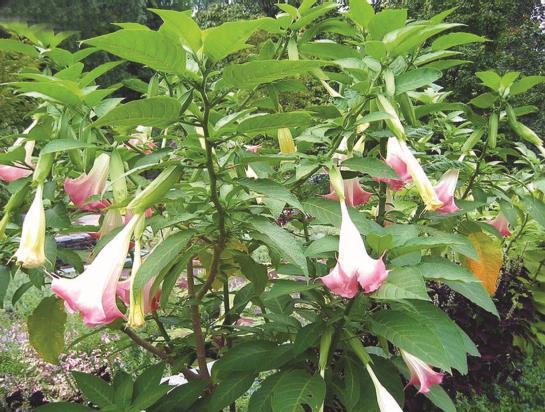
Propagation and Pest and Disease Control Cultivation Techniques for Datura
Datura (Datura stramonium) is an annual herbaceous plant in the Solanaceae family. The flowers and the whole plant are used as medicine; the flowers taste bitter, are warm in nature, and are toxic. They are mainly used to treat asthma, chronic bronchitis cough, wheezing, and other conditions. It can also be used as a pesticide, serving as an insecticide and fungicide, with good control effects against aphids and corn borers. It is native to the tropics and is widely cultivated in the northern temperate zone. In Jilin Province, it is cultivated or has escaped into the wild in the cities and counties of Tonghua, Baishan, Hailong, Liuhe, Huinan, Ji'an, and Changbai. Within this region, in addition to this species, the Datura genus also includes three other species: purple-flowered datura, white-flowered datura, and downy datura.
I. Plant Characteristics
Datura plants grow 50 to 150 cm tall, with the entire plant smooth and having a foul odor. The stem is erect, the upper part branched and green, the old stem hairless, and the young stem covered with powdery hairs. The leaves are simple, upright, and have long petioles. The leaf blades are ovate or elliptical, with acuminate tips and wedge-shaped bases, and the margins have irregular wavy large teeth; the upper surface is dark green, the lower surface lighter, smooth and hairless or with short hairs only on the lower surface. The flowers are solitary in the forks of branches or in leaf axils, nearly sessile, white, and upright; the calyx is tubular, 3 to 5 cm long, green, with 5 lobes, and 6 to 10 cm long. The capsule has small sharp spines, is upright, ovate, up to 6 cm long, and splits into 4 valves when mature. The seeds are kidney-shaped or ovate, about 3 mm long, and have a reticulate pattern. The flowering period is July to September, and the fruiting period is August to October.
Datura mostly grows on loam or sandy loam soil at forest edges, in shrub thickets, along roadsides, at field edges, and near dwellings, at an altitude of 750 to 850 m. It grows well under conditions of mild, humid climate, sufficient sunlight, and good drainage, but grows poorly under cold and shaded conditions.
II. Cultivation Techniques
1. Land Preparation
Choose a sunny, slightly elevated, fertile, well-drained sandy loam; sunny gentle slopes in mountainous areas, newly opened wasteland, and clearings in young larch forests can also be used for planting. Low-lying, easily waterlogged land, saline-alkali land, and heavy clay soil are not suitable for planting. Before winter, plow 25 to 30 cm deep, and during plowing apply 2000 to 3000 kg per mu of barnyard manure or farmyard manure. After spring begins, plow again once so that the farmyard manure is evenly mixed into the soil, achieving the effect of deep fertilization. Break up the clods, level and harrow finely, then form ridges 15 days before sowing, with a ridge height of 30 cm and a ridge spacing of 60 cm, and dig drainage ditches around the perimeter.
2. Propagation
Propagate by seed, generally using direct sowing or hole sowing, with sowing time from early May to early June. When sowing, first rake the ridge surface level, with a plant spacing of 40 cm, press the bottom of the holes firmly, sow 6 to 8 seeds per hole, cover with 1.5 to 2.0 cm of soil, press appropriately, and keep the soil moist. Seedlings can emerge 15 to 20 days after sowing. The seeding rate is about 1 kg per mu.
3. Field Management
(1) Thinning When seedlings are 5 to 6 cm tall, begin thinning, removing weak seedlings and leaving 4 to 5 vigorous plants per hole; when seedlings are 10 cm tall, carry out a second thinning, leaving 2 to 3 plants per hole; when seedlings are 15 cm tall, carry out the final thinning, leaving 1 plant per hole.
(2) Cultivation and Weeding Each thinning should be combined with cultivation and weeding, avoiding root damage, with a depth of about 10 cm. The number of cultivation and weeding operations depends on soil moisture and weed growth conditions. The planting area should be kept loose and free of weeds. After the plants close the rows, no further cultivation and weeding are carried out.
(3) Fertilizer and Water Management After early June, with high temperatures and sufficient light, the plants grow vigorously and require large amounts of nutrients and water, so topdressing is needed twice. After the second cultivation and weeding, carry out the first topdressing, applying 500 to 1000 kg per mu of dilute human and animal urine water, and after fertilizing, water once with clean water; the second topdressing is before the rows close, applying about 2000 kg per mu of human and animal urine water, and adding 20 kg of superphosphate. After fertilizing, water thoroughly, and after the water seeps down, cultivate 2 to 3 days later to keep the soil loose and promote vigorous plant growth. During the rainy season, pay attention to drainage to prevent water accumulation. [Jishan Huayao]
III. Pest and Disease Control
1. Aphids
Control method: Spray with 40% dimethoate emulsion at 2000 times dilution.
2. Twenty-eight-spotted ladybird beetle
Damages leaves, prone to occur in summer. Control method: Spray with 90% trichlorfon technical material at 800 times dilution; avoid crop rotation with Solanaceae crops.
3. Black spot disease
Damages leaves. Control method: After harvest, clean the garden and burn diseased branches and leaves; before onset and in the early stage of disease, spray with 50% thiram at 1000 times dilution or 65% wettable zineb at 500 times dilution for control, spraying once a week for 3 to 4 consecutive times.
4. Datura verticillium wilt
Symptoms: On infected plants, the areas between the lateral veins of the leaves turn yellow, then gradually turn brown, and death begins from the leaf margins, while the veins remain green, and the leaves gradually wilt and yellow from bottom to top; when the diseased stem is cut crosswise, the vascular bundles appear dark brown; in some cases only 1 to 2 branches are affected; severely affected plants cannot bear fruit.
Control method: Carry out crop rotation, and when necessary, before onset, drench with 50% thiophanate-methyl or carbendazim wettable powder at 600 to 700 times dilution for control.
IV. Harvesting
During the flowering period in July, collect flowering branches and stems and leaves, and dry them in the sun for later use. When the seeds mature between August and September, collect the seeds, remove the seed coat, and dry them in the sun for later use.