How to propagate a cactus? A few minutes to teach you to learn quickly
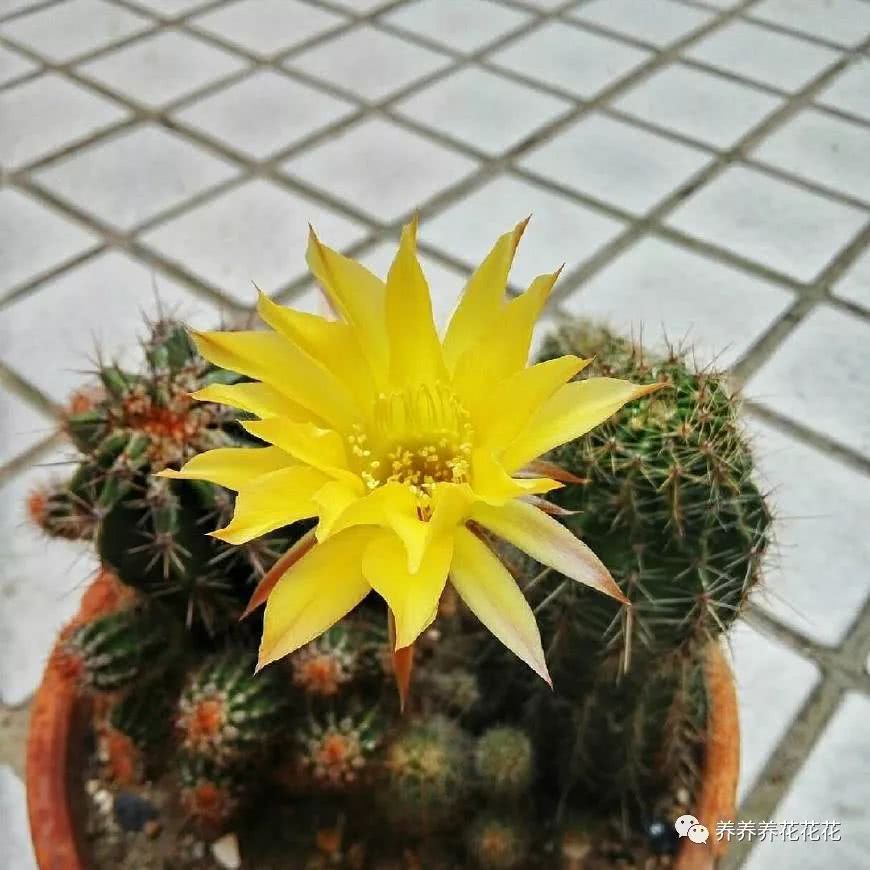
Cactus propagation. Seeing this question, Xiao Qi has to answer it. Because Xiao Qi has kept cacti for many years, and has kept far too many. Right now there are tens of thousands of cacti in the greenhouse, and this is also my favorite, so I should be fairly qualified to speak on it. The only propagation methods for cacti are seed sowing and offset propagation.
Offset propagation
After a cactus grows to a certain size, its body will stop growing. At that point it will endlessly produce small cacti from the areoles. When these small cacti grow to a certain size, they will grow roots on their own. If they grow large enough, you can detach them from the mother plant. After drying the wound, place them on soil and they will root by themselves. Once the roots are well grown, it becomes a large plant. The advantage of propagating this way is that it will not change character; its original flower color is exactly the same as the mother plant's flower color. This is also the most commonly used method of cactus propagation.
Cacti grow relatively slowly. So the speed at which they divide offsets is also relatively slow. In a year you might propagate a few; of course, the common white and pink cacti divide offsets very quickly. Better varieties of cacti propagate very slowly. We then have to use grafting to make them grow quickly and divide offsets. For grafting we can use prickly pear cactus, or triangular stem, or dragon fruit stem, all of which are fine; their root systems are very well developed, and the nutrients can be supplied to the cactus to grow quickly and divide offsets. So this propagation method suits commercial mass propagation, dividing many in a year, but after such offsets come out, they will be relatively hard to root, because they grow too fast, and the nutrients are all absorbed through someone else's root system, so they do not even know they are supposed to absorb nutrients through their own roots. So with grafted offsets, buy as few as possible: one reason is they are hard to root, and another is that the rooting process is prone to rot.
Seed propagation
Seed propagation is mainly used for breeding new varieties, because most cactus varieties cannot self-pollinate; they must be pollinated by other cacti, and it must be the same genus. Their own pollen cannot pollinate successfully, which is what we call cross-pollination. Using pollen from another plant of the same genus to pollinate, the resulting flower color will vary. Some will not keep the mother plant's flower color, which means strong variability. Another point is that from seed sowing to flowering takes one and a half to two years, and some varieties take even longer. This is a long process; if you are eager to see flowers, buying offsets is more reliable.
These are the two methods of cactus propagation. Those grown from seed have well-developed root systems, and some varieties will have a taproot. After watering too much, they are not prone to rot, and they are strongly drought-tolerant. Those propagated from offsets have weaker root systems compared with seed-grown ones. After watering too much, they are prone to rot. These are the pros and cons of the two propagation methods. You can refer to them.
Xiao Qi likes growing flowers and updates flower-growing videos and knowledge every day. If you also like growing flowers, follow Xiao Qi and help share and support; Xiao Qi thanks everyone here!
Like growing flowers, followWeChat public account: Yang Yang Yang Hua Hua Hua (hcqzj521)More flower-growing knowledge is waiting for you
Click below“Read the original article”Go straight thereXiao Qi's shop