How to make roses bloom: Old Wang's tips that made the neighbors green with envy
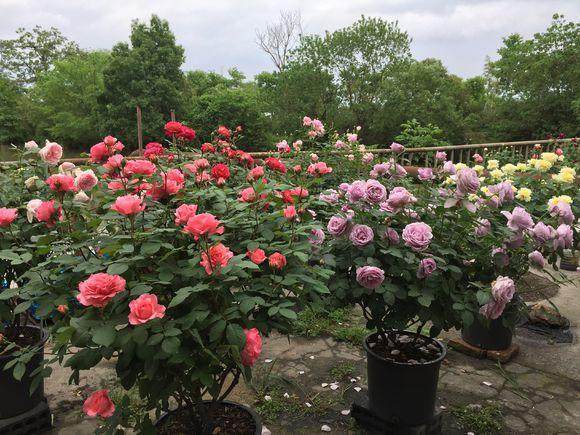
Old Wang loves growing roses; his balcony is filled with them, and almost everyone in the neighborhood knows him, because his roses really are grown well and burst into full bloom. Plus, he loves playing chess, and Aunt Wang often dries jasmine petals and brews them into tea for him. The chess buddies are even more familiar with the fragrance of the roses in Old Wang's home. Today, Huahua is here to share some key points of how Old Wang grows roses.
1. Don't be greedy for a big pot. Many flower lovers think that since roses grow relatively fast, they should start them off in a big pot, just to reduce the number of times the roses need repotting and to cut down on damage and hassle. But a pot that is too big needs more water and nutrients, and if it is not watered thoroughly in one go, it can easily cause poor root respiration and hinder the plant's growth.
To care for roses, use mainly loose sandy loam soil. A ceramic pot is the best choice, but it does not look very good and is not easy to transport. When planting roses, put crushed charcoal or plastic foam at the bottom to improve permeability. Remember not to use sticky clay soil; they grow best in loose, fertile, slightly acidic sandy loam. For home potted plants, it is best to use leaf mold mixed with an equal amount of garden topsoil, then add 5%-8% sand as the growing medium, and add a little bone meal or NPK compound fertilizer as a base fertilizer when planting.
2. Water appropriately, and provide plenty of phosphorus and potassium fertilizer. Everyone knows that roses like heavy fertilizer and plenty of water, but the amount must still be controlled appropriately so as not to cause waterlogging or fertilizer burn. In spring and autumn, water once every 3 days to keep the soil moist. In summer, water once a day; in winter, water once every 7-10 days.
Fertilizing should also follow a regular pattern. In spring and autumn, fertilize once a week. In summer and winter, the amount of fertilizer should be half that of spring and autumn. Do not use strong fertilizer in cold or stuffy hot weather, as this will cause the rose leaves to turn yellow and can even rot the roots and kill the plant. Many flower lovers' roses do not bloom but have lush branches and leaves. To break the rule of not fertilizing during the flowering period, in addition to using organic fertilizer specially made for roses, you can also use one application of a dilute potassium dihydrogen phosphate solution to encourage the roses to bloom with large, brightly colored flowers.
3. Provide plenty of light, cool them down in summer, and keep them warm in winter. Roses love light and should receive at least 6 hours of light a day. But in midsummer, it is still best to shade them slightly. If it is your own balcony, spraying water is one aspect, and you can also hang a curtain appropriately. If you are growing them on a terrace, you can hang fishing net so they will not be scorched and withered by the blazing sun at noon. In winter, if it snows, be sure to cover them with cloth strips or straw, and at the same time do heavy pruning, leaving only a few main branches.
4. One branch can yield a pot of roses; pinch and top them properly. When growing roses, the biggest bonus is propagating them from cuttings, and it is relatively simple. You can use sand and gravel directly, or sandy loam, vermiculite, or peat soil for cuttings.
Cut the branch at a 45-degree angle, then stick it directly into the soil and water once to settle the roots. You can use rooting powder, or use an organic nutrient solution to retain fertilizer, which is relatively rich in nitrogen, phosphorus, and potassium and also has added salicylic acid to promote rooting.
It will take about 20 days or so to root, and after about a month it can be moved into a flowerpot for planting. After about 1-2 weeks it will adapt to the pot, and then it can be cared for normally.