This tree in the mountains is called "plant gold"; its bark is a rare treasure, don't miss it
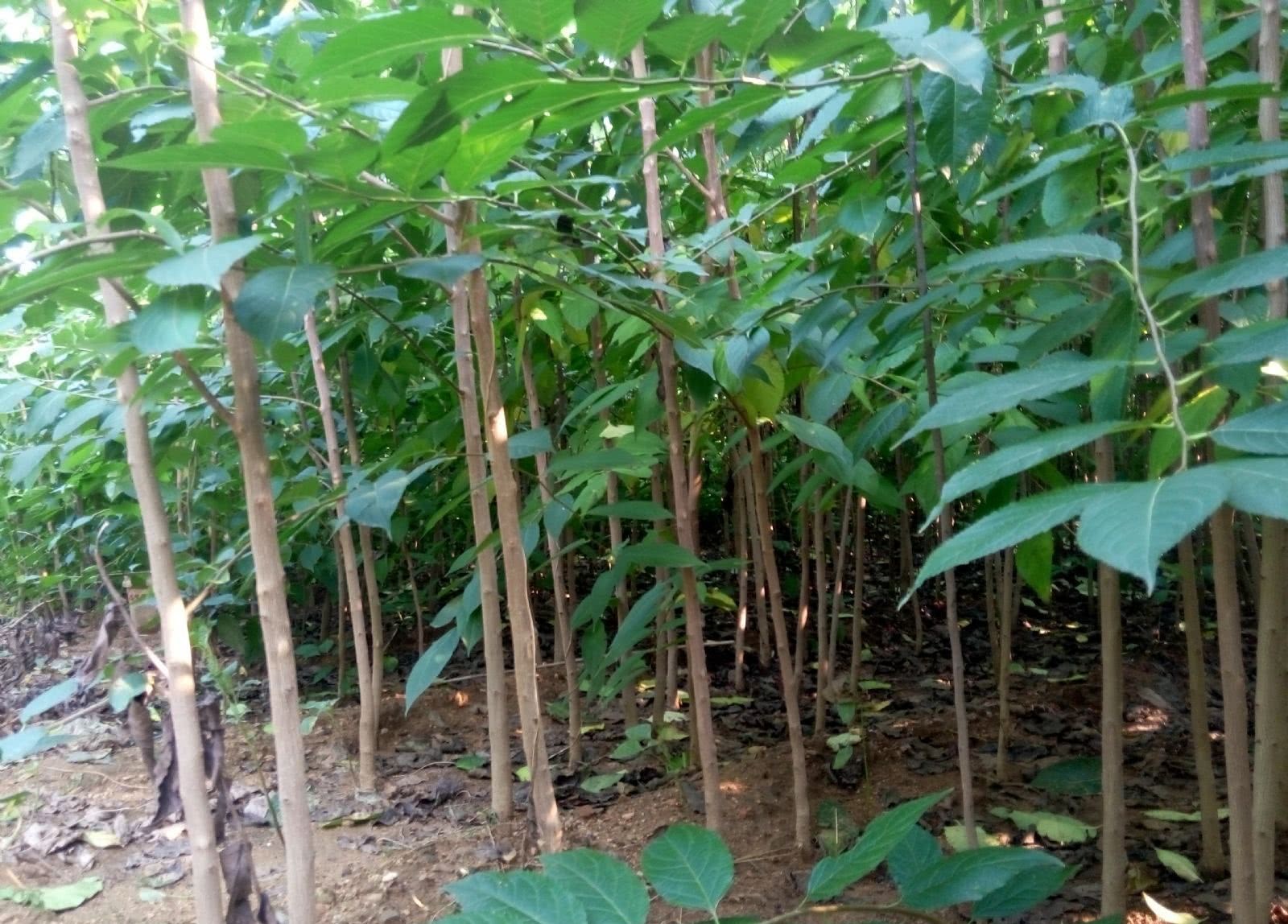
Our country has many mountain ranges, and the mountains hold rich wild plant resources. Besides common mountain delicacies such as mushrooms and wild vegetables, some trees are also extremely precious resources. There is one such tree whose most valuable part is neither its fruit nor its timber, but its bark. A single intact piece of bark from a tree several decades old is of extremely high value and has enjoyed a great reputation since ancient times. The Shennong Bencao Jing listed it as a top-grade substance, a very rare and precious medicinal material that can be mentioned alongside ingredients such as lingzhi and ginseng.
This tree is called "Eucommia ulmoides" (hardy rubber tree); it sounds like a person's name, and in fact it really is related to a person. According to the Bencao Gangmu: "In ancient times there was a man named Du Zhong; after taking this he attained the Dao, and so it was named after him." The general meaning is that in ancient times a man named Du Zhong took the bark of this tree and then attained the Dao and "became an immortal," and from then on people called this tree Du Zhong. The Eucommia ulmoides tree is therefore quite mythological, though after all this is just a legend and not to be believed; yet the efficacy of Eucommia ulmoides has always been highly praised.
What makes Eucommia ulmoides special is its bark, which is sweet in taste and warm in nature and has a very good nourishing effect. Folk belief holds that Eucommia bark can strengthen sinews and bones, tonify the liver and kidneys, secure essence and calm the fetus, and has a relatively good effect on conditions such as lower back pain, weakness of the lower back and knees, dribbling and incomplete urination, kidney yang deficiency, rheumatism and high blood pressure. Moreover, the medicinal nature of Eucommia bark is relatively mild, able to warm and tonify without causing internal heat. In folk practice, Eucommia bark is often used to stew medicinal dishes, such as Eucommia pig tail soup, Eucommia pork kidney soup and Eucommia chicken soup. It can also be brewed as tea or infused in liquor, with a slight hint of sweetness.
Eucommia ulmoides is good, but its bark is not easy to peel. As the saying goes, a person needs face and a tree needs bark; bark is the tree's nutrient transport system, and if the bark is completely stripped off, then the tree's life has also come to an end. Therefore, when peeling Eucommia bark, pay attention: you must not make a complete ring cut; leave a bit of bark connecting the upper and lower parts so that the tree does not die. After peeling, you can see that the inner bark of Eucommia ulmoides is very smooth. If you want it to keep growing, it is best to wrap the inner bark with a layer of film to promote growth.
After the peeled layer of bark is cut open, you can see that it contains a gelatinous substance like fine threads. This gelatinous layer is precisely its essence and is called "plant gold." Generally, only trees more than 20 years old have more of this gelatinous substance, so if you see this tree in the mountains, you have really struck it lucky; its bark is truly a rare treasure! However, cutting down wild trees is not recommended!