This is how to clean up dead leaves when caring for succulents in summer so that pests do not appear
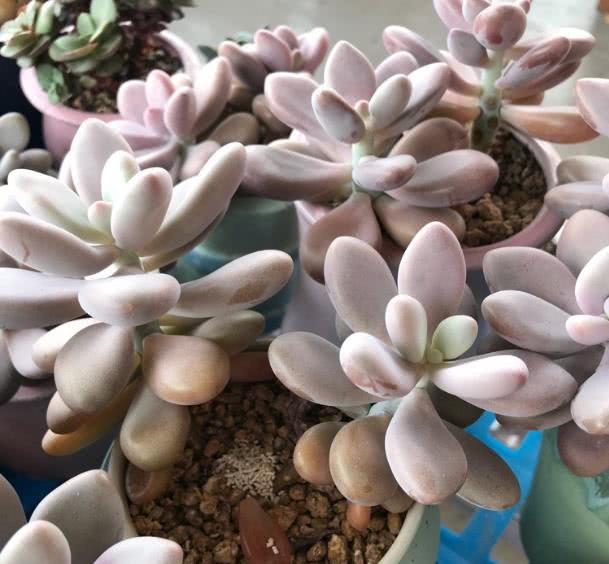
Why can succulents go without having their dead leaves cleaned up in a natural environment? Because succulents living in their native environment have no nutrients coming to them naturally, so these dead leaves at the bottom can help the plant store a small amount of water to maintain normal growth. But when we grow succulents indoors, especially in southern regions, because the growing environment has changed, the succulents themselves live in superior conditions, so dead leaves can become a breeding ground for pests, and especially when the seasons change or during the summer rainy season, dead leaves can easily create a big risk.
In summer, the lowest leaves of succulents often dry up and drop off or turn transparent and mushy. The former is a normal metabolic process of succulents and there is nothing to worry about; once the leaves are completely dry and can be removed easily, just take them off and throw them away. Dead leaves that accumulate over a long time can easily become infected with pests and diseases, and in summer especially they easily create a closed, stuffy, hot environment, so they must be cleaned up.
When cleaning up dead leaves for succulents, you should also pay attention, because the state of the dead leaves is not all the same. Those dry leaves that are not easy to remove should be left alone; pulling them off by force will hurt the succulent. But those that have completely dried up, or leaves that have already fallen onto the flower pot, must be cleaned up. Layered dead leaves, plus clusters of pests, can easily cause succulents to become infected with black rot, and even a very tough plant like Echeveria glauca can easily have its growth point and even the whole plant slowly rot.
When you find fallen leaves, clean them up as soon as possible, otherwise once they stick to the plant they become hard to clean up. If you find fallen leaves that are hard to clean up, do not be in a hurry to pull at them with your hands, as this will damage the flowers. Be as careful and meticulous as possible; if you really cannot clean them up, you can wait a few days before doing the cleaning work. Use your hands to hold the body of the succulent steady, and then you can clean up the fallen leaves that have dropped onto the flower pot or the soil. Keep the cleaning motions as gentle and delicate as possible, do not use too much force, and use tweezers to take out the fallen leaves one by one, but when using tweezers do not harm the roots, and do not leave the tweezers behind in the flower pot.
Succulents brought back from flower markets and greenhouses must be given a soil change and a pot change, especially if there is some black leaf mold soil or yellow clay, which is very bad for planting succulents at home and must be thrown away. While changing the soil, you can also check whether there are "scale insects" or other diseases and pests, and you can also see the condition of the plant's root system, so you can make relative adjustments according to the plant's condition. Of course, if you are sure the soil is clean and has no pests, this soil can also be used again.
This is a gathering place for succulent lovers, sharing succulent care tips; you are welcome to follow and exchange ideas.