Growing lettuce in pots is super simple, making home vegetable gardening easy to get started with
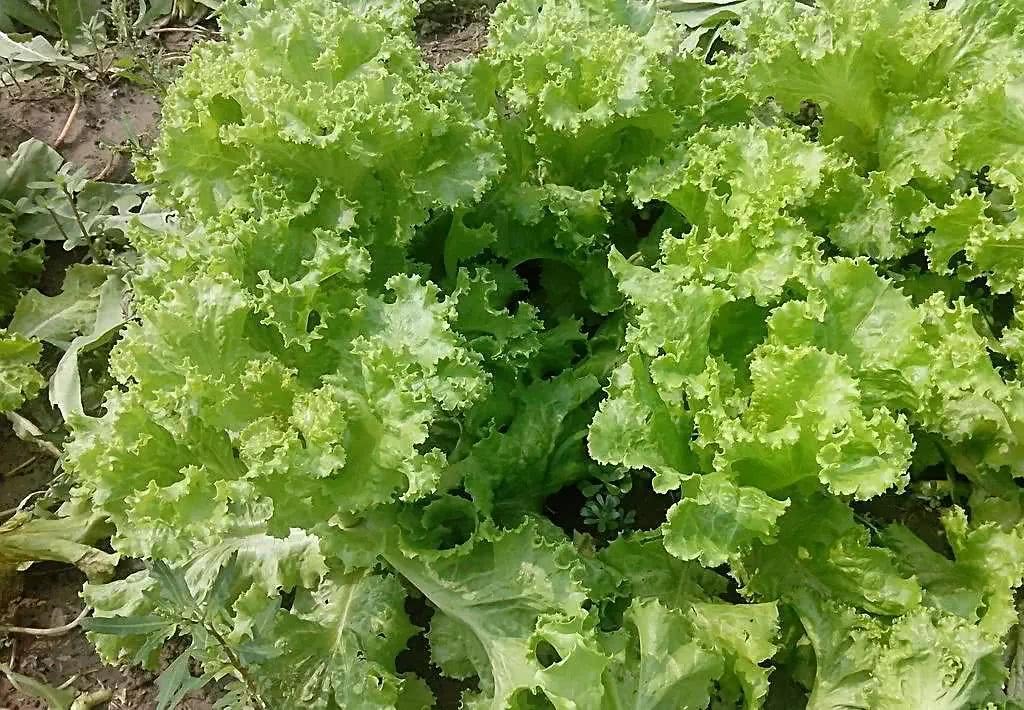
Lettucealso known as leaf lettuce and western lettuce, is an annual or biennial herbaceous plant of the genus Lactuca in the Asteraceae family. Lettuce is rich in nutrients and has a good flavor; it can be eaten raw, stir-fried, or used as an ingredient in Western salads and Chinese hot pot. At the same time, people in the south take advantage of the homophone between "lettuce" and "prosperity," and during Chinese New Year every household will set out two pots of lettuce for good luck. Potted lettuce is attractive in appearance and is a commonly used ornamental plant on many occasions.
Lettuceis a shallow-rooted plant with a dense root system and well-developed fibrous roots, mainly distributed within the 0-20 cm soil layer at the surface. It has a shortened stem, with basal leaves growing alternately on the shortened stem. The leaves are lanceolate, spoon-shaped, elliptical, or ovate; the leaf surface is flat or wrinkled, and the leaf margins are wavy or shallowly lobed. The outer leaves are flat, and the leaf color can be dark green, emerald green, yellow-green, purple, or red. The new leaves are loose or folded together to form a head. The inflorescence is a conical capitulum with a flat receptacle; the flowers are pale yellow, self-pollinating, with a single-locule ovary. The seeds are grayish-white or dark brown, and after maturity bear umbrella-like pappus at the tip, easily dispersed by the wind.
Home vegetable gardening is super simple - variety selection for growing lettuce in pots
(1) Red leaf lettuce
It is named for its purple-red leaf color and its use as a raw vegetable. The plant is 23-25 cm tall with a spread of 22-25 cm. The leaves are nearly ovate, about 20 cm long and about 18 cm wide, and each plant weighs 150-250 grams. The leaves are often purple-green and turn purple-red when the temperature is lower. The leaf surface is wrinkled, the leaf margins are wavy and shallowly lobed, the heart leaves do not fold together, the leaf texture is tender, and the taste is relatively sweet with good quality.
(2) Upright lettuce
The plant is 25-30 cm tall, with obovate leaves that are relatively thick, dark green, and glossy; the leaf surface is slightly wrinkled, and the heart leaves fold together. Each plant weighs 200-400 grams. The leaf texture is crisp, and the taste is light, fresh, and sweet, with good quality.
(3) Butter lettuce
The plant is 15-20 cm tall, with elliptical leaves that are relatively thick, 18-20 cm long and 10-12 cm wide, light green, with a slightly wrinkled leaf surface and entire margins; the heart leaves may or may not fold together. Each plant weighs 200-300 grams. It is relatively cold-tolerant and slightly heat-tolerant.
(4) Fine chrysanthemum lettuce
The leaf surface is wrinkled, and the leaf margins are wavy and shallowly lobed. The plant is 15-20 cm tall, the heart leaves do not fold together, and it is high in edible fiber, so it is called a weight-loss vegetable.
Home vegetable gardening is super simple - sowing and seedling-raising methods for growing lettuce in pots
Lettuce seeds have a light requirement, and moderate scattered light can promote germination. Choose a suitable container and treat the seeds before sowing: first soak them in well water for about 6 hours, rub and wash them, then take them out and wrap them in wet gauze, place them at 15-18°C to promote germination, or hang them in a water well to promote germination, or store them in a refrigerator (about 5°C) for 24 hours, then place the seeds in a cool place while keeping them moist to promote germination; when 80% of the seeds show white sprouts, sow them promptly. After sowing, the soil covering should not be too thick, and under suitable temperature conditions they will sprout in 3-4
days. For seedling raising and transplanting, thin or transplant the seedlings promptly when they have 2-3 true leaves.
Home vegetable gardening is super simple - management methods for growing lettuce in pots
(1) Temperature
Lettuce likes cool conditions and dislikes high temperatures. The minimum temperature for seed germination is 4°C, and the optimum germination temperature is 15-20°C. When it is above 25°C, seed germination is inhibited or poor, and if it exceeds 30°C, the seeds will not germinate. The seedling stage has strong cold tolerance and can endure short periods of -5°C low temperature. At 12-13°C the plants can still grow vigorously, and the optimum growth temperatures are: 15-20°C during the day and 12-15°C at night
(2) Fertilizer and water management
After planting, water to help the seedlings recover, then water 3-4 times; in combination with watering, apply nitrogen and phosphorus fertilizer in stages. Stop watering before harvest.
(3) Other management
Loose-leaf lettuce can be harvested for eating 40 days after sowing; head lettuce is best harvested after the head is firm, because if it is too late the base inside the head elongates, the head becomes loose, and quality declines.
(4) Pest and disease control
The main diseases include downy mildew, soft rot, viral disease, and sclerotinia. Do not plant pots too densely, and remove diseased plants promptly. The above diseases can be sprayed with chlorothalonil at 1000 times dilution. The main pest is aphids, which can be controlled with imidacloprid at 800 times dilution.