Remember these 5 points when growing kalanchoe, and one pot becomes 10 pots, with a flowering period lasting more than half a year
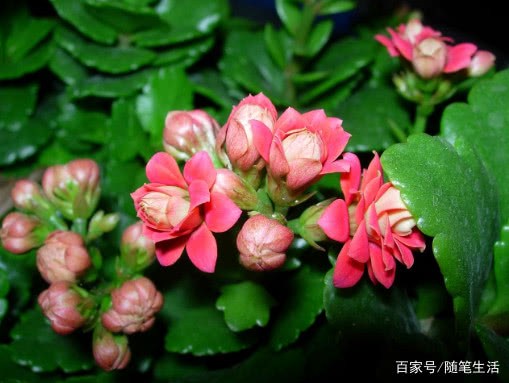
Because its flowering period is close to Christmas and lasts a long time, kalanchoe has become a "holiday flower" people use to create a festive atmosphere. This flower has high ornamental value, and even when it is not blooming, its leaves can still be enjoyed, making it a very ideal indoor potted flower. So today let's talk about how to grow kalanchoe.
Kalanchoe must not be grown in heavy, sticky soil, otherwise it will lead to poor growth, root rot and leaf drop, and in severe cases cause the plant to die. The potting soil should be mixed with 4 parts leaf mold, 4 parts garden soil, 2 parts river sand, plus a small amount of bone meal. This growing medium is loose and fertile, has good drainage, and shows a slightly acidic reaction, which is beneficial to root development.
The suitable growing temperature for kalanchoe is 15°C to 25°C. If the temperature is too high or too low, kalanchoe will enter a dormant state, affecting its growth requirements. Therefore, during cultivation, take care to avoid direct sun exposure in summer, and when winter temperatures are too low, kalanchoe can be brought indoors for growing.
Kalanchoe likes a sunny, well-lit environment. Apart from slight shading at midday in midsummer, it should be placed in a sunny spot the rest of the time, and it needs at least 4 hours of direct light each day to grow vigorously. On apartment balconies, turn the pot 180 degrees every half month so it receives light evenly, avoiding uneven crown growth and reduced ornamental value. Although it can also grow in semi-shade, the stems are thin, the leaves are sparse, there are fewer flowers, and the color is pale, far less lush than in a sunny spot. If it is too shady, it will not only easily drop leaves and fail to bloom, but even a plant that has already bloomed, if placed in shade, will have duller flower color and then drop its flowers and wither.
Kalanchoe is different from other plants. It has a relatively high water content in its body and is fairly drought-tolerant. So during the growing period, do not water too much, and it is better to keep the potting soil on the dry side. Each time you water, wait until the potting soil has dried out completely. Generally, water once every 3 to 4 days; when the weather is dry, you can mist the surrounding environment to increase humidity. To grow kalanchoe well, above all avoid a pot that is too wet and poor drainage, otherwise it will cause root rot.
In how to grow kalanchoe, pruning is also very important. How should kalanchoe be pruned? In the early stage of vigorous growth, pay attention to pinching to promote branching and make the potted plant grow fuller; after the flowers fade, promptly cut off the spent flowers to avoid consuming nutrients and affecting the number of flowers in the next bloom. Proper pruning is also very beneficial for kalanchoe.