Mix a little coal briquette slag into succulent soil and you can even skip the fertilizer
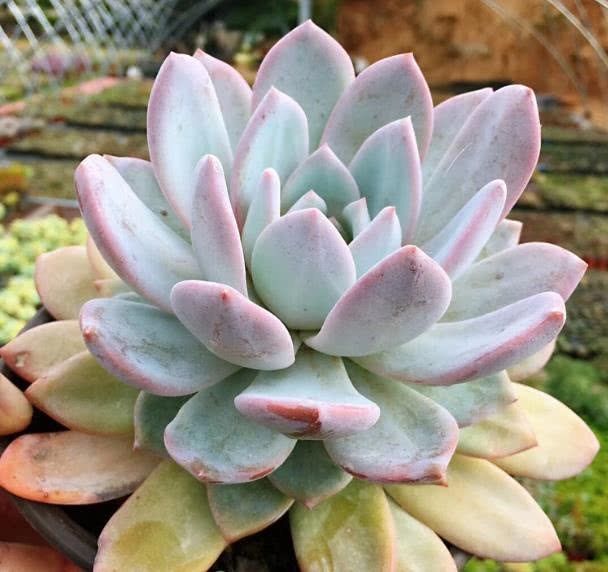
Coal briquette slag is a fairly common growing medium, and many gardening enthusiasts choose it too; it is quite popular. After being burned at high temperature, it basically has no residual pathogens. We usually soak the burned coal briquettes in clean water first to avoid dust floating around. After soaking, crush the coal briquettes into slag, pick out and discard the parts that were not burned, and once the pieces are about 1 cm in size you can sift them.
First of all, choose the coal briquette slag that has been thoroughly burned. That means picking the pieces that look slightly reddish and rough in the middle; whereas when you break open coal briquette slag that has not been thoroughly burned, some parts are black, and it is not suitable for use as a growing medium. Mixed into nutrient soil, coal briquette slag can loosen the soil and keep it in a loose state for a long time, thereby improving the soil's water permeability and air permeability; this in turn creates favorable space conditions for the root growth of all kinds of plants. And when the soil dries out completely, it will not shrink or pull away from the edge of the pot, and after drying out it is also very easy to water it thoroughly.
After being burned at high temperature, coal briquette slag basically has no residual pathogens. We usually soak the burned coal briquettes in clean water first to avoid dust floating around. After soaking, crush the coal briquettes into slag, pick out and discard the parts that were not burned, and once the pieces are about 1 cm in size you can sift them. The mixing ratio of coal briquette slag to other components should reach 1:1 part other: or 1 part coal briquette slag:2 parts other. Only in this way can the coal briquette slag take effect. Many gardening enthusiasts say that coal slag is alkaline and not suitable for growing acid-loving flowers, but testing has found that coal slag solution is actually neutral; therefore acid-loving plants can use it as well. Another point is that coal slag contains a very high amount of sulfur, so it cannot be used on sulfur-sensitive plants, such as Christmas cactus (Schlumbergera).
The effect of using coal slag is comparable to orchid stone, Ishi pumice and other light pumice; we certainly will not refuse a medium that costs nothing and works well. Moreover, coal slag contains many trace elements, such as calcium oxide, magnesium oxide and iron oxide, etc., which are very helpful for the growth of succulents. As an air-permeable and water-permeable material, it is more than suitable for helping succulents grow roots; when the roots are good, there is no problem with the growth of succulents.
Succulents like loose, air-permeable soil, and granular soil mixed with a medium is suitable for succulents to take root and grow vigorously. The coal briquette slag commonly found in daily life is both air-permeable and water-permeable. Coal briquette slag contains trace elements such as calcium oxide and magnesium oxide, so using it to grow succulents is more than suitable. When choosing coal briquette slag, you can pick the pieces that look reddish and rough in the middle; these are coal briquette slag that has already been thoroughly burned and is suitable for succulents. Mixed into nutrient soil, coal briquette slag can keep the soil in a loose state and improve the soil's air permeability and water permeability, and after the soil dries out it is also very easy to water it thoroughly.
This is a gathering place for succulent enthusiasts, sharing succulent care tips; you are welcome to follow and join the discussion.