The Echeveria 'Perle von Nürnberg' succulent has beautiful pink-purple leaves
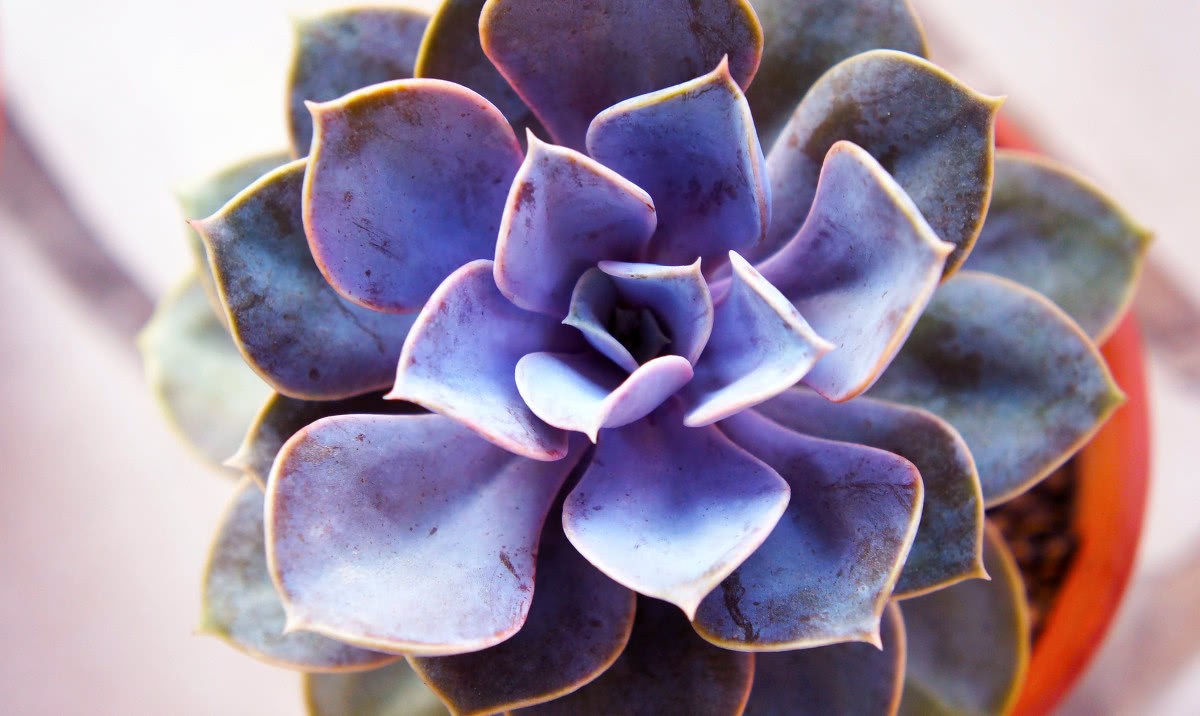
Echeveria 'Perle von Nürnberg' is a succulent in the Crassulaceae family, genus Echeveria, also known as Perle von Nürnberg. Its violet-colored leaves give this variety very strong ornamental value. A succulent with beautiful pink-purple leaves, with white leaf margins. The leaves are arranged in a rosette-shaped spiral.
Echeveria 'Perle von Nürnberg'
Morphological characteristics:
In an environment with sufficient light and a large temperature difference, the leaf color is very bright, but during the growing season (usually summer) or when light is insufficient, the leaf color turns dark green or grayish green. In late summer and early autumn, flower stalks grow from the leaves, blooming with slightly purple-orange flowers.
Echeveria 'Perle von Nürnberg'
Growing environment:
It likes light, and prefers a warm, dry and well-ventilated environment. It likes light, is drought-tolerant, cold-tolerant, shade-tolerant, and tolerant of stuffy indoor environments, with extremely strong adaptability. It is not tolerant of intense sunlight exposure, and has no obvious dormant period. It likes a cool, dry and sunny environment and well-drained sandy soil.
Echeveria 'Perle von Nürnberg'
Propagation methods:
Mainly cutting and division; cutting includes leaf cuttings and stem cuttings.
Leaf cuttings: Lay a complete mature leaf flat on moist sandy soil, with the leaf surface facing up and the leaf back facing down. There is no need to cover it with soil. Place it in a cool place. After about 10 days, small leaf clusters and new roots will grow from the base of the leaf. Bury the root system into the soil, then let it get plenty of sun and water it appropriately, and gradually it will grow into a robust new plant.
For stem cuttings, tiller shoots or top shoots can be used. The length of the cut cuttings is not limited, but the cut end must be dried, then the lower leaves removed, and then inserted into a sand bed to avoid excessive water evaporation. After insertion, roots generally form in about 20 days, and watering can begin once roots have formed; it is normal for the lower leaves to dry up and shrivel before rooting, and once the root system is well developed and enough water is absorbed, it will naturally recover. The soil must not be too wet, otherwise the cut end is prone to yellowing and rotting. When the roots are 2-3 cm long, it can be repotted; division is best carried out in spring.