Purple tulbaghia releases a romantic color, with beautiful and moving flowers
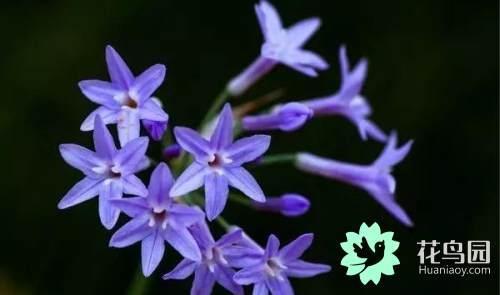
Purple tulbaghia (Tulbaghia violacea)
Life is a river that flows endlessly, and we are all those who cross it. On the left bank of the river of life is forgetting, and on the right bank of the river of life is remembering. We ride in our own unique boats, shuttling between the left bank and the right bank, and only then do we know to forget what should be forgotten and remember what should be remembered.
"The Left Bank Is Forgetting, the Right Bank Is Remembering"
Xi Murong
Introduction
Purple tulbaghia (Tulbaghia violacea)
Also known as xiebai, wild small garlic, small-root garlic, mountain garlic, caizhi, small-root vegetable, and African small lily.
Amaryllidaceae, Tulbaghia.
Apart from the flower color being different from that of Chinese chives (Chinese chives generally have white flowers, while this flower is purple), its other characteristics are all similar to those of Chinese chives, and the whole plant has a strong chive odor and can be eaten in the same way as Chinese chives, whether stir-fried, served cold, or made into soup, so it is also called foreign chives and foreign Chinese chives. The terminal cyme bears small purple-pink flowers.
Growing environment
It likes high temperatures, and the suitable temperature for growth is 24-30 degrees.
It was originally a short-day plant growing in mountain forests and grassy areas in southwestern and northwestern China, so most varieties prefer a cool, moist, semi-shaded environment and are relatively cold-tolerant. It grows luxuriantly in fertile sandy soil rich in humus with good drainage, with well-developed bulbs and brilliant flower colors.
Morphological characteristics
The bulb is thick and spherical, reaching 2 cm in diameter, with white membranous leaf sheaths. The leaves are mostly semi-cylindrical, slightly hollow in the center, about 30 cm long and about 5 mm wide, with leaf sheaths 5-20 cm long. The flower stem is upright, 30-60 cm tall, and the umbel is spherical, with many flowers, 2-5 cm in diameter; the perianth is pink, and the perianth segments are ovate-oblong, 4-5 mm long, slightly joined at the base, with a blunt or acute tip and a purplish-red keel; the stamens are longer than the perianth and inserted at the base of the perianth, with the lower part of the filaments flat and broad and slightly united at the base; the style is exposed; the stigma is small and not split. The flowering period is May-July. It is a bulbous flower with a plant height of 30-50 cm, bearing small cylindrical bulbs and forming clumps when mature. Both stems and leaves contain a chive flavor. The terminal cyme bears small purple-pink flowers.
Flower language
The flower language of purple tulbaghia: keep it in mind.