The 4 most terrifying plants in the world, each one deadly
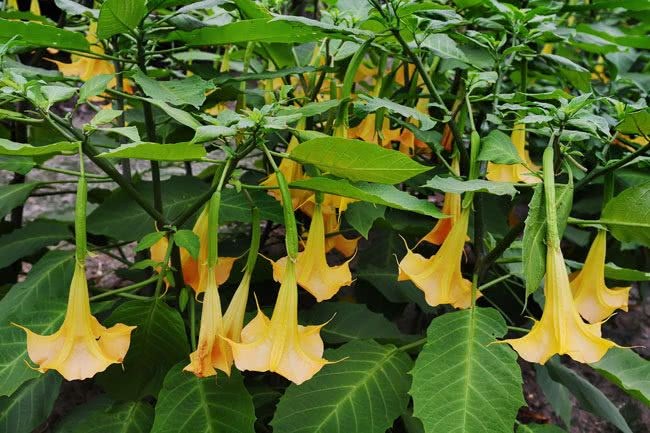
1. Brugmansia (angel's trumpet)
Brugmansia belongs to the nightshade family Solanaceae. Because its flower sap stimulates the nerve center, swallowing it can produce excitation and may cause hallucinations. If too much is accidentally ingested, it can overstimulate the nerve center, which suddenly flips into inhibition, causing body functions to plummet, often leading to death.
The whole plant is toxic, with the fruit, especially the seeds, being the most toxic, followed by the young leaves; dried leaves are less toxic than fresh leaves. After poisoning, symptoms generally appear half an hour after eating, at the earliest 20 minutes, and at the latest no more than 3 hours. Symptoms mostly disappear or largely disappear within 24 hours. In severe cases, after 24h the person enters a state of drowsiness, convulsions and cyanosis, and finally dies in a coma.
2. Venus flytrap
The Venus flytrap is an insectivorous plant in the sundew family, genus Dionaea. The leaves of this species have many tiny trigger hairs, with 3 bristles on each side of the inner leaf. Once touched more than 3 times within 20 seconds, the leaf closes and traps the prey. The Venus flytrap's leaves close extremely fast, in less than one second. Glands in the leaf secrete fluid to digest the softer parts of the insect's body. After one or two weeks, the leaf opens again, ready to set another trap to catch insects. They exist only in parts of the coastal areas of North Carolina and South Carolina in the United States.
3. Mala mujer (bad woman flower)
It is mainly distributed in the southwestern United States and Mexico. Its surface is covered with sharp spines, and these spines are very hard; if necessary, the spines of this plant can even be used as fishhooks. The truly terrifying part of this plant is a corrosive milky liquid that seeps out, a common feature of many members of the Euphorbia family. This liquid can cause painful skin irritation and unsightly discoloration.
4. Water hemlock
Water hemlock is "the most toxic plant in North America." Its flowers and stems are non-toxic, but the slender stem is full of a sap called cicutoxin. Even swallowing just a small amount can trigger violent seizures and death very quickly.