How do you grow orchids so they produce more new shoots? You need to master these methods
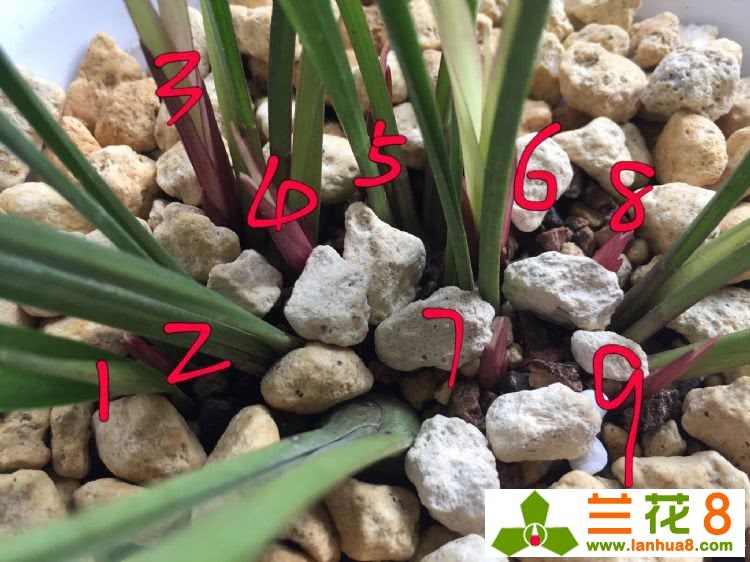
Generally speaking, orchids begin to sprout from the end of March each year, and the shoots that grow during March to June are called spring shoots. Next, during October to December, they may sprout again, and the new shoots at this time are called autumn shoots.
Spring shoots are relatively easy to cultivate into robust and beautiful orchid plants, while autumn shoots, because not long after they emerge they encounter the severe cold of deep winter, are unless there is complete protective equipment relatively difficult to cultivate into strong orchids.
The basic condition for orchids to grow robust new shoots is that the orchid itself is mature and robust. This is exactly the same as the situation when we humans have children: only a mature and healthy mother can give birth to a healthy and lovely baby. Therefore, when new shoots grow to the mature stage, if every 5 days to one week you spray a suitably diluted fertilizer, then when this mature plant grows new shoots, it will grow both robust and numerous new shoots. Thanks to advances in science and technology, nowadays people generally switch to simple, efficient and safe slow-release fertilizer, such as Osmocote slow-release fertilizer imported from the United States.
Next, if you hope that every old plant will send out new shoots, you can choose an appropriate period (April to May), take the old plants and divide them appropriately (they must not be completely separated), soak the orchid roots in diluted auxin solution for two to three hours, and then plant them into pots. In this way each old plant will send out at least one new shoot, and some may even grow two or three shoots, with fairly good results.
Soaking in auxin when repotting is based on the same principle as a woman fully supplementing nutrients before she wants to conceive. A mother with sufficient nutrition naturally has a higher conception rate. If orchid growers want their beloved orchids to produce robust and numerous shoots, they might as well try the good methods above.
In addition, according to the sayings of veteran orchid growers, to make an old head (old pseudobulb) send out new shoots, you can wrap the old head with sphagnum moss or tree fern fiber, place it in a cool, ventilated place, and keep suitable humidity to make it sprout. After sprouting, replant it with Songliwang potting medium, spread a layer of Kanuma soil or fired stone on the surface, and switch to normal management. During this period do not fertilize, otherwise the loss will outweigh the gain. Songliwang potting medium is an organic potting medium, which can both avoid fertilizer damage and provide sufficient nutrition for the orchid's growth.
For orchids sending out shoots, those that emerge in spring are better. In subtropical regions, once spring arrives, the temperature gradually rises, and on clear days the temperature often reaches above 30°C, so when handling old heads, the temperature issue must be considered; it is best to do it between 15-25°C.
First wrap the old head tightly with sphagnum moss, then place it in an orchid pot, loosely stuff some sphagnum moss into the surrounding gaps, cover the top with a 2-cm layer of Kanuma soil, then water appropriately every day. After about half a month, the old head will certainly send out thick young shoots. Incidentally, if before wrapping the old head in sphagnum moss you can first soak it in diluted auxin solution for two to three hours, the effect will be even better.
You may ask: why does the sphagnum moss need to be wrapped tightly? Actually, readers may not know that only an old head tightly wrapped in sphagnum moss can maintain a high-temperature state, while loosely stuffing sphagnum moss around it has the effect of regulating temperature. Keeping the old head at high temperature will certainly accelerate its internal chemical reactions. As long as you spray an appropriate amount of water every day, it will naturally promote the old head to send out shoots sooner. I publish orchid knowledge and pictures every day, taking you to understand orchids in depth and teaching you to grow orchids easily. If there is anything about orchids you do not understand, you can ask me at any time or leave a message below. If my knowledge has helped you, I hope you can give me a like or share it to help more people!