How to Grow Potted Figs: Potted Fig Cultivation Methods
Reprinted from Baijiahao author: Liuyi Potted Plants
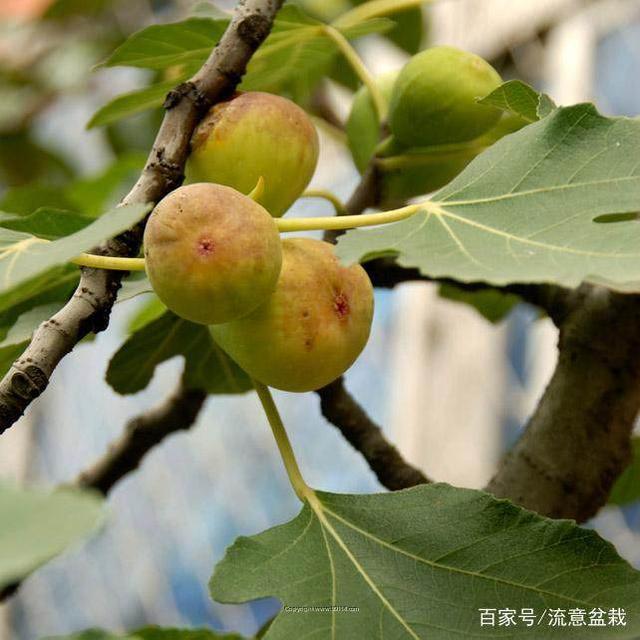
The fig tree has luxuriant branches and elegant form, with excellent ornamental value, making it one of the very best potted fruit trees. So how do you grow potted figs? Below we introduce the cultivation methods for potted figs. Let's take a look.
I. Container
The size and quality of the container chosen determine the volume and growth vigor of the potted root system. The fig is a shallow-rooted fruit tree, with its roots distributed vertically within a 15-60 cm soil layer and spreading over a fairly wide horizontal range. For potting, a clay or ceramic pot with a diameter of 40-50 cm and a depth of 25-30 cm is usually chosen.
II. Variety Selection
At present there are more than ten main fig varieties cultivated in China. By fruit color they can be divided into green-fruited, red-fruited, purple-fruited and yellow-fruited varieties; by fruit ripening period they can be divided into varieties exclusively for summer fruit, varieties exclusively for autumn fruit, and varieties for both summer and autumn fruit. For potted figs, choose varieties with brightly colored fruit, larger fruit size, and fruiting in both summer and autumn. For red-purple varieties you can choose: Japanese Purple Fig, Bojihong, Masui Dauphine, Brown Turkey; for yellow-fruited varieties you can choose: Tanigawa, Golden Alfonse, b1011, a42, Brunswick, etc.
III. Potting at the Right Time
The fig is not strict about soil conditions; it grows best in deep, fertile, loose, well-aerated neutral to slightly alkaline soil. Therefore, the potting soil can be made from 2 parts sandy loam, 1 part vermiculite and 1 part barnyard manure, or mixed from 2 parts garden soil, 2 parts peat and 1-2 kg of compound fertilizer. Before filling with soil, place a tile shard over the drainage hole at the bottom of the pot. Potting is generally done in mid-to-late March. Choose 1-year-old cutting seedlings or 2-year-root/1-year-trunk seedlings for potting; when planting, use pruning shears to shorten the root system of the seedling, especially cutting off damaged roots and broken roots, to prevent root rot after planting and to stimulate the growth of new roots. During planting, make sure the roots spread out and bind tightly with the soil, then water thoroughly after planting.
IV. Light and Air Conditions
Potted figs should have their pots placed in a spot with good light and ventilation, to ensure normal photosynthesis and transpiration of the thick, large leaves. It is best to place them where light can shine directly, such as a sunny balcony or a sunny spot on the ground in a courtyard. If potted figs are kept on an enclosed balcony, open the windows often to maintain ventilation. If potted figs are kept in a courtyard, move the pots indoors in winter to prevent cold damage.
V. Fertilizer and Water Management
In early June, apply a topdressing of diammonium phosphate or potassium dihydrogen phosphate, using about 0.3 kg; dissolve it in water and pour the fertilizer liquid evenly into the pot. In late August, apply a topdressing of compound fertilizer containing nitrogen, phosphorus, potassium and trace elements, using about 0.5-1 kg. In early June, spray paclobutrazol (pp333) on the leaves; the method is to dilute paclobutrazol to a 300-500 times solution and spray once every 15 days, for 2-3 consecutive sprays, which can inhibit new shoot growth, shorten internode spacing, make branches thick and strong, and promote flower cluster differentiation and fruit development. The fig tree is drought-tolerant and waterlogging-tolerant, so water management can be somewhat rough; do not water too much, especially during the fruit ripening period, as too much water will aggravate fruit cracking.
VI. Training and Pruning
The fig tree has strong sprouting and branching ability, and its new shoots grow fast and in large amounts, so potted figs require special attention to training and pruning. First, the trunk should be set low: after potting, immediately cut back the seedling trunk at 15-20 cm to set the trunk. Second, control vegetative growth and cultivate a compact tree shape with dense branching and short branches. Fig branches are divided into long, medium and short branches, all of which can bear fruit; flower buds differentiate from the leaf axils at the base of the leaf stalk and develop into fruit. Long branches are over 60 cm long, with 20-30 nodes and large internode spacing of 3.5-5 cm; medium branches are 30-60 cm long, generally with 10-20 nodes and internode spacing of 2.5-3.5 cm; short branches are under 30 cm long, with fewer than 10 nodes and internode spacing of 2.0-3.0 cm. Usually the terminal bud and upper lateral buds develop into long branches, while the lower lateral buds develop into medium and short branches. In May and June, during the peak growth season of the fruit tree, use pruning methods such as pinching, bud removal and branch bending to control vigorous branch growth and cultivate medium and short branch groups with short internodes and thick, strong growth. Third, according to your own preferences, train the plant into a certain shape to enhance the artistic value of the potted plant.
How to grow potted figs, and the cultivation methods for potted figs, is what we have introduced to you here. Potted figs like a warm, humid climate, are not cold-tolerant and are not waterlogging-tolerant, so special attention is needed during their care.