Milk thistle is unwelcome in Africa, yet it has become a money tree for farmers in our country
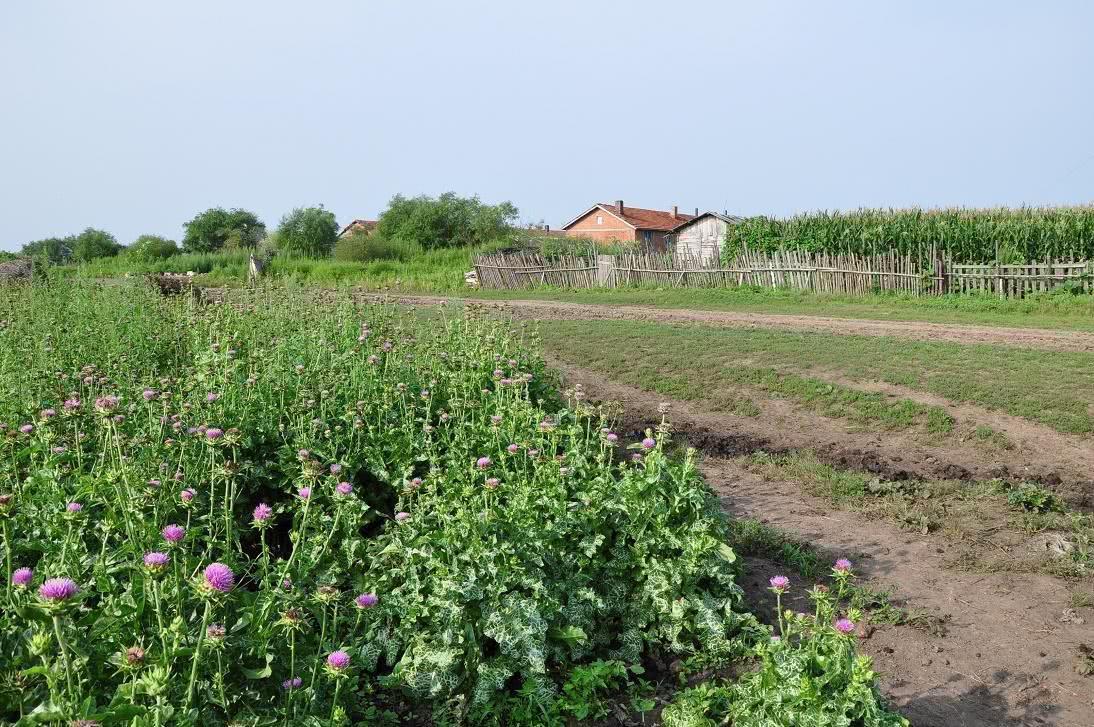
The world is full of wonders, and this fits the plant kingdom perfectly. In the plant world there are all kinds of strange wild grasses and trees, and most of these strange wild grasses are loved by farmer friends, especially those that can be eaten as wild vegetables, which are even more popular, such as houttuynia, kalimeris, and Chinese toon. However, some wild grasses, because of their particular appearance, were once disliked by many farmer friends, yet today they have become the "money tree" of farmer friends. Below, the author introduces one such wild grass.
In the morning, while the author was passing by a piece of farmland in the village, the author saw this strange crop planted in the farmland. The reason it is called strange is that ordinarily farmland is planted with corn, wheat, or vegetables and other common crops, yet in this piece of farmland what was planted was a wild grass, and this wild grass is "milk thistle," also called "mouse thorn" or "milk thistle" by farmer friends.
Speaking of this wild grass called milk thistle, many friends may never have seen it, because it is not a native plant of our country, but an introduced plant.
Milk thistle is a wild grass native to Africa. In Africa, milk thistle is said to be very unwelcome. The reason for this is actually related to milk thistle's own characteristics. The first point is that milk thistle has very strong adaptability and is not strict about soil or water requirements; it can grow in sandy beach land and saline-alkali land, is both drought-tolerant and high-temperature-tolerant, likes to grow near farmland, and will snatch the nutrients of crops and thus harm the crops. The second point is that milk thistle is covered in thorns from top to bottom and easily pricks people, so it is very unwelcome in Africa.
However, after milk thistle entered our country, it became the "money tree" of our country's farmer friends. The main reason is that milk thistle is a wild grass with very high medicinal value.
According to "Chinese Materia Medica," the thorn-covered fruit of milk thistle can be used as medicine. Its taste is bitter and its nature is cool, and it has the effects of clearing heat and detoxifying, promoting lactation, protecting the liver, and promoting bile flow. It can be used to treat acute and chronic hepatitis, cirrhosis, metabolic toxic liver injury, urinary stones, and many other symptoms. In particular, milk thistle extract is very popular in Europe and is called the "natural liver-nourishing medicine" in Europe.
It is precisely because milk thistle has such great effects that in our country's rural areas, quite a few farmers have begun to plant milk thistle. A farmer friend in the village who plants milk thistle told the author that planting milk thistle is easy if you say it is easy, and hard if you say it is hard. Planting must begin in mid-to-late April, and generally one mu can plant 12,000 plants. If conditions are good, the annual output value of one mu is around 4,000 yuan; if conditions are not good, the output value per mu is around 2,000, which also counts as a path to getting rich.
Dear friends, do you know about milk thistle? You are welcome to leave a message and exchange views!