Should weeds growing in bonsai be pulled out?
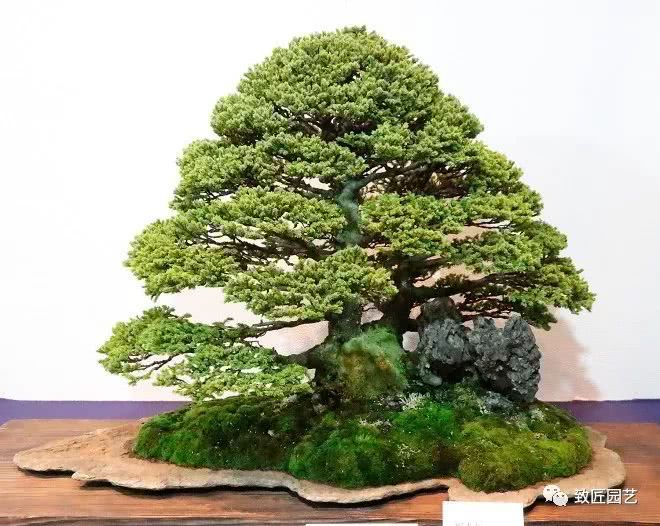
As the seasons change, all kinds of weeds grow in bonsai. These weeds not only consume the limited nutrients in the pot soil, but also affect the ventilation and lighting of the bonsai plants, and also affect the overall ornamental effect of the bonsai work. So "weeding" has become an important, routine task in the process of bonsai maintenance and management.
Everything has two sides. Weeds in bonsai also have their clever uses. Once we understand the beneficial aspects of bonsai weeds for bonsai maintenance, we can achieve "scientific weeding."
1
Pot weeds are a "moisture meter"
Keeping a few weeds in the pot allows you to see the dryness and wetness of the soil more intuitively, providing a reference for daily watering. For moisture-loving bonsai plants, water when the pot weeds are slightly wilted; for plants that need to be kept slightly dry or have their water controlled, water when the pot weeds are completely wilted. Weeds generally have fairly strong vitality and revive as soon as they get water.
2
Pot weeds are a "fertility meter"
General weeds have fairly developed root systems and respond quite quickly to the fertility status of the pot soil: "Lush grass means sufficient fertilizer, weak grass means a lack of fertilizer." But we must also distinguish different situations: for trees in the trunk-growing stage that need to be enlarged and thickened, fertilize frequently to ensure sufficient fertility; for trees that have already taken shape and need to be controlled, fertilize less or not at all.
3
Pot weeds are a "looseness meter"
Weeds have fairly developed root systems, and pulling them out can loosen the pot soil and improve its permeability. If the weeds can be pulled out with their roots and can lift the surrounding soil with them, it shows that the pot soil is loose; if they are very difficult to pull out by the roots, or only the leafy shoots above the roots can be broken off, it shows that the pot soil is compacted and needs to be replaced.
4
Reflecting environmental growing conditions
Generally speaking, each kind of weed has its own inherent growth characteristics. Once its inherent characteristics are changed, it can indicate that "the environment here is unsuitable," and the conditions need to be improved or the maintenance location changed. So weeds can be used to observe environmental growing conditions and provide a reference for improving conditions or changing the maintenance location.
5
Pot weeds can "protect soil and water"
The soil in a bonsai is limited, and limited soil dries out easily. Properly retaining some small, low, attractive pot weeds can both preserve water and moisture and bind sand and protect the soil, playing the role of bonsai moss.
6
Pot weeds can prevent "root rot"
Root rot in bonsai plants follows the same principle as root rot in crops. It mainly occurs under climate conditions of high temperature and high humidity in summer with continuous alternation of overcast and clear days. Because the underground part of the plant roots is too humid and the soil has poor aeration, the plant roots have difficulty breathing; the surface soil is pounded very compacted by heavy rain, and the gaps are filled with mud, making it hard for air to circulate between above and below the surface; intense sunlight causes the moisture in the wet surface soil to rapidly turn into vapor and rise, forming an updraft, while the oxygen at the roots is in short supply, suffocating the roots to death. Keeping a few weeds properly in the pot soil and, when encountering the above severe weather, choosing the moment when heavy rain suddenly clears, pulling out 2-3 small weeds from different parts of the pot can greatly reduce the occurrence of root rot, and the efficiency is very high.
7
Enhancing the ornamental value of bonsai
Natural beauty is an important part of the artistic beauty of bonsai works. Intentionally retaining some weeds in a bonsai and combining them with other elements such as rocks, pavilions and bridges, streams, moss, and other auxiliary plants, arranged properly, can greatly enhance the natural feel of the bonsai work and make its artistic conception more true to life.
Featured content