Green plants that stay evergreen all year round and can grow without sunlight; a single stem cutting can cover an entire wall
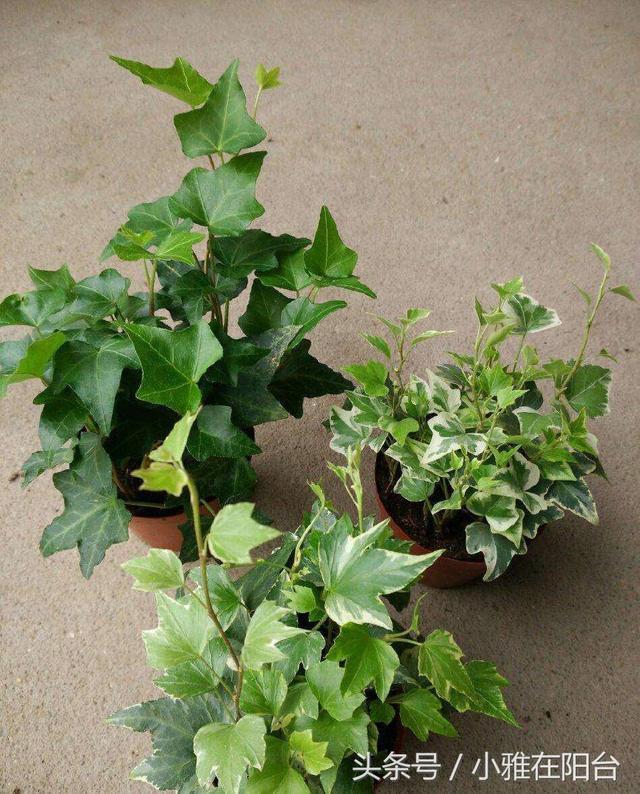
Ivy (English ivy) is a perennial climbing shrub with leaves that stay evergreen all year round. Its vines can grow to more than two meters long, forming a lush green mass that is very beautiful. It is a shade-loving plant and can grow well even in spots with insufficient light, and it likes a warm, humid environment.Even if your home has insufficient light, you can still grow ivy. To grow ivy, you do not need to spend a single cent to buy it; you only need to pinch off a bit of stem vine and it can be grown alive.
Soil
Ivy is not picky about soil; basically all soils can be used to grow it, and it is even better if the soil is loose, fertile, airy and moist. Generally, leaf mold, garden soil and sand can be mixed together for planting.
Propagation
The stems of ivy have some aerial roots. Directly cut off some healthy branches about fifteen centimeters long that have aerial roots, and keep only two or three leaves. April and May in spring, and August and September in autumn, are the best times for cuttings. For spring cuttings, use older, harder branches; for autumn cuttings, use tender, semi-lignified branches.
For the cutting soil medium, choose a sandy soil with good drainage. After inserting the cuttings into the soil, shade them and keep the soil moist; in more than twenty days they will grow roots, sprout and survive.
As long as the soil is moist and the temperature is suitable, it grows especially fast. Moreover, even when it snows in winter, as long as the temperature does not drop below minus five degrees, it is basically fine, and in summer it is also fairly tolerant of high temperatures.
Watering and fertilizing
It likes a warm and humid environment, so during the spring and autumn growing seasons it needs frequent watering, and the soil should be kept on the moist side. If it is not watered for a long time, it will drop leaves. When the air is dry, mist the plant appropriately.
In winter, reduce watering; a slightly dry soil state is better. Normally, you can apply some diluted organic fertilizer liquid once a month. Frequent fertilizing can make it climb with more vines and faster. There is no need to fertilize in winter. Although it will drop some leaves in winter, in spring it will grow even more tender branches and leaves. It is very tough and easy to keep alive.
Repotting
If it grows too quickly, it can be repotted once every two years. When changing the soil, keep part of the old soil when planting, so it settles in faster and grows more lushly.
Ivy likes fertilizer. With the addition of new fertile soil, the ivy has sufficient nutrients and very easily fills the pot; some flower lovers have grown it until it covered an entire wall on the balcony.
Ivy that has grown to cover an entire wall! Very beautiful, pleasing to the eye and lush!