Crimson Rose ranks first among the top ten most fragrant roses, one branch in bloom fills the whole garden with fragrance
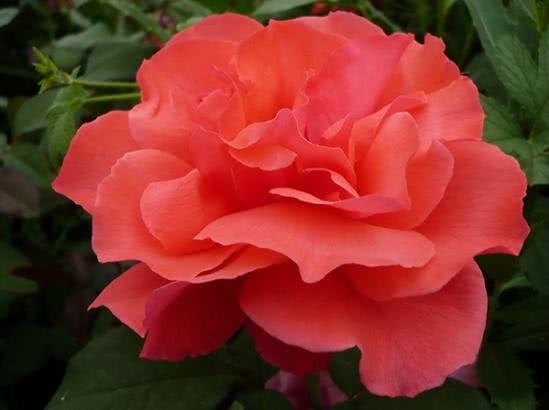
Fragrant Cloud is one of the excellent varieties in the rose family; its name matches its flower, with a rich fragrance that carries a citrus scent when smelled, and it has been rated by many flower lovers as the most fragrant of the top ten roses (of course, fragrance is a matter of personal taste, and some flower lovers even think it is too fragrant), and it won the ARS fragrance award in 1969 and 1970.
Here one cannot help but marvel at the naming skills of the Chinese people; the name alone already brings out its greatest feature. The Fragrant Cloud flower is bright red, as vivid and brilliant as fire, with multiple layers of petals arranged in a cup shape. Although it blooms a single flower per stem, one branch alone can fill a room with fragrance, showing how intense its scent is.
Roses generally do not have high requirements for soil, but the principle of good ventilation and breathability is always right. You can mix garden soil and sand at a ratio of 6:4. There is no need to strictly follow this standard; if you have perlite or peat, you can mix some in as well. After all, good soil produces good flowers. Having low requirements means it can grow well under ordinary standards, and under higher standards it can grow even better.
When choosing a pot, you can select according to the size of the plant. It is not advisable to choose a pot that is too large, as it easily accumulates water and causes root rot. It is better to be diligent and change the pot and soil the next year, and by the way prune the roots and replenish nutrients. Changing the soil and pot is like giving it a second life! Everyone should not, for convenience, give a small plant a very large flower pot from the start; it is neither attractive nor good for water control.
Fragrant Cloud likes fertilizer, and only with sufficient nutrients can it bloom flower after flower, each one fragrant. When mixing the soil, you can add a little bit of organic fertilizer, mix it into the soil, and stir it together with the soil. Do not pile the fertilizer together at the bottom layer; spread the nutrients out, and do not use too much.
Later, you can frequently apply nitrogen, phosphorus, and potassium fertilizers. Phosphorus fertilizer promotes flowering. The principle of fertilizing is small amounts applied frequently, and depending on the situation, once every 20-30 days. It can be decided specifically according to the size of the plant and its flowering condition, and small amounts applied frequently are best. In fact, fertilizing is also possible in summer. Summer has strong heat, and the consumption of water and nutrients is relatively high, so sufficient water and nutrients must be ensured; otherwise, it cannot bloom with fragrance filling the house!