What are the common methods of side grafting for Yanshan Chinese chestnut?
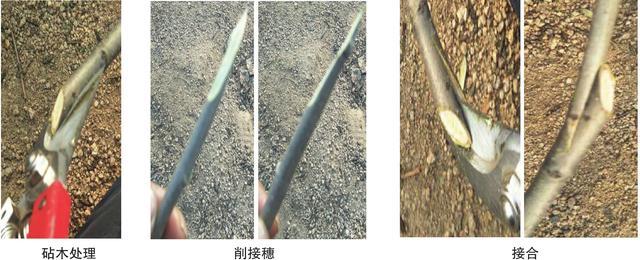
Common methods of side grafting for Yanshan Chinese chestnut
Chinese chestnut grafting mostly uses methods such as cleft side grafting, bark side grafting, bark side grafting with a base branch, and bare-pillar bark side grafting, which can improve the survival rate. In the Yanshan Chinese chestnut producing areas, these methods have been promoted and applied on a large scale with good results.
1 Collection and handling of scions
1.1 Collecting scions
Scions should be collected from large trees in full fruiting stage that are of fine varieties and grow vigorously. From the mother tree, cut well-developed, fully filled, plump-budded, thick one-year-old vegetative shoots or fruiting mother branches. It is best to collect them within one month before bud break (around the Spring Equinox in mid-to-late March). The storage period should preferably not exceed 50 days; otherwise, the grafting survival rate decreases. The longer the storage time, the lower the grafting survival rate; if it exceeds 80 days, grafting generally does not survive easily.
After collection, the scions must be properly sorted: cut off the non-filled part at the front section of the branch, as well as the blind-node section of the current year's fruiting branch and the curved part at the base. The scion length should be more than 20 cm, and the thickness should be more than 0.6 cm. After collection, tie them in bundles of 50-100, mark the variety clearly, and promptly place them in a low-temperature, moisture-retaining cellar for storage.
1.2 Storage of scions
When the number of scions is small, they can be stored in a cellar or cave, and the cellar opening or cave entrance should be sealed well. The ground should be shaded with straw to prevent temperature rise, and the temperature should not exceed 10°C. They can also be placed in a water well, more than 1 m above the water surface, with the well cover put on; they can also be placed in the refrigerator compartment of a household refrigerator. When the quantity is large, cellar storage, trench storage, or cold-storage storage can be used.
1.3 Wax sealing of scions
To extend the preservation period and improve the grafting survival rate, scions can be wax-sealed. First cut the scions into the length required for grafting, generally 10-15 cm (with 2-3 plump buds); thicker ones can be longer, and thinner ones can be shorter. Then melt industrial paraffin in a container (preferably using a water-bath double-layer bucket to make it easier to control the paraffin temperature), with the temperature controlled at 80-100°C. After the paraffin is melted, hold one end of the scion and dip it in wax, then take it out immediately; the faster the better (the wax liquid immersion should be 1-2 seconds). Then switch to the other end and dip again, leaving no unwaxed gap in the middle, so that the entire scion is covered with an even layer of paraffin. After the wax-sealed scions have fully dissipated heat and cooled, tie them in bundles and put them centrally into hemp bags or plastic bags (if the storage time is slightly longer, put them into plastic bags), and place them in a cool place. After marking them clearly, store them in sand or refrigerate them for later use. The scions must remain fresh, with sufficient moisture, not sprouting, free from mold and rot, and free from freezing injury.
2 Grafting period
Generally, it starts in late April. As long as the stored scions do not sprout, the grafting period can continue until the end of May, but it is most suitable when the rootstock has sprouted but not yet unfolded leaves. When the temperature rises and the daily average temperature reaches above 15°C, and the new buds have grown to 0.5 cm but the leaves have not yet unfolded (when local peach blossoms open), grafting is best.
3 Grafting methods
Figure 1 Cleft side grafting of Chinese chestnut
3.1 Cleft side grafting
This can be carried out when the rootstock bark is not slipping. The method is simple and the survival rate is high (Figure 1). It is mostly used to fill empty parts of the canopy of large trees. Therefore, the angle between the scion and the rootstock can be appropriately increased so that the strong bud faces outward and, after forming a branch, extends outward laterally to expand the canopy. After survival, the rootstock is not cut off.
3.1.1 Rootstock cutting should be done at an appropriate height. Choose a smooth side, and at the intended grafting site on the rootstock, make a deep diagonal cut from top to bottom. The cut should go deep into the xylem, but the lower end of the cut should not go beyond the pith. The depth should be 1/3-1/2 of the xylem. The cut should be deep on the outside and shallow on the inside; "deep on the outside" means the length of the cut should be comparable to the long cut surface of the scion.
3.1.2 Cutting the scion. For side grafting, scions that are slightly longer, slightly thicker, and slightly curved are suitable. Choose a vigorously growing one-year-old vegetative shoot as the scion. Cut the scion into a wedge shape: first use a knife to cut a long cut surface 3-5 cm long at the lower part of the scion; the cut surface should be flat and gradually slanted. Then cut a short cut surface 1.5-2.5 cm long on the back of the long cut surface, so that the lower end is slightly pointed. Between the two cut surfaces, one side should be slightly thicker and the other slightly thinner. Leave 2-3 plump buds on the upper part of the scion, and the apical bud should remain on the back of the large cut surface. The cut surfaces must be smooth, and cut off 0.5 cm above the bud.
3.1.3 Joining. Quickly insert the scion with the short cut surface facing outward and the long cut surface facing inward (the thick side outward and the thin side inward) into the cut on the rootstock. Be careful to ensure that the cambium of the rootstock and the scion are aligned and in close contact with each other.
3.1.4 Tying. After joining, bind and wrap tightly with plastic strips to retain moisture.
3.2 Sub-bark side grafting
This is used when the rootstock bark is slipping, mainly for adding branches in bare areas inside the canopy of chestnut trees. The survival rate is high. It can also be used for top grafting to change the cultivar, using the previous live support for tying new shoots, and later cutting off the live support.
At the part of the rootstock where branches need to be added (generally add 1 branch every 75-100 cm), first shave the old bark of the rootstock thin until reaching fresh phloem, then cut a "T"-shaped opening. At 1-2 cm above the horizontal cut, use a grafting knife to cut downward a crescent-shaped diagonal surface to the "T"-shaped horizontal cut, reaching the xylem, so as to avoid a "pillow" after the scion is inserted. If the rootstock bark is too thick and the prepared scion cannot be forcibly inserted into the rootstock bark layer, first insert a hard bamboo stick or similar to lift the bark layer at the rootstock cut.
The scion should be longer, generally about 20 cm. It is best to use a curved scion, with a horse-ear-shaped cut surface 8-12 cm long, and the back cut to the phloem, forming an arrow shape. Then insert the scion into the rootstock bark layer and bind tightly with plastic strips, without exposing the wound (Figure 2).
Figure 2 Process of sub-bark side grafting
3.3 Side grafting with a base branch
This is actually a new improved method of sub-bark side grafting. Its advantages are that the base angle opens naturally and widely, and above the rootstock "T" opening there is no need to cut a crescent knife opening, so there is no need to worry about the "pillow" problem. The specific method is:
Shave the old bark of the rootstock thin; rootstocks without old cracked bark may not need shaving. Directly cut a "T"-shaped opening at the selected site, reaching the xylem. Select a scion from a 2-year-old mother branch that has two 1-year-old branches. Cut off at 3 cm on the 2-year-old mother branch. On the branches, select one 1-year-old branch and keep it as the scion; cut off the other branch 2 cm from the branching point. The cut-off branch can still be used as a bark-grafting scion for other chestnut trees. Then, from below the retained 1-year-old branch up to the 2-year-old base branch, cut into a horse-ear shape, with the 1-year-old branch thick and the 2-year-old base branch thin (the knife direction is to cut from the back side of the retained section of the 1-year-old branch).
Insert the prepared 1-year-old branch scion with the 2-year-old base branch directly into the rootstock "T"-shaped opening and bind it with plastic strips. The survival rate is high and the effect is good.
3.4 Bare-pillar bark side grafting
The bare-pillar bark side grafting method for Chinese chestnut is as follows: in spring when Chinese chestnut sprouts and the bark is slipping, leave 50 cm in front of the grafting interface, strip the bark completely with pliers to make a fixed support, then use bark side grafting to graft the scion onto the rootstock. It is suitable for Chinese chestnut orchards using the early-high-yield techniques of "open center, branch pulling, and bud notching."
This grafting method can avoid the major impact of bleeding during the bleeding period on callus formation in grafted trees and improve the grafting survival rate. Tying the sprouting new shoots directly to the fixed support can avoid branch injury and branch breakage caused by strong winds. After the bark is stripped, the branches in front of the interface die, reducing ineffective nutrient consumption, which is beneficial to the vigorous growth of the main and lateral branches, and the interface heals well.
3.4.1 Rootstock bark stripping treatment. At about 20 cm from the trunk at the interface (choose a smooth position on the inner side of the main branch), strip the bark completely above the interface with pliers, leaving 50 cm as a fixed live support.
3.4.2 Cutting the scion. The cut surface is 5-8 cm long, and the retained scion length is 7-10 cm, ensuring 3-4 plump buds.
3.4.3 Inserting the scion. Choose a smooth position on the inner side of the main branch (to prevent breakage and branch folding when pulling branches), pry open the bark, and quickly insert the scion. For young trees with thinner rootstocks, generally only 1 scion is inserted per interface; do not graft too many.
3.4.4 Binding. Use special plastic strips for grafting to bind the interface tightly and tie a slip knot (later untie the plastic strips to use for tying new shoots) (Figure 3).
3.4.5 Preventing insect damage. Cook flour into a thin paste, then add strong-smelling organophosphorus insecticides (such as fenvalerate or dichlorvos, etc.). The paste adheres to the branches and acts for a long time, playing a role in repelling pests. Coat a full layer on the bound plastic strips. Through the repellent effect of the pesticide on pests, prevent adult Chinese chestnut clearwing moths from laying eggs at the interface and larvae from boring into and feeding on the interface; at the same time, it is also effective against other pests and can also prevent the spread of gummosis (Figure 4) [Jishan Huayao].
Figure 3 Bare-pillar bark side grafting
Figure 4 Applying paste after grafting to prevent disease and insect damage