Detailed Guide to Cultivation Points for Common Ornamental Varieties of Orchids
What are the cultivation points for common ornamental varieties of orchids?
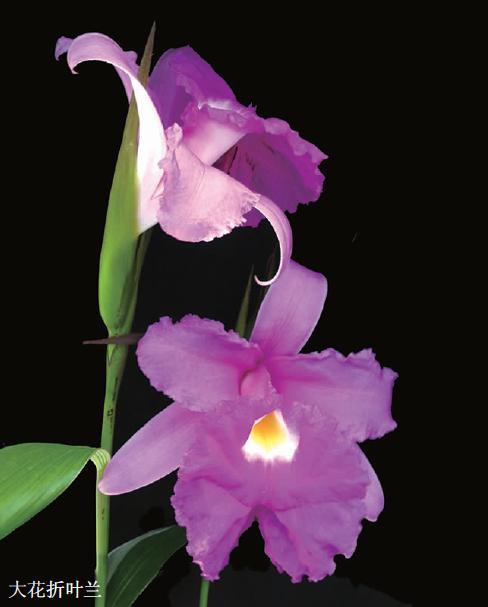
1. Sobralia macrantha
Sobralia macrantha is the most famous among the more than 100 species in the genus Sobralia, native to Central America and Mexico. Sobralia macrantha is an evergreen plant, with stems reaching up to two meters in length; the upright plant together with its pleated leaves is itself highly ornamental. However, the greatest highlight is its flowers: huge and gorgeous blooms that can rival those of Cattleya. The flowering period is from May to October, with flower colors in pink, purple-red and white, and flower diameters reaching 15-25 cm. Although individual flowers have a short lifespan, generally lasting only three days, mature plants usually bear multiple inflorescences, so the total flowering period of a single plant can last more than a month. Sobralia macrantha has become an important commercial flower.
Cultivation points: Sobralia macrantha is suitable for growing in courtyards and greenhouses. It needs light conditions ranging from semi-shade to full sun, maintains 30%-80% humidity, requires frequent watering during the growing season, and should be given an appropriate amount of nitrogen, phosphorus and potassium fertilizer from March to September to help the plant grow and bloom.
2. Mediocalcar decoratum
The genus Mediocalcar has about 15 species, all small and rare epiphytic orchids. Mediocalcar decoratum is a relatively common species in this genus, distributed in the high-altitude regions of New Guinea. Mediocalcar decoratum is a dwarf plant with hard leaves, and its vegetative body often grows attached in a moss-like form. Without a towering stature, its flowers appear even more delicate and charming. The small flowers are about 5-6 mm in diameter; the petals and sepals fuse into a tubular shape, with the lower fused part orange-yellow and the upper part yellow. The flower colors are bright and vivid, and the flowers are densely clustered, looking very much like lit candles, or like small pomegranates hanging on the plant, which is why some people also call it the small pomegranate orchid. A single flower can last 1-2 months.
Cultivation points: Mediocalcar decoratum prefers a low-temperature, high-humidity growing environment, but it is still a type that is easy to cultivate. With careful attention, it can produce abundant and brilliant flowers. When cultivating, pay attention to planting in shallow pots, shading, and maintaining low temperature and high humidity.
3. Brassavola nodosa
The genus Brassavola has more than 20 species, mainly distributed from Mexico to tropical America, growing as epiphytes or lithophytes at lower altitudes. The popularity of Brassavola nodosa began in 1698, when it was introduced from the Americas to Europe and cultivation and propagation began. It is called the Lady of the Night because its white flowers release a wonderful fragrance at night, fresh-scented and slightly similar to the scent of citrus, which can attract moths for pollination. Besides its enchanting fragrance, its white, star-like flowers are another major charm. Brassavola nodosa has a broad lip, pure white color, abundant flowers and a long flowering period; these advantages have made it a favorite of horticulturists and orchid enthusiasts. By crossing the Lady of the Night with orchid plants of the same or different genera, they have already bred more than two hundred new orchid varieties.
Cultivation points: Use a well-drained medium or attach it to bark, provide medium to strong light, 50%-70% humidity, daytime temperature 24°C-29°C, and at night the temperature can be appropriately lowered by 6°C-8°C.
4. Stanhopea embreei
The genus Stanhopea is distributed in the western Andes of Ecuador and Peru, with about 68 species, and consists of epiphytic herbaceous plants. Stanhopea embreei blooms in late spring and early summer; the flower is about 8 cm wide, white, with the petals and the base of the lip yellow. At the base of the lip there is also a pair of eye-like black spots, and the lip has two obvious horns, making it very peculiar. When blooming, it is also accompanied by a unique and wonderful fragrance. Individual flowers have a relatively short lifespan. The inflorescence of Stanhopea embreei grows downward; if there is not enough space for the inflorescence to grow out, it may rot in the medium. Therefore, choose a pot with enough gaps for the inflorescence to grow, and hang the pot so the inflorescence can hang down.
Cultivation conditions: Use a suitable container, avoid direct sunlight, and partial shading can be applied. Keep the daytime temperature at around 25°C and the nighttime temperature at around 15°C-18°C. Water frequently, and maintain air circulation and a certain level of humidity.
5. Ansellia africana
The only species in the genus Ansellia, it grows widely in tropical Africa and often grows as an epiphyte on tree trunks and rocks. It is relatively large in size, with upright stems, and a relatively large panicle that can reach 85 cm. The flowers are yellow with brown spots, looking very much like leopard print; the density of the markings and the depth of color vary greatly among different individuals. Because of this, Ansellia africana is loved by many enthusiasts, and what is even more rare is that its cultivation and management are relatively simple.
In summer, water according to the principle of watering when dry and stopping when wet. After new roots have grown, fertilizer can be applied appropriately to promote its growth and also promote flower bud differentiation. In winter, keep it as dry as possible, which can make the plant stronger and also promote flower bud growth. Ansellia africana usually blooms at the end of the dry season; however, in cultivation it has a special characteristic: with proper management it can bloom at any time of the year, and can bloom several times. This requires giving it enough light, as well as letting it experience a 4-6 week drought period every 6 months.
6. Peristeria elata
The genus Peristeria has more than 10 species, mainly distributed in South America. The most famous in this genus is Peristeria elata, which was chosen as the national flower of Panama in 1980. Peristeria elata is a large terrestrial orchid; the pseudobulb is up to 12 cm tall and slender, and the four leaves can reach up to 100 cm in length, with a leaf width of about 15 cm. The flowering period is from July to August; the inflorescence emerges from the base of the pseudobulb, and the small flowers are 10-15 cm. The flowers are waxy, white, and fragrant. If you look carefully, a small white dove is hidden in the center of each flower; this is the origin of the name Peristeria elata, and for this reason it is regarded as a symbol of peace and purity. In addition, it must be mentioned that the wild population of Peristeria elata is already facing the danger of extinction due to over-collection. Protecting wild Peristeria elata is urgent, and I also hope everyone will not buy wild-collected flowers.
Cultivation conditions: Suitable for cultivation in a mixed medium, moderate temperature (15°C-21°C), maintain 40%-70% humidity, needs sufficient water during the growing season, and partial shading can be applied.
7. Erycina pusilla
Erycina pusilla is mainly distributed in the Americas, growing as an epiphyte at altitudes of 500-950 meters. The leaves are alternate and arranged in a fan shape; the inflorescence extends from the leaf axil, and usually a single flower opens at the tip of the inflorescence. The flower is yellow, the petals have brown markings, the lip has light-colored markings, and there are whisker-like structures on both sides of the column; this is a relatively large difference from Oncidium. A plant usually has multiple inflorescences, and it is very spectacular when blooming. The flower shape is beautiful, like a dancing girl, so it is also called the dancing orchid. Erycina pusilla is a small plant that blooms continuously, with an exquisite appearance, bright colors, and a small footprint, and is deeply loved by people. At present, Erycina pusilla can already be rapidly propagated through sterile sowing, making it a good orchid for home cultivation.
Cultivation conditions: The plant prefers a warmer environment and bright indirect light. It can be grown in sphagnum moss and watered frequently.
8. Aerangis citrata
The genus Aerangis is distributed in tropical Africa and from South Africa to Sri Lanka, and has many species. The greatest characteristic of this genus is its slender spur. Aerangis citrata is native to the island of Madagascar, growing as an epiphyte on trees at an altitude of about 1500 meters. The short stem bears dark green leaves with fine texture, and the leaves often have an unequal two-lobed notch. The flowering period is from spring to autumn; the inflorescence emerges from the leaf axil, about 40 cm long, and droops. There are 12-30 small flowers, pale lemon-green to white, arranged in the same plane, with a slender spur about 2.5 cm long. Although the flowers are not large, they are numerous, neatly arranged, and have a faint lemon fragrance, with a flowering period that can reach half a month, so their ornamental value is very high.
Cultivation conditions: It can be cultivated using media such as sphagnum moss and bark, or tied to a tree fern board. Maintain relatively high air humidity. The temperature is between 10°C and 33°C, making it a type that is easy to cultivate. Jishan Huayao