The detailed steps of flower arranging are actually like this
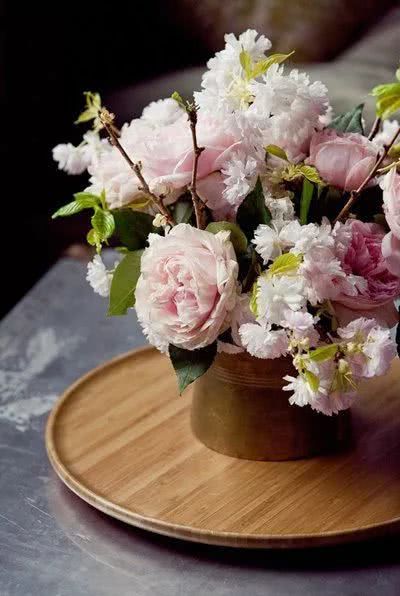
Flower arranging, which can also be called the art of flower arranging, is the practice of placing flowers in containers such as vases, dishes, and pots, rather than planting them in these containers.
The floral materials used, whether branches, flowers, or leaves, are all without roots, being only parts of the plant body, and they are not arranged randomly. Instead, materials are selected according to a certain concept, following certain creative principles, and arranged into a beautiful form (shape), thereby expressing a theme, conveying a feeling and mood, delighting the eye and pleasing the mind, and giving people spiritual beauty and joy.
Chinese flower arranging is an ancient traditional cultural phenomenon, mostly to satisfy subjective and emotional needs, and it is also a special way of entertainment in daily life. Flower arranging originated from the ancient folk love of flowers, growing flowers, admiring flowers, picking flowers, giving flowers, wearing flowers, and pinning flowers in the hair.
Flower arranging, although it can be done as one pleases, still requires attention to the main steps. Flower arranging mainly has the following six major steps.
1. Choose the right flowers for arranging
Commonly used flower arranging materials mainly include tree peony, Chinese peony, gladiolus, Chinese rose, rose, chrysanthemum, iris, sweet willow, rose, lotus, tree peony, and so on.
2.Ensure the quality of the flowers
That is, cut them off with sharp scissors before the flower buds have fully bloomed. If buying flower branches at a flower shop or flower market, choose ones that are about to bloom, fresh and lively, free of pests and diseases, and complete with both flowers and leaves.
3. Choose a good vase
The vase should be simple and rustic, generous, elegant, and clean, and its shape and size should match the flower branches.
To keep it stable, you can put a few small stones at the bottom of the vase to avoid being top-heavy, and they can also serve as decoration.
4. Pay attention to water quality
The water used for flower arranging is best "rainwater". If tap water is used, it must first be placed in a jar and left to stand for three days before use. The water in the vase cannot be left unchanged once and for all, and should be replaced every day; at night, the vase can be moved outdoors to receive the nourishment of rain and dew.
5. Pay attention to special treatments
For example, for tree peony, Chinese peony, and others, before placing them in the vase, the base of the flower branch can be scorched with a match, which can make them bloom for several more days. Also, if roses are kept in sucrose water, they can remain fresh for 9 days.
6. Design the shape
Flower arranging has principles but no fixed formula, so we can freely give play to our creativity as needed.
The flower branches can be arranged with one kind or two or three kinds, achieving spirit and color, clever matching, and proper placement.
In this respect, predecessors once summarized the experience as follows: "One branch and two branches upright, three branches and four branches slanting; better upright than curved, compete in clarity rather than luxury."
Tang Sanzang traveled west to obtain the scriptures and had to endure 81 trials before achieving the true fruit. We only need to go through these six steps to have a beautiful flower arrangement. Let's get started together.
If you also like growing flowers, then follow us!