If your succulent shows this seemingly ordinary situation, never take it lightly
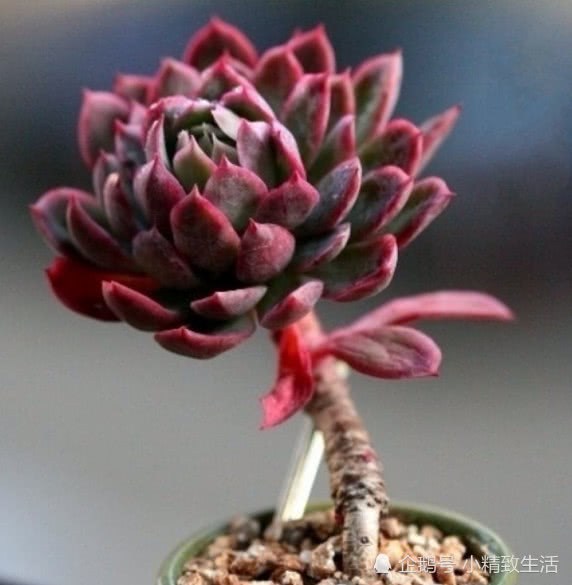
Many beginner friends, during the process of caring for succulents, will notice that some succulents have somehow tilted to one side, and some friends may not take it seriously. But in fact, when a succulent tilts, it is very likely that a problem has appeared, and it is sending you a "cry for help." We must never take it lightly; we must carefully analyze and see whether something has gone wrong somewhere. Next, Little Exquisite Life will take a look with everyone at the reasons why succulents send out this kind of "cry for help" signal when they tilt.
1. Uneven light
The vast majority of plants need to carry out photosynthesis, so most plants need light. Succulents are no exception. Especially for indoor succulents, because only one side has light, they will strive to "stretch their heads" toward the sunny place to bathe in the sunlight. If you find that a succulent is growing leggy and striving to grow in one direction, you need to turn the flowerpot to another direction so the succulent receives light evenly. But this is not the best method either. The best solution is to move it to a balcony or, if conditions allow, simply grow it outdoors, because most succulents are not suitable for being grown indoors.
2. Top-heavy
As succulents gradually grow up, the lowest leaves will gradually dry up and fall off, and in some cases the leaves have been plucked too aggressively, turning the succulent into a bare-stemmed commander and creating a "top-heavy" state. At this time, if the potting soil is loose and too light, then it is very easy to cause the succulent to tilt to one side. When this happens, you can make a support to prop up your succulent, or simply repot it, refill the soil, and use weighty granules to stabilize it, and by the way check the roots. Also note that you should not pluck the leaves too aggressively.
3. Plant disease and pests
When pests or diseases occur at the roots of a succulent, such as being hollowed out by insects, or root rot, and so on, the roots no longer have supporting strength, and tilting will also occur. When this happens, you need to behead it or remove the rotten parts, disinfect it again, let the wounds heal, and then replant it in a pot.
In short, when a succulent tilts, you must never take it lightly. You need to quickly check and analyze what exactly the cause is and then take corresponding measures. If you choose to ignore it, the consequences may be beyond what we can predict.
The above was compiled and published by Little Exquisite Life. We hope it is helpful to everyone.