Chinese Hackberry Bonsai: The Novel Indoor Bonsai You Never Knew About
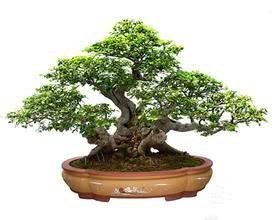
When I heard about Chinese hackberry bonsai, my first reaction was to think of the singer Pu Shu. As a plant, the Chinese hackberry is equally famous, and it is fairly common in the middle and lower reaches of the Yangtze River.
We can start with the everyday care of the Chinese hackberry, beginning with watering. Normally we water once a day; in summer, when it is muggy and water evaporates quickly, we can water twice a day. And in winter, when the water requirement is not especially high, we must not forget it either. Of course, this is not the standard for its watering; it mainly depends on how it is growing day to day. Since we have mentioned watering, water and fertilizer go hand in hand, so let's talk about fertilizing. There is no need to worry too much about this. Generally, we fertilize once every half a month, and then in autumn, when it is fairly mature, we give it one more round of fertilizer, which also lays a foundation for the next year's growth.
It is not very demanding about soil and can adapt to somewhat poor soil. That said, when conditions allow, fertile soil is undoubtedly more favorable for its growth. As a bonsai, we need to display it for people to appreciate, so during this period we have to artificially enhance its beauty. This requires pruning, and pruning is a very important part that cannot be neglected; it must be done carefully, because over-pruning may leave it deformed, while failing to promptly cut away the bad and damaged parts not only affects its beauty but also hinders its growth. This process requires a certain degree of craftsmanship.
Now let's talk about its value. All bonsai have ornamental value, so the Chinese hackberry can be planted in gardens for people to admire. Of course, it can also be used to green roads. It is fairly resistant to certain harmful gases, so it can effectively absorb those harmful gases and remove dust; therefore it is often planted along city roads or in industrial areas, and it is an indispensable member of urban construction. Its wood is fairly hard, so it can also be used in industry as artificial fiber and the like. In addition, it also has medicinal value and can be used as a Chinese herbal medicine to disinfect and relieve pain, and to reduce fever and disperse toxins.
Different plants carry different meanings, just as different flowers have different flower languages. The meaning of the Chinese hackberry is especially easy to guess: just from its name, we should be able to guess that its meaning is a symbol of plainness and simplicity.
This is the Chinese hackberry bonsai. It represents plainness, a symbol of character. In an age of material abundance, we still must not forget our original heart, and we must not abandon the quality of plainness.