How can farmers solve the problem of watering potted orchids?
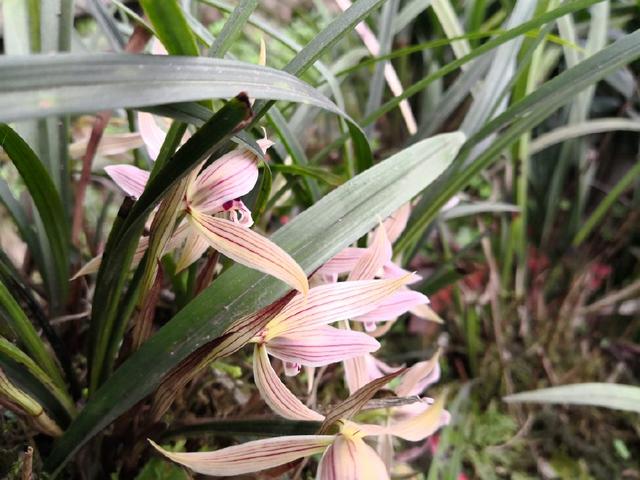
As the saying goes: "Water once, grow a stretch." Orchids depend on water for growth, and whether watering is done well or poorly affects orchid growth. During the sprouting season, proper watering may lead to more sprouts. On every day of orchid growth, if watering is done properly, the orchids will even grow faster.
Different environments require different amounts of water. Different orchid pots also require decisions based on the growing medium, as well as different amounts of light, to determine how much water to give. It cannot be generalized, and there is no way to explain it uniformly. It cannot be specified down to how many drops of water per watering, or how many seconds per watering. As for the amount of water, each of us has our own experience, and this experience cannot be passed on accurately either. It requires continuous exploration.
If the environment has good ventilation and the orchid growing medium is loose, you can choose to use a more water-heavy method of growing, which means watering more, watering frequently and heavily. During the growing period, generally water thoroughly once about every three days. Watering this way will also make orchids grow faster, with faster maturity and a higher sprouting rate.
It is impossible to explain the specifics clearly, and it still has to be chosen according to the selected medium ratio, the cultivation environment, management habits, the condition of the plant's seedlings, whether the weather is cloudy or clear, and other specific factors. When farmers grow orchids, most tend toward slightly drier management (the so-called "dry for orchids, wet for chrysanthemums"). They often do not water, or rely on a good environment and high humidity, and may even go a long time without watering once. Therefore, most orchids grown by farmers grow slowly, which affects the time to maturity and the sprouting rate. However, orchids are less prone to disease, and the root system is also robust. Even when divided, transported, or repotted, they are more likely to survive.
How can the problem of watering orchids be solved? In fact, what was said above has basically already explained it clearly. But if you are a beginner with strong curiosity and insist on getting to the bottom of things, then it really is a case of a scholar meeting a soldier, where reason cannot be explained clearly. No matter how it is explained, it cannot be made specific and clear. The key is still practice! Practice is the only criterion for testing truth!