10 common herbaceous flowers that you can root from cuttings right now, and build a small garden without spending money
Many beginners think that taking cuttings is a very high-end skill that only veteran gardeners can handle, and that novices can only stare helplessly! But that is not actually true. Even if it is your first day growing flowers, you can take cuttings! Do not believe it? Try growing these 10 flowers below!
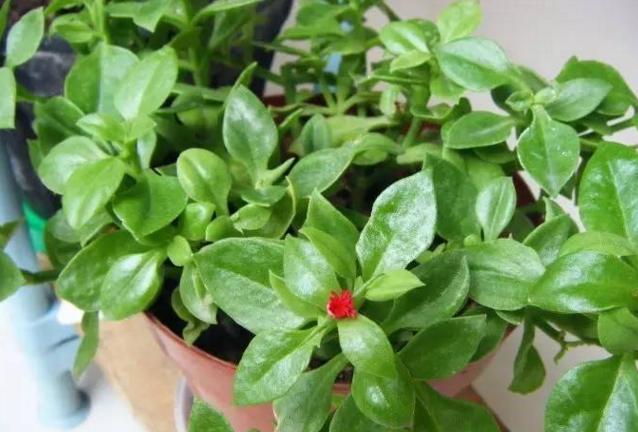
1. Heartleaf ice plant (Aptenia cordifolia)
Cutting time: spring and autumn
Cutting temperature: 15-20°C
Heartleaf ice plant is generally propagated by cuttings, mostly carried out in autumn, and it roots very easily.
Cut a mature branch, let it dry slightly, then insert it into the prepared potting soil, place it in a cool, ventilated spot, and keep the soil moist. After a few days you will see the branch stand upright, and the cutting will begin to root and sprout.
Heartleaf ice plant cuttings
Rooted branches
2. Dahlia
Cutting time: June-August
Cutting temperature: 20-28°C
Dahlia cuttings can be taken together with the removal of side shoots.
1. When the side shoot grows to 15 to 10 cm, cut off the side shoot, making sure the side shoot has 3 buds.
2. Keep the upper two leaf buds, and for the lower leaf buds, cut off the leaves at the base.
3. Insert the cutting into the soil, cover with soil up to the second bud, water thoroughly, and shade it.
4. Spray water morning and evening, keep soil humidity at 90%, and roots will form after about three weeks.
Successfully rooted dahlia
3. Chrysanthemum
Cutting time: April-May
Cutting temperature: 18-20°C
Chrysanthemums are usually propagated by cuttings, which are further divided into bud cuttings, softwood cuttings, and leaf-bud cuttings. In daily life we generally use softwood cuttings for propagation.
1. From April to May each year, cut 8-10 cm of young chrysanthemum shoots as cuttings.
2. Remove all the leaves from the lower part of the cutting, keeping only the upper leaves.
3. For the cutting medium, vermiculite, perlite, or coarse sand is preferable. Insert the cutting into the medium.
4. At a temperature of 18-20°C, most varieties root in about 3 weeks, and after about 4 weeks they can be moved into pots.
Cutting the shoots
Preparing the cuttings
Taking cuttings
4. Coleus
Cutting time: spring, summer
Cutting temperature: 18-25°C
When taking coleus cuttings, water propagation is mostly used.
1. Prepare a container; a glass cup or plastic bottle will do.
2. Cut a cutting: choose a coleus with a thick stem, about 10 cm, keep only 1-2 nodes at the base, and cut off the lower leaves.
3. Put the prepared cutting into the container, with water preferably covering 3-4 cm of the cutting.
4. Place the container in indirect light and change the water about every 2-3 days.
At 18-25°C, white roots can be seen in about one to two weeks.
Coleus rooted in water
5. Goldfish plant (Nematanthus gregarius)
Cutting time: spring, autumn
Cutting temperature: 20-25°C
The goldfish plant is named for its flowers that look like goldfish, and it is deeply loved by people.
1. The best time to take goldfish plant cuttings is in spring and autumn.
2. When taking cuttings, choose healthy, robust branches as cuttings, cut them to a length of about 10 cm, and insert the cuttings into the medium.
3. The best medium is river sand or a mix of peat, perlite, and vermiculite.
After cutting, pay attention to moisture retention; you can cover with a bag or spray water frequently. Roots form in about three or four weeks. After rooting and growing new shoots, pinch promptly to encourage side branches to sprout and maintain a good plant shape.
6. Dianthus
Cutting time: October, February-March
Cutting temperature: 10-15°C
1. Select cuttings from mother plants that grow robustly, bloom uniformly, and have thick, short-jointed branches.
2. From the middle of a strong branch, choose a short, thick side shoot, 3 to 4 cm long.
3. Insert the cutting into a loose, airy medium, with the cutting depth about one-third to one-half of the cutting.
4. After inserting, water thoroughly and keep at 10-15°C.
At the beginning of rooting, shade it on clear days to avoid strong light; generally about 2 weeks of shading is enough. The cuttings root in about 30 to 45 days, and generally after the seedlings have survived for 1 month they can be transplanted.
7. Mint
Cutting time: May-June
Cutting temperature: 15-25°C
Mint is both attractive and edible, and is deeply loved by everyone, so how should mint be propagated by cuttings?
1. Cut mint cuttings, each about 10 cm long.
2. Remove the leaves from the lower part of the cutting and insert it into the medium.
3. After it roots and sprouts, transplant the plant into a flowerpot.
Mint cuttings
8. Swiss cheese plant (Monstera deliciosa)
Cutting time: spring, ball
Cutting temperature: 25-27°C
The Swiss cheese plant can be propagated by stem-node cuttings in both spring and autumn, with the best results in spring from April to May and in autumn from September to October. This is because the temperature during these periods is suitable for the stem-node cut surfaces to heal and root, so they survive quickly.
1. For the cuttings, select current-year side branches with substantial stem tissue and robust growth. The cuttings should be 20-25 cm long. Cut off the leaves at the base, keep the small leaves at the upper end, cut off the long aerial roots, and keep the short aerial roots.
2. Use a mixed medium of coarse sand and peat or leaf mold for the cutting bed.
3. After cutting, maintain 25-27°C and relatively high air humidity.
Rooting only begins about 1 month after cutting, so everyone needs to wait patiently.
9. Chinese peony (Paeonia lactiflora)
Cutting time: June-July
Cutting temperature: 20-25°C
I wonder if everyone can tell the difference between tree peony and Chinese peony. In fact, one big difference is that tree peony is woody, while Chinese peony is herbaceous. Now let us look at how to take Chinese peony cuttings:
1. Cutting medium: mainly river sand, perlite, and vermiculite.
2. Select cuttings 10-15 cm long, each with at least two nodes, and cut off the leaves at the lower nodes.
3. When cutting, insert into the medium to a depth of about 5 cm. After inserting, water thoroughly, wrap with plastic film, and keep humidity between 80-90%.
In about three or four weeks, the Chinese peony will root and form dormant buds. After rooting, reduce watering and gradually remove the plastic film.
10. Carnation
Cutting time: spring, autumn
Cutting temperature: 10-25°C
The best season for carnation cuttings is from autumn to early spring; high summer temperatures easily cause root rot.
1. For cuttings, side shoots are best, and the side shoots must be robust and free of pests and diseases.
2. For the cutting medium, pure perlite and pure vermiculite are best. If the weather is very cold, ordinary nutrient soil is also fine, because in cold temperatures the soil is less likely to develop bacteria.
3. For cutting containers, small flowerpots or disposable water cups with holes punched in the bottom are both fine.
After cutting, spray enough water, and afterward control the soil so it does not become too wet, otherwise root rot easily occurs.
Of course, dear, if you want to learn more gardening knowledge or have questions about plant care, you can follow the editor! O(∩_∩)O haha~