North America's notorious harmful weed became a good medicine for treating diseases after invading our country
 Friendly reminder: Hemu Report aims to share and popularize information about various plants and their uses, for reference only. If medicinal use is needed, it is recommended to consult a professional physician to avoid problems!
In rural areas there is a saying, "Wild grasses are treasures." I believe many friends who have lived in the countryside have felt this deeply, especially those wild grasses that can be eaten as wild vegetables, as well as the wild mushrooms in the mountains and forests, all of which are treasures. However, there are still many wild grasses that annoy farmer friends, namely invasive alien wild grasses, because most of these invasive alien wild grasses are destructive, especially to crops. Below, the author introduces one of them.
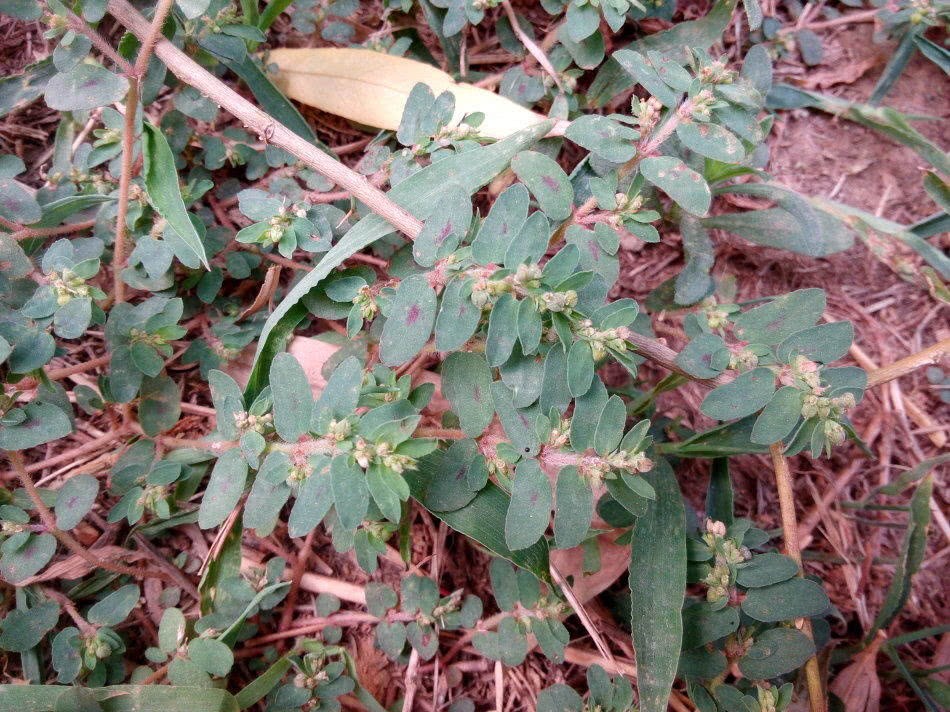
Whenever spring arrives, all kinds of wild grasses begin to grow in front of and behind rural houses, in vegetable gardens, along roadsides, in farmland, and in mountains and forests. Most farmers do not pay attention to wild grasses growing in other places, but the wild grasses growing in farmland are what farmer friends care about most, because these wild grasses harm crops, and farmer friends pay very close attention to them. As soon as they are discovered, they are uprooted. Among them, one wild grass gives many farmer friends who grow crops headaches and makes them hate it: spotted spurge.
Spotted spurge is one of the field weeds that many farmer friends hate. It is a wild grass native to North America, and in North America it was already a very "notorious" harmful weed, listed on the North American continent as one of the most common and most difficult-to-mow weeds in farmland. Spotted spurge invaded our country around 1940. It likes to grow in farmland. Its roots and stems are well developed, it grows close to the ground, reproduces quickly, and is very difficult to remove. If not pulled out in time, it easily spreads. It is a "malignant weed" in fields of dry-season crops such as peanuts, so it is often hated by farmer friends, who pull it out whenever they see it.
However, such a hateful harmful weed in fields also has considerable uses. Previously, the author also always thought that spotted spurge had no use other than harming crops. Later, an old farmer in the village told the author that spotted spurge is actually also a very good Chinese herbal medicine.
The author also consulted relevant materials. According to "Common Chinese Herbal Medicines of Shanghai," the whole plant of spotted spurge can be used as medicine, and when used as medicine it is also called "blood tendon grass." Its taste is pungent and its nature is neutral, and it has the effects of stopping bleeding, promoting urination, strengthening the stomach, invigorating blood, and detoxifying. It can be used to treat jaundice, dysentery, diarrhea, urinary tract infections, blood in the stool, blood in the urine, uterine bleeding, hemorrhoid bleeding, infantile malnutrition, bruises and swelling, blocked breast milk in women, snake bites, head sores, skin sores and toxins, traumatic bleeding, and many other symptoms, so it has also become a good folk medicine for treating diseases.
Therefore, although spotted spurge is very hateful, it still has considerable value. As long as it is used in the right place, its value changes.
The author reminds: Although spotted spurge has quite good medicinal value, it also has a small problem, namely that the whole plant of spotted spurge is toxic. Therefore, the author suggests not using spotted spurge casually, and it is best to consult a professional physician to avoid problems.
Friends, have you seen spotted spurge? You are welcome to leave a message and exchange views!
Text/Hemu Report, Images/Internet. If you like Hemu's articles, you are welcome to follow.