How to prevent and treat black spots on orchid leaves? Practical methods shared
Promote Chinese orchid culture, spread orchid knowledge
As temperatures rise, the peak season for black spot disease is approaching again, and preventing black spots on orchid leaves is urgent!
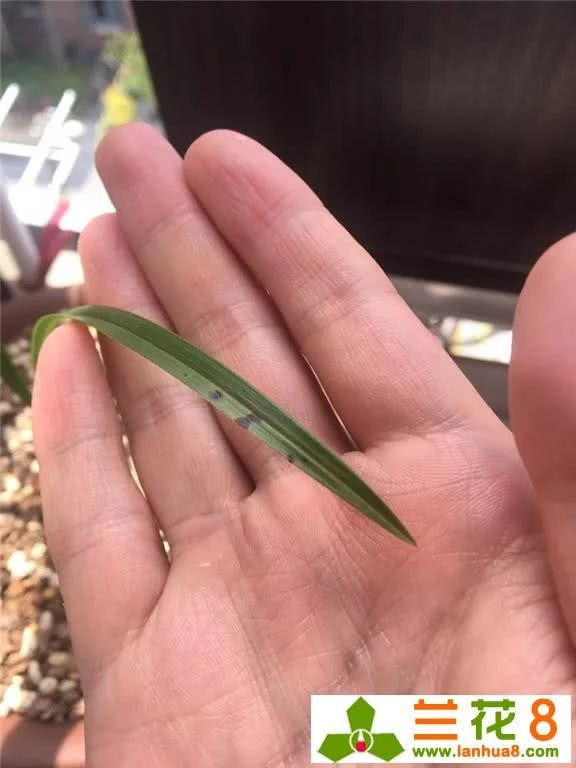
Symptoms
The pathogen mainly infects orchid leaves. Diseased leaves first show small brown spots that rapidly expand into round or semi-circular dark brown patches, often surrounded by a water-soaked light yellow halo, with a diameter of 1-17 mm. Later, the center of the diseased area gradually fades, becoming a lesion with a light brown center and dark brown edges. Both the front and back surfaces of the infected areas bear pale brown to grayish-white blister-like small protrusions. In humid environments, honey-yellow granular substances emerge, which are the conidial clusters of the pathogen. Lesions tend to occur on leaves in the middle and lower parts of the plant. The leaf tissue between lesions loses its green color and turns yellow. Multiple lesions can merge into large patches, easily causing the leaf sections above the patches to dry up or even the entire leaf to die.
Pathogen
Orchid black spot disease (Cylindrosporium phalaenopsidis) is caused by infection from Cylindrosporium dioscoreae, belonging to the Deuteromycotina, Coelomycetes, Melanconiales, Melanconiaceae, Cylindrosporium genus. The conidial acervuli of the pathogen mainly form on the upper surface of leaves, initially embedded beneath the epidermis, later breaking through and becoming exposed, with a diameter of 129-257 micrometers. The conidiophores are colorless, short and small, branching only at the base, with 0-2 septa, cylindrical, producing spores through inner wall budding. The conidia are colorless, thin-walled, filiform, straight or slightly curved, measuring 20.4-45 x 1.4-2.4 micrometers (Figure 2). The optimal temperature for pathogen growth and development is 20-25°C, but at around 10°C the spore germination rate can still reach 50%.
Disease patterns
The orchid black spot pathogen overwinters as mycelium or conidia within diseased tissues. In Guangzhou, it begins producing conidia for invasive transmission in mid-December each year. The following February to March is the epidemic period of the disease. If there is continuous rain, heavy fog, and little sunshine, the disease is most severe. After May, when temperatures rise to 30°C, the disease subsides and stops spreading. The pathogen can infect various orchid species such as Cymbidium sinense, Cymbidium goeringii, Cymbidium ensifolium, Cymbidium faberi, Calanthe discolor, Phalaenopsis, and Vanda concolor. It can also harm Hippeastrum, spider plant, and Reineckea carnea.
Prevention and control methods
1. Strengthen quarantine, especially origin quarantine. Select disease-free seedlings to control disease spread.
2. Remove diseased orchid leaves and fallen leaves. Promptly prune lesions from the middle and upper parts of orchid leaves and burn them in a centralized manner.
3. Spray 1% Bordeaux mixture twice before disease onset in early December, once every 10-15 days. During the disease period, choose 40% Miebingwei 600-700 times dilution, or 45% ShibaoKe 1000 times dilution, or 50% mancozeb 1000 times dilution. When spraying, ensure even coverage on both the front and back surfaces of leaves. Spray once every 7-10 days, continuously multiple times. Alternating fungicides gives better results.
Prevention and control
Choose a good orchid growing site. Choose a location with good air circulation and no pollution as the orchid site. The surroundings of the orchid site should preferably have trees, a water pool, and multiple small water jars to help increase air humidity. Use bamboo blinds for the shade shelter, with shade netting placed on top. The shading degree should preferably be automatically adjustable, opened in the morning and evening for ventilation. The spacing of orchid pots should be appropriate to allow air circulation.
Keep the orchid site clean and hygienic. Regularly clean up withered orchid leaves and weeds in pots. When dividing orchid clumps or purchasing new orchid seedlings, disinfect with thiophanate-methyl, dry them, and then plant. Growing media (humus soil, pond mud, charcoal, etc.) must be sterilized at high temperature or sun-dried before use to prevent bacteria from entering orchid pots (the site).
Cultivate robust orchid seedlings to enhance disease resistance. Fertilizing and pest control must be carried out according to plan. During the winter dormancy season of orchids, spray a mixture of thiophanate-methyl, carbendazim, and buprofezin on leaf surfaces more than 3 times. This both eliminates pests and kills pathogens, which helps new seedlings grow vigorously in spring. After that, spray thiophanate-methyl and carbendazim once every 20 days. Combined with proper fertilization, orchid plants become robust with strong disease resistance and are less prone to black spot disease.
Master the seasons for timely prevention and control. Black spot disease is highly prone to occur during the plum rain season each year, especially when long periods of rain turn to clear weather. Spray pesticides promptly for prevention and control. During the sprouting stages of orchids in spring and autumn, new seedlings have poor disease resistance, so chemical prevention and control should be strengthened.
Frequently observe orchids to prevent disease onset. Regularly observe the growth of orchid seedlings. Once diseased leaves with black spots are found, promptly prune and destroy them in a centralized manner. Clean up the surrounding environment and strengthen ventilation. During high temperature and high humidity weather, spray carbendazim or thiophanate-methyl at 600-800 times dilution, once every 15 days, for 3 consecutive times, which can suppress the occurrence of black spot disease.
Orchid Bar, your good teacher on the journey of growing orchids
If the orchid knowledge we publish has been helpful to you, we hope you can give it a like or click the top right corner to share it with your friends! After following this official account "Orchid Bar", you can ask your orchid questions online and get answers. Send the number "8" to buy orchids, send "6" to sell orchids, and send "1" for online zero-inventory orchid consignment sales!