Ailanthus: Though It Stinks, Its Practical Value Is Very High, Part Two
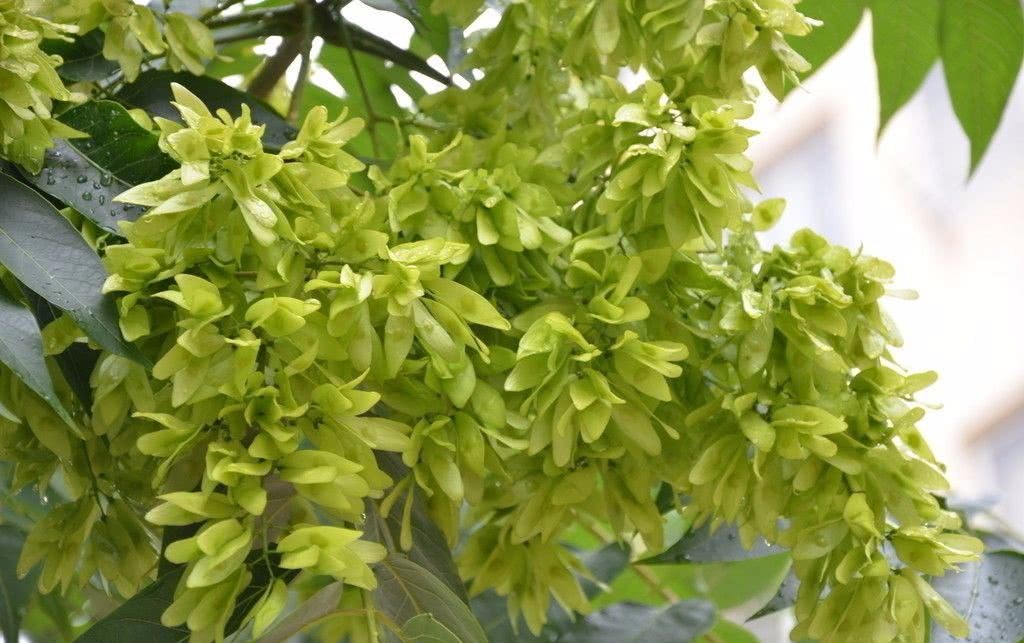
Ailanthus has extremely strong adaptability. Apart from clay, it can grow in all other kinds of soil, whether neutral, acidic or calcareous. Moreover, ailanthus is cold-resistant, drought-resistant and tolerant of poor, thin soil; it has a deep root system with well-developed roots, grows rapidly, propagates easily and suffers few pests and diseases. At the same time, it is also tolerant of saline-alkali soil. Such ailanthus can conserve soil and water on barren hills, loess hills and rocky mountain areas, and it is also an excellent tree species for saline-alkali land.
Besides these benefits, ailanthus also has strong resistance to smoke and dust, sulfur dioxide, chlorine, hydrogen fluoride and nitrogen dioxide. And these are precisely the main emissions from industrial and mining areas, so ailanthus is a very suitable tree species for greening industrial and mining areas. Not only that, ailanthus has a dignified posture, a straight and tall trunk, and luxuriant branches and leaves; in spring its young leaves are purplish red, and in autumn red fruits fill the tree. It is both beautiful and able to green the environment, so it can serve as a landscape tree, an ornamental tree and a street tree.
So far, that is all this editor knows about the value of ailanthus. With so many great uses, although this plant smells bad, its value is enough to make up for this shortcoming. For example, in India, the United Kingdom, France, Germany, Italy, the United States and other countries it is much appreciated and is often used as a street tree. Our country could also plant a bit more of it! It can both increase the economy and protect the environment, greening and beautifying barren hills, industrial and mining areas (and other places too).