Moss rose is so beautiful; combined like this, every flower color becomes even more vivid and striking.
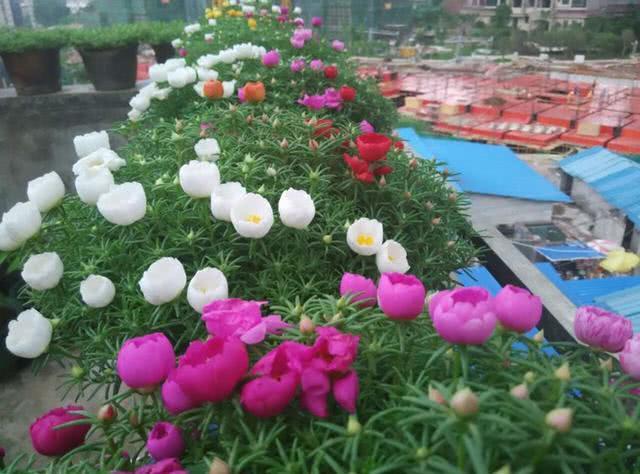
Moss rose, also known as creeping pine-leaf peony or purslane, is a perennial flower of the genus Portulaca in the purslane family, often grown as an annual. It likes a warm, sunny and dry environment, and blooms when it sees sunlight. In the south, the flowering period runs from May to November.
There are many varieties of moss rose. This year I only grew two varieties. One variety is the PanAmerican double-flowered Happy Hour moss rose; I bought seeds online and raised them into seedlings, buying eight colors in total, and planted them directly upon receipt in large clay pots 24 cm in diameter, with three plants per pot, using chicken manure and organic compound fertilizer as the base fertilizer. After planting, I watered once with a root-setting watering using the imported fungicide Liangdun; this product can prevent and control root rot, then I placed them in a shady spot to recover for two days, and on the third day they could be moved out to the outdoor terrace for care.
Seven days after planting, they can be fertilized. Because it rains often and the potting soil is very moist, I sprayed a 1:1000 organic nutrient solution every three or four days, and when the potting soil was dry I also watered with the 1:1000 solution. When the seedlings grow to 5 cm long, they can be pinched back, leaving 4 cm and removing the top 1 cm. Each pinching should be done uniformly within one or two days, so that later the flowers will easily bloom at the same time, and only then will they fill the pot; keep pinching until the pot is full.
When there are many flower buds, you can apply flowering fertilizer, also spraying or watering with a 1:1000 flower-promoting nutrient solution, once every three or four days. After the flowers fade, pull off the petals; this improves the ornamental effect, and in addition a second and third flower bud will grow from below the petals.
The other variety, the perennial moss rose, was also bought online as cuttings, with seven colors of double flowers and six colors of single flowers. Upon receipt, I planted them directly in large clay pots 24 cm in diameter, with twenty-four plants per pot, using chicken manure and organic compound fertilizer as the base fertilizer. After planting, I watered once with a root-setting watering using the imported fungicide Liangdun; this product can prevent and control root rot, then I placed them in a shady spot to recover for two days, and on the third day they could be moved out to the outdoor terrace for care.
Seven days after planting, once they have rooted, they can be fertilized. Because it rains often and the potting soil is very moist, I sprayed a 1:1000 nutrient solution every three or four days, and when the potting soil was dry I also watered with the 1:1000 nutrient solution. When the seedlings grow to 7 cm long, they can be pinched back, leaving 5 cm and removing the top 2 cm. Each pinching should be done uniformly within one or two days, so that later the flowers will easily bloom at the same time, and only then will they fill the pot. During the seedling stage, pinching three times is enough. When there are many flower buds, you can apply flower-promoting nutrient solution, also spraying or watering at 1:1000, once every three or four days. From planting to filling the pot takes only fifty days. Fellow flower lovers, moss rose is truly worth having in summer.