A restaurant in the forest uses an entire island as its ingredient, with food truly sourced from nature
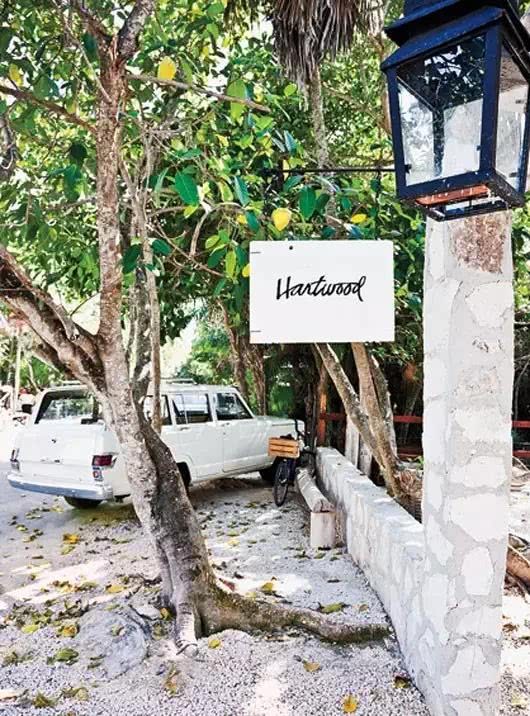
Many restaurants tout concepts like "locally sourced ingredients," "sustainable development," and "green," but the one that truly implements this 100% is the currently popular Hartwood restaurant.
This restaurant is located in a small seaside village in Tulum, Mexico.
Located on the Yucatan Peninsula, 90 minutes south of Cancun, Tulum is a small village on the edge of the jungle with not much development. Because of its beautiful natural environment, azure sea, white sand beaches, and the wild charm of the jungle, it attracts many city dwellers to vacation here and enjoy its charm far from the hustle and bustle.
In 2009, Eric Werner, who worked as a chef in New York, and his wife Mya Henry also came to this untouched place for a vacation. After a wonderful week, the two returned to their daily lives in New York.
They asked themselves a big question: What if we just stayed in this beautiful village and never left?
Unlike other people's New Year's resolutions such as losing weight, making money, or getting fit, this young couple's New Year's resolution in 2010 was: to open a restaurant in the jungle of Tulum.
"I've always wanted to open a restaurant that truly goes from ocean and farm to table," said Eric, the chef.
"With abundant fishing grounds, beautiful Maya culture, and farms using traditional farming methods, Tulum is truly a great place to put our ideas into practice. The restaurant we want to open must be 100% supportive of sustainable development," said his wife Mya.
True to their word, they quit their jobs in 2010 and put all their savings into this piece of land on the edge of the Mexican jungle. They spent seven months visiting local farmers and fishermen, learning about ingredients, and personally designing and building their ideal restaurant.
To practice 100% sustainability, Eric and Mya traveled around to find old items, furniture, kitchenware, and more that had been discarded at recycling centers. After repairs, these items were all very usable.
In this place by the jungle with abundant sunlight, natural cool breezes, green shade, and a comfortable climate, Eric and Mya believed there was no need for fashionable or clever architectural design. Sitting outdoors to dine was the most comfortable, the open air was the most beautiful, and at night one could even enjoy a sky full of stars.
They built a natural wood-fired oven and used the inexhaustible firewood from nature to cook.
"An oven with 2000 years of history can make all kinds of delicious dishes. It is not inferior to modern technological oven designs at all, and is even better to use," said Eric.
Opening a restaurant in a jungle lacking electricity, Eric used solar panels to obtain all their energy. Apart from ice cubes and clean water, which needed to be transported in from outside, they tried to be as self-sufficient as possible with water and electricity.
"We designed a composting system. All kitchen waste is recycled into fertilizer that nourishes the land," said Eric.
With abundant fishing grounds and fertile farms nearby, rich ingredients could be provided every day. Throughout the year there were always fresh and different ingredients for Eric to work with.
Every morning, Eric, who has three small boats, hires eight local fishermen. These indigenous people still use environmentally friendly fishing methods. Eric, who enjoys outdoor sports, sometimes goes out to sea with them as well, rowing boats to the Caribbean Sea and the lagoon of Boca Paila just like traditions hundreds of years old, catching the fish the restaurant needs for the day.
"Never catch too many fish. The fishermen still use traditional Maya cultural fishing methods, catching with spears and handlines," said Eric.
The bar attached to the restaurant uses only locally produced fruits and vegetables, and Mya is in charge of this bar.
"Nothing is poured out of a box or bought from a juice barrel. We use freshly squeezed fruits and vegetables to make all our drinks," said Mya.
Cooking with a wood-fired kiln gives dishes many flavors that an electric oven cannot provide. For example, one of the customers' favorite dishes, honey pineapple roasted pork ribs, is slowly baked at night using the residual heat left in the kiln.
Eric and his wife's life is no longer like their life in New York, where they could only seek balance in life amid busy work every day. Now they have a baby. Every day from 5 a.m. to 11 p.m., whether foraging with villagers, fishing, or researching ingredients, planning, and cooking on their own, they are simply living happily. It cannot be called work or leisure.
"Dishes made by slow living simply have a different flavor," said Eric.
"I am in a state of excitement every day. There is no boring moment, because the villagers always bring me new ingredients. These ingredients mean new challenges for the taste buds. I always have many ideas. For a chef, this is truly the most satisfying treasure."
It has already been six years. Now Hartwood restaurant has almost achieved the sustainable operating model that Eric and Mya promised at the beginning. Their operation has not placed any burden on the environment. They use a hunting method that respects natural reproduction, buy products and meat directly from farmers and producers, adopt pollution-free solar energy, and build lasting relationships with community workers.
This restaurant created by the husband-and-wife team has constant daily reservations and has become one of the most inspiring restaurants in the world.
Now that they have become famous, the two are not in a hurry to expand the business. Instead, they spend time writing a book, turning their philosophy into words and pictures that can influence more people.
In modern society, which ceaselessly pursues growth, humans pollute the environment, exploit farmers and laborers, drive species to extinction, and even produce food through genetic modification for the sake of money and wealth. Human nutrition is imbalanced, and the relationships between humans and nature, humans and the land, humans and objects, and even between people have reached their most tense moment.
Eric and Mya's restaurant is not just a place for us to taste delicious food, but also offers us a lifestyle and set of values for living in harmony with nature.
Just as Alain de Botton said in The Art of Travel: "If a person spends their life in nature, their character will change considerably. They will no longer be competitive, envy others, or feel anxious. After too much contact with people, one should look at more scenery in order to purify a complicated and sensitive mood."
This couple, living in seclusion in the jungle, made a major life decision back then to leave the big city and return to nature. They practice a sustainable lifestyle, and nature has rewarded them with abundant spiritual nourishment. They no longer scramble for every gain in life, and no longer sink into meat-grinder-like interpersonal relationships.