African Violet Potted Plant Care for Beginners and Tips to Encourage Reblooming After Flowers Fade
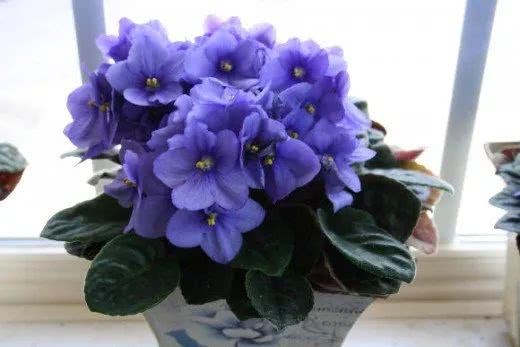
African violets are small potted plants that tolerate a little shade, but if they are kept in a spot with no light at all, they will very likely fail to bloom again. African violets need about 3 to 8 hours of diffused light each day to encourage continuous blooming throughout the year.
African violets are very beautiful and fresh-looking potted plants with excellent ornamental value. They come in different flower colors and can thrive under a variety of environmental conditions. They are fairly inexpensive and tolerate some shade, so they can be grown on a windowsill with diffused light, and even beginners can grow them well.
African violets are also a very easy flowering plant to propagate. You can simply cut off a single leaf and use it for leaf cuttings. As long as you water regularly and keep them in suitable conditions, they will bloom continuously.
The photo above shows an African violet propagated from a leaf cutting, with small shoots already growing at the leaf stalk.
The most important thing for beginners caring for African violets is learning how to water. Improper watering easily harms the plant: too much water causes rot, while excessive drought causes wilting. To keep African violets growing well, you also need to learn the following 10 tips.
1. Variety selection:
There are a great many African violet varieties, with rich flower colors, diverse forms, and even different leaf colors. First, choose a healthy African violet free of pests and diseases, preferably one with glossy leaves that has already started to form flower buds.
2. Environmental requirements:
African violets are indoor plants and can be grown indoors. In warm summers, it is best to place them on a windowsill or balcony with diffused light, and avoid keeping them together with plants that have pests or diseases, to prevent infection.
3. Light requirements:
African violets like diffused sunlight. It is best to place your African violet on an east- or west-facing windowsill. Avoid places with intense sunlight, avoid direct exposure to the harsh afternoon sun, and do not keep them in overly shaded spots either.
4. Water:
During the peak growing season, the soil for African violets needs to be kept appropriately moist, while avoiding waterlogged soil. Some people like to put water in a tray and let the potted African violet slowly absorb water from the bottom of the pot; this also increases the ambient humidity, which is very beneficial to the growth of African violets. Avoid pouring water directly onto the leaves, otherwise spots easily form.
5. Humidity:
Most people's homes have humidity that is too low. Growing African violets indoors requires relatively high humidity. You can place a bowl of water beside it to increase air humidity. Avoid spraying water directly onto the African violet plant; instead, you can place pebbles in a tray, add a little clean water, and then set the pot on the pebbles.
6. Temperature:
African violets need a warm environment year-round to grow well. They like consistent temperatures and dislike environments with large temperature differences. Keeping the temperature at around 20 degrees is most suitable.
7. Potting soil:
For growing African violets, be sure to use sterilized soil. You can mix perlite with peat moss for growing them. Avoid using soils with poor drainage. The soil should be loose and breathable, and old soil should not be used to grow African violets.
8. Container:
For growing African violets, use a flower pot with fairly large drainage holes to avoid water accumulating in the pot. The pot should not be too large, otherwise water easily accumulates and causes root rot.
9. Fertilizing:
African violets do not need much fertilizer. If an African violet has not bloomed for several months, it needs a suitable supplement of diluted fertilizer. You can give it fertilizer specially formulated for African violets, or give it a small amount of diluted organic liquid fertilizer.
10. Propagation:
African violets produce side shoots. You can divide them for propagation in spring and autumn, or you can cut off the lower leaves and use leaf cuttings to propagate. Prepare loose, well-draining soil and keep the environment moist and warm. Cultivation requires relatively high air humidity, and then they will easily grow and bloom.
Overall, caring for African violets requires relatively high air humidity, maintaining appropriate diffused light, promptly cutting off spent flowers after they fade, giving a suitable diluted fertilizer if they do not bloom for several months, and also keeping a warm, ventilated environment year-round.