What should you do when a rubber plant's leaves turn yellow? If you don't save it soon, all you'll have left is the pot
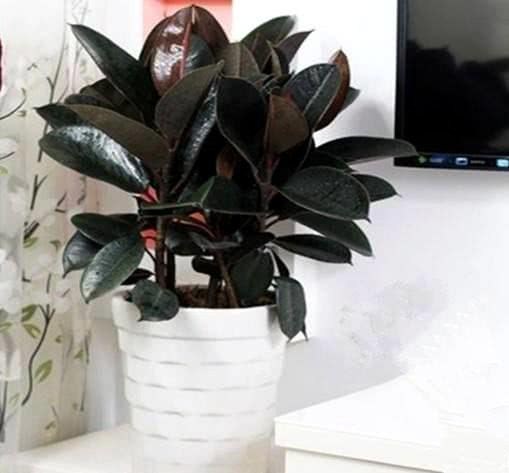
The rubber plant (Ficus elastica) is an ideal potted plant for decorating a home. Its leaves are glossy and lustrous, it stays evergreen all year round, its stems are tall and upright, and it also carries the auspicious meaning of good fortune on all sides and bringing in wealth and treasure, making it very popular.
There are also a great many people who care for rubber plants, but in the process of caring for them, have you ever seen yellow leaves too? The rubber plant I kept did develop yellow leaves, but luckily I saved it in time, otherwise there really would have been nothing left but the pot.
The reasons a rubber plant develops yellow leaves come down to just these few points?
Insufficient light
When there is little light, the leaves cannot carry out photosynthesis and cannot synthesize chlorophyll, so the leaves will slowly turn yellow, first showing spots, then the whole leaf turning yellow, and finally dropping off. If you do not save it in time, all the leaves of the rubber plant will slowly turn yellow!
Insufficient nutrients
Although the rubber plant can carry out photosynthesis, if nutrients cannot keep up and the roots cannot absorb nutrients, its stems and leaves still cannot grow normally, so yellow leaves will also appear. If it lacks nutrients for a long time, then it will certainly grow poorly!
So what should you do when yellow leaves appear?
If an entire leaf has turned completely yellow, cut off the yellow leaf in time. This can avoid consuming too many nutrients and can also promote the sprouting of new buds.
After cutting off the yellow leaves, you can spray ferrous sulfate, once every 10 days, for 2 to 3 times in a row, to acidify the soil, increase the leaves' utilization of iron, and promote photosynthesis, and it will slowly improve.
If all the leaves of the whole plant have dropped off but the root system is still intact, it is recommended to cut off the top of the rubber plant, cultivate it anew, and let it grow leaves again. Afterward, place it in a spot with plenty of sunlight and give it enough nutrients, and the leaves that grow back will be even more emerald green and lustrous.
Of course, to prevent yellow leaves on the rubber plant, you can also use ferrous sulfate once a month, with a dilution ratio of 1:300. It can not only adjust the soil to be acidic but also reduce the chance of the rubber plant's chlorosis.
So when yellow leaves appear on the rubber plant in your home, you should also take it seriously. With a simple bit of handling, it can be full of vitality again.