Balcony plants not growing well? These 3 key elements are all indispensable
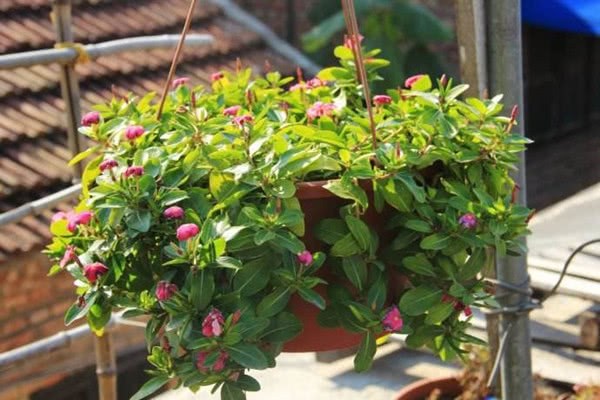
Balcony plants not growing well? Growing flowers on a balcony mainly depends on 3 factors: sunlight, ventilation, and watering. The experience is as follows:
1. Sunlight
Sunlight has two most important roles for plants: first, photosynthesis produces the necessary nutrients that sustain life; second, it sterilizes and prevents disease. It is said that glass can block 50% of ultraviolet rays, so flowers on a balcony cannot fully receive ultraviolet light the way plants in the outdoor natural environment do, and their innate conditions are insufficient. For example, if Japanese honeysuckle, osmanthus, gardenia, and so on wither for no apparent reason, it may be related to insufficient ultraviolet light or to water use.
Therefore, as much as possible, in spring, autumn, and winter, place flowering plants close to a spot with sunlight, especially succulents, so they grow more healthily. But in summer, you need to draw the balcony curtains to shade the plants; except for particularly sun-loving plants, such as orchid trees (Aglaia) and jasmine, and robust snake plants placed near the window, let the rest receive scattered light, and move succulents and summer-dormant flowers to a north-facing bay window for ventilation and less sun exposure.
2. Ventilation
As the number of plants at home keeps increasing, ventilation gradually becomes the problem that most needs to be solved well on a balcony.
For the sake of the plants, it is best to open the windows every day all year round. In winter, open half a balcony window; in spring, summer, and autumn, open two panes; when someone is home, open the windows to let the air circulate. This way, first, even though the plants cannot feel rain, they at least experience wind, making them grow more robustly; second, it reduces pathogens in the plants and potting soil and prevents the breeding of pests in spring. Although this also freezes some delicate flowers to death, compared with freezing, the consequences caused by poor ventilation are very serious. Especially in muggy, humid conditions with no air circulation, pests are easily triggered, and the process of sterilization and pest removal will be very long, with powdered medicine, liquid medicine, and granular medicine used together, spraying combined with drenching, and pruning plus isolation before results show.
3. Watering
Water use is man-made, and the key is control. As the saying goes, "Diligent people keep fish, lazy people grow flowers." It is best to use water with a sense of measure; skimming the surface and stopping after a shallow try is the worst for flowers; only watering thoroughly after the soil has dried out will do.
To be safe, you can refer to a simple watering method - the soak method. This is because plants bought from the flower market are planted either in nutrient soil or in garden soil. Nutrient soil is too loose, and garden soil is too compact; if you pour water from the top down, neither can be watered through.
Therefore, for newly bought flowers, generally do not repot them at first, and do not water heavily in the first few days. Wait until the plant leaves wilt, then try placing the pot in water to absorb water, without letting it soak through completely. Once it has fully adapted to the home environment, when the flowerpot feels light in your hand, place it in a basin of water to soak. Generally, plants growing well will quickly absorb enough water, and you can feel with your hand that the water has reached the surface of the pot. Usually put a little monopotassium phosphate in the water (liquid fertilizer or powdered fertilizer for foliage plants); with a bit of nutrition, the flowers will be healthier.