This "lowly weed" is covered in thorns and was once hated by farmers, but now it sells for 15 yuan per jin and has become a rare commodity.
 Friendly reminder: Hemu Report aims to share and popularize information about various plants and their uses, for reference only. If medicinal use is needed, it is recommended to consult a professional physician to avoid problems!
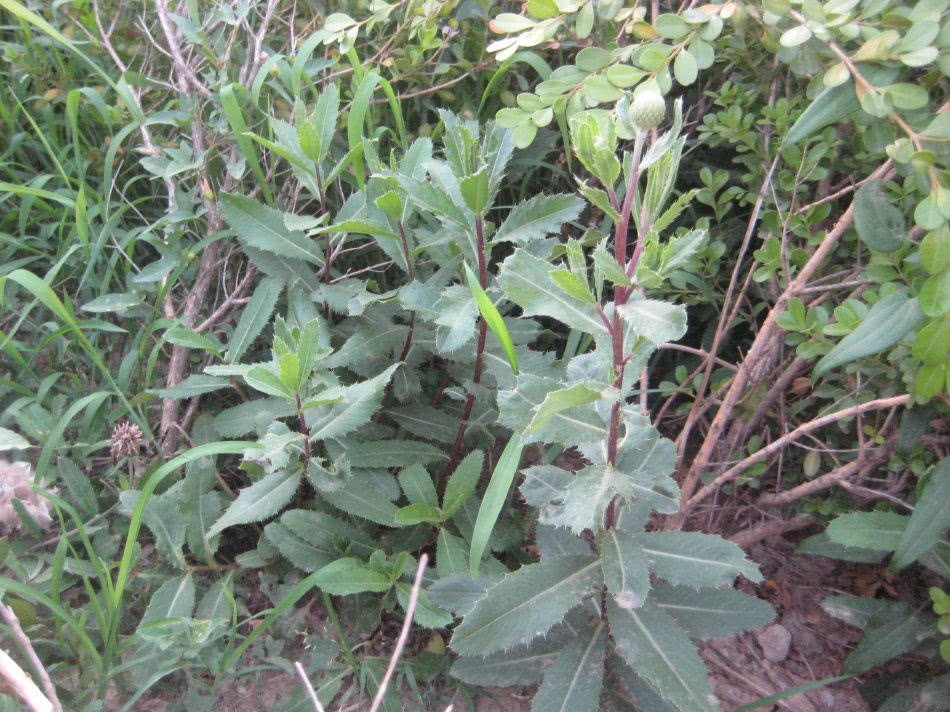
After dinner in the afternoon, the author took the child for a walk by the village and saw by the roadside a wild grass not seen for a long time. Speaking of this wild grass, quite a few farmer friends dislike it, and quite a few farmer friends also like it. This wild grass is thistle. Speaking of thistle, friends living in rural areas are surely no strangers to it. It is a very common wild grass in rural areas and also a common weed in farmland.
In ancient times, thistle was called "lowly grass" by the ancients. The reason it was called this is actually pointed out in Tao Hongjing's book "Variorum of the Classic of Materia Medica": "It is abundant in the fields, and prescriptions no longer use it; this is why it is considered lowly." What this says is that thistle is simply too common in the wild and easy to obtain, and therefore appears lowly, hence the name lowly grass.
In fact, the reason many farmer friends dislike thistle is not that it is so lowly, but because thistle has too strong adaptability and vitality, reproduces in great numbers, and likes to grow near farmland or orchards, where it robs crops of nutrients and causes poor crop growth. This is what harms crops.
In addition, thistle is covered in thorns, including on its leaves, and easily pricks people. On top of that, the stems of thistle are very tough, making it very difficult to remove thistle from farmland or orchards. Therefore, thistle is disliked by many farmer friends who work the land.
In fact, although thistle is very lowly and also harms crops, its value is still very great. It is both an edible wild vegetable and a medicinal Chinese herbal medicine.
In spring, when thistle has just grown out, its tender leaves and young whole plant can both be eaten as a wild vegetable, and its nutritional value is very good. It is rich in vitamins and mineral elements, especially its calcium content, which is very high, higher than many vegetables, and it has good dietary therapy value.
In addition, thistle also has good medicinal value. Its whole plant can be used as medicine, with the effects of cooling blood and stopping bleeding, removing blood stasis and reducing swelling. It can be used to treat symptoms such as nosebleeds, vomiting blood, blood in urine, blood in stool, uterine bleeding, external bleeding from trauma, and carbuncles and sores. Its bleeding-stopping effect is especially very good, and it is also a commonly used folk remedy for stopping bleeding.
It is precisely because thistle has these uses that, although it harms crops to a certain extent and makes farmer friends who farm dislike it, quite a few farmer friends still like it very much. In the rural area where the author lives, there are farmer friends who specifically grow thistle to make money. According to what the author has learned, the average price of thistle is about 15 yuan per jin. Compared with its former name "lowly grass," this price can also be considered a rare commodity.
Dear friends, have you ever eaten thistle? You are welcome to leave a message and exchange ideas!
Text/Hemu Report, Images/Internet. If you like Hemu's articles, you are welcome to follow.