If you don't know how to repot flowers, it's hard to keep them alive; let me teach you the correct method
If you don't know how to repot flowers, your plants can only wait to die!
1. Repotting
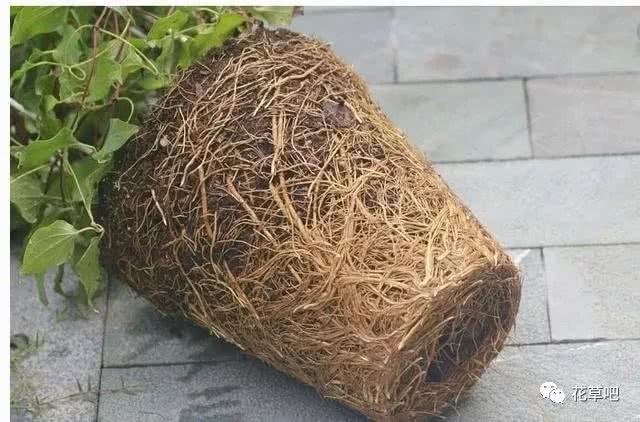
Repotting is usually called "turning the pot." It means moving a potted plant into another pot to grow. Repotting is one of the important measures for growing flowers well. Many flower-growing enthusiasts often overlook this, thinking there is no need to change the pot, but that is not the case. Repotting is usually needed under the following conditions:
1. The potted plant grows larger and larger, and the original pot can no longer meet the needs of the flower or tree's growth and development, so it must be replaced with a larger pot.
2. During the growth of flowers and trees, the root system continuously absorbs nutrients from the soil. In addition, with frequent watering and rain, the organic fertilizer in the potting soil gradually leaches away and decreases, leading to compaction of the shrubs and soil and deterioration of permeability (that is, a lack of nutrients in the pot and soil). This is not conducive to the continued growth and development of flowers and trees, so the growing soil needs to be replaced.
3. If flowers, grass, or trees become diseased or have insect pests, they need to be repotted immediately.
Annual herbaceous flowers grow rapidly, generally requiring 2-4 repottings from the seedling stage to the flowering stage. Multiple repottings can promote plant sturdiness and delay flowering. The last repotting is called "final planting." Perennial flowers (perennial herbaceous plants, such as green cherry, spider plant, etc.) are repotted once a year, and woody flowers once every 2-3 years.
The repotting time for perennial flowers and woody flowers usually occurs in autumn when growth stops or before early spring begins. Evergreen flowers can also be repotted during the rainy season. Therefore, when air humidity is relatively high, less water evaporates from the leaf surface, and the effect after repotting is smaller.
If greenhouse conditions are appropriate and management is proper, repotting can be done throughout the year, but it cannot be done when flowering or when flower buds are forming, otherwise the flowering period will be affected.
When repotting, lift the flowers and plants out of the pot, scrape away the old soil around the roots with bamboo, so as to remove about 1/3 or 1/2 of the old roots, curled roots, and poorly growing roots near the edge of the pot. Trim them properly with scissors. Perennial flowers can be combined with division.
For one- or two-year herbaceous flowers, when repotting, only a little of the soil ball can be removed from the surface; generally no treatment is done, but be careful not to let the soil ball break apart when planting. After treatment, follow the above operating procedure and use a larger pot for the plant. If you still use the original pot, give it new soil and add nutrients. If the pot is not suitable for repotting, you can dig out the old soil from the surface of the pot and replace it with new soil, which can also achieve the effect of repotting.
After repotting, water must be applied so that the roots of the flowers and trees are closely connected with the soil. Afterward, the roots should not be overwatered. After repotting, most of the roots are injured and water absorption is reduced. Especially when the roots are pruned, overwatering makes it very easy for the roots to rot; after new roots grow, the amount of water can be gradually increased.
However, it is also impossible to let the soil dry out when repotting, otherwise it will easily die after repotting. After repotting, in order to reduce leaf surface evaporation, place the pot in a cool place for a few days, then gradually let it see light, and then place it in a sunny place.