Remember these 4 points when growing flowers, and it will never be difficult again
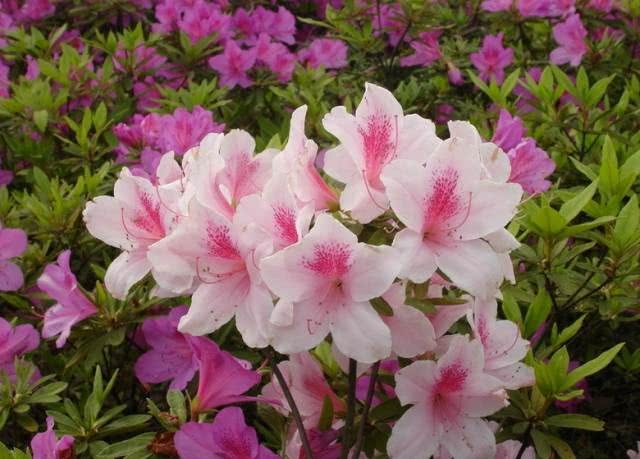
Always envious when you see "other people's gardens"? How can you keep those plants and flowers alive and thriving? Here is some experience to share with you. A beginner flower-growing enthusiast must master the 4 most basic areas of knowledge: soil, watering, fertilizer and light for growing flowers. Add your love and patience, and a garden full of spring color will not be far away!
“
The four steps of growing flowers
”
Soil
Soil is the most basic thing for growing flowers well. Most flowers and plants like acidic or slightly acidic soil rich in organic matter. The simplest approach is to buy ready-made nutrient soil, but you can also mix soil yourself.
For ordinary potted flowers, you can use 1 part leaf mold, 1 part garden soil, half a part barnyard manure soil, and half a part rice husk ash, or 1 part garden soil and 2 parts leaf mold to make a light fertile soil. Plants such as asparagus fern, cineraria, poinsettia, and wax begonia can all use it.
You can also use ordinary mountain soil. It is a natural humus soil, loose and acidic, and is suitable for planting camellias, azaleas, Aglaia odorata, gardenias, jasmine, and so on.
Soil mix for foliage plants: 2 parts leaf mold, 2 parts fertile soil, 1 part sand or stone, plus about 5% of the total weight in decomposed barnyard manure.
Soil mix for epiphytic cacti and succulents: 3 parts leaf mold, 3 parts coarse sand, 1 part plant ash. Soil mix for shade-tolerant, acid-loving flowers: 4 parts leaf mold, 2 parts garden soil, 1 part stone, 1 part river sand.
Watering
Watering is a very important part of growing flowers. You need to master the principle of "do not water if not dry; when you water, water thoroughly."
Watering potted flowers should be handled according to the plant species, growth stage, pot size, and seasonal climate.
For moisture-loving plants such as cineraria and primroses, you can water more, while for drought-loving plants such as five-needle pine, sago palm, and succulents and cacti, water less. In addition, when plants are growing leaves and blooming, water a little more appropriately, and when they are fruiting, water a little less. In winter, during the dormant period, water less or control watering. When it warms up in spring, the amount of watering should gradually increase. In summer, when temperatures are high, potting soil dries out easily and water demand is high. By autumn, the amount of watering can gradually decrease.
For potted flowers, rainwater is generally best for watering. If you use tap water, it is best to store it in a small vat for 2 to 3 days and wait until the chlorine in the water evaporates before watering.
Fertilizing
Fertilizers for home flower growing include: organic fertilizer, generally made from leftovers such as soybeans, peanuts, and rapeseed, rich in nitrogen, phosphorus, and potassium, and commonly used for potted flowers. Decomposed soybean cake and rapeseed cake are sold in flower and bird markets; inorganic fertilizer, generally available on the market, such as urea, superphosphate, potassium dihydrogen phosphate, etc.; plant ash, an alkaline fertilizer, containing more nutrients such as iron, calcium, and magnesium.
Under normal conditions, when symptoms such as pale leaf color, stunted plants, pale flower color, small flowers, and spots in the leaf veins appear, it means the plant is already lacking nutrients, and you should supplement nutrients and fertilize in time. The key to fertilizing is to apply thin fertilizer frequently, and avoid thick, concentrated fertilizer. Generally, apply once about every 15 days.
Potted flowers are best fertilized during the growth period or one month after flowering, when they sprout in spring, when they sprout a second time in autumn, before flowering, and one month after repotting. The times when fertilization is not needed are the flowering period and the dormant periods in summer and winter.
Many flower-growing enthusiasts like to fertilize newly bought potted flowers. This is not appropriate. Generally, newly bought flowers already have good soil or have already been fertilized, which can sustain them for 2 months. For potted flowers to grow vigorously, it is not too late to fertilize after 2 months.
Light
Flowers are generally divided into two types: sun-loving and shade-loving.
Those that grow well when cultivated in sunlight, such as Chinese rose, pomegranate, chrysanthemum, narcissus, purslane, oxalis, and lotus, are sun-loving flowers. If these flowers do not get enough light intensity, they often show thin branches, elongated internodes, thinner leaves, and abnormal leaf color, and are also more susceptible to pests and diseases.
Shade-loving flowers mostly do not like direct strong light, especially in hot seasons when they need varying degrees of shading, and attention should be paid to appropriately increasing air humidity. Shade-loving flowers include wax begonia, maidenhair fern, impatiens, asparagus fern, fuchsia, orchids, clivia, azaleas, Monstera deliciosa, and Chinese evergreen.
For ordinary potted flowers, during the flowering period, strong light can be appropriately reduced in order to prolong the flowering time, such as for Chinese roses and chrysanthemums. But some flowers can only bloom well under strong light, such as water lilies and purslane. There are also some flowers that do not like strong light in summer, but cannot bloom in winter without light, such as geraniums, wax begonias, hydrangeas, and fuchsias.
Overall, you need to know whether the flowers you grow are shade-loving or light-loving, and then place them according to the light conditions in your home. But note that shade-tolerant flowers also need to be placed in a bright place to get some sun after a period of time. Long-term shade is not good!
As long as you master these 4 steps
growing flowers will no longer be difficult!