Detailed Explanation of the Sweet Cherry "Firecracker Twist" Method Rapid Propagation Technique
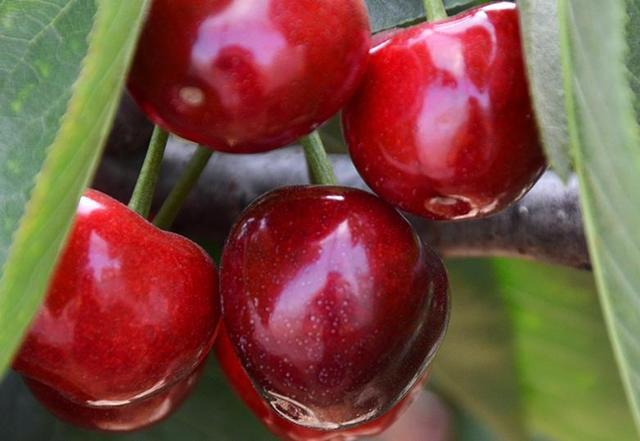
"Firecracker Twist" Method Sweet Cherry Rapid Propagation Technique
Traditional propagation of quality sweet cherry varieties generally requires at least 2 years to produce finished nursery stock, with rootstock propagation in the first year and grafting of variety scions in the second year. To shorten the nursery cycle and explore new propagation pathways, the author began in 2013, respectively in Hougezhuang Village, Liyuan Subdistrict and Gouxi Village, Dongge Subdistrict of Pingdu City, borrowing the traditional "firecracker twist" propagation technique used for Populus tomentosa (Chinese white poplar) to propagate sweet cherry, and achieved success. The propagation cycle was shortened by 1 year compared with traditional methods, and one rootstock plant could produce 7-10 seedlings, greatly improving propagation efficiency. The survival rate was high; in experiments grafting 25,000 sweet cherry plants of varieties such as Huangmi, Hongdeng, Bingtangying, Meizao, DadiHong and Summit, 23,800 survived, with a survival rate of 95%, and 22,600 finished seedlings were produced, with a seedling rate above 90%. The main technical points are summarized as follows.
1 Selection of Rootstock
In the "firecracker twist" propagation technique, rootstock selection is the most critical. The author used Yingzhenwang, also known as Okayama 16, which has strong rooting ability. This variety roots extremely easily from cuttings; even very small branch segments can survive as cuttings, the root system of the seedlings is very dense, growth is rapid, and seedlings can be produced in the same year after cutting. One-year-old main trunk portions and thick lateral branches with a diameter of 0.8-1.3 cm were selected and cut into segments 13-15 cm long to serve as rootstock.
2 Timely Grafting
2.1 Preparation of Rootstock and Scion
In autumn, in late November after leaf fall, Yingzhenwang branches were collected and brought indoors, then cut indoors into branch segments 13-15 cm long for use as rootstock for grafting; at the same time, sweet cherry variety nursery plants were cut indoors into segments 18-20 cm long as scions, and stored well with moisture retention and freshness preservation.
2.2 Grafting
Grafting is suitable from early December to early January. Before grafting, the upper end of the rootstock and the lower 3 cm of the scion were soaked for 2 hours in 100 mg/kg ABT No. 1 rooting powder solution. After soaking, they were taken out, air-dried, and immediately sealed with paraffin wax. The grafting method used was the double tongue graft: at 3-4 cm from the upper end of the rootstock, a smooth diagonal surface was cut with a sharp knife, and a vertical slit was cut at the upper 2/3 of the diagonal surface, with a depth of 1/2 of the diagonal surface; a scion roughly consistent in thickness with the rootstock was selected, and at its lower end 3-4 cm from the bud and 1 cm on the back side, a diagonal surface was cut with a sharp knife, and likewise a vertical slit was cut at the upper 2/3 of the diagonal surface, with a depth of 1/2 of the diagonal surface; then, diagonal surface to diagonal surface, the cambium layers of the rootstock and scion were aligned and inserted tightly together; where thickness differed, it was ensured that the cambium layers on one side aligned and matched, and then the joint was wrapped tightly and securely with plastic strips. The scion retained 2 buds, and was cut flat 1 cm above the top bud.
3 Storage of Grafted Units
After grafting, 50 grafted units were bundled into one bundle. In a wind-sheltered, sunny place, a storage pit 0.6 m deep and 1.5 m wide (it may also be appropriately widened) was dug, with the length determined by the number of grafted units. About 5 cm of clean, sterile sandy soil was placed at the bottom of the pit, and the bundles of grafted units were placed upright in the pit one by one, with the scions facing upward, and fine moist sand was carefully filled in to bury all the scions. Care was taken to ensure the moist sand made full contact with the grafted units, with the upper part basically level with the ground; the moist sand was covered with moist soil and patted firm gently, taking care not to trample it. If the storage pit was at the edge of a field, a windbreak barrier of straw and film was set up on its north side.
4 Planting of Grafted Units
From late March to early April of the following year, the grafted units were taken out and residual sand removed. At this time most of the scions and rootstocks had healed together, and during transport and planting the grafted parts must never be touched or loosened by hand. They were planted at a row spacing of 60 cm and plant spacing of 20 cm. Three to five days before planting, the nursery land was given sufficient base fertilizer, soil moisture was built up, and the land was prepared; when the soil was moist but neither sticky nor compacted, furrows were opened for planting, with a furrow depth of about 20 cm and furrow spacing equal to the row spacing. During planting, the units were handled gently and set down lightly, strictly preventing displacement or movement of the grafted parts. Then soil was covered and ridges were raised. The soil cover thickness was preferably about 3 cm above the upper end of the scion, followed by watering along the furrows. After 3-4 days, the furrows and ridges were further tidied and plastic mulch was laid.
5 Seedling Stage Management
Seven to ten days after planting, the grafted units began to sprout successively; at this time the film was promptly broken and soil pressed to ensure normal growth of the scion buds. From May to July, rootstock sprouts and excess scion sprouts were promptly removed. In mid-July, a topdressing of quick-acting compound fertilizer was applied once, at 30 kg per 666.7 sq m, and watering was done in time according to soil moisture conditions to promote seedling growth. Throughout the seedling growth period, weed control, watering for moisture conservation, and pest and disease control were carried out well.