The ultimate roundup of peony extremes - how many do you know?
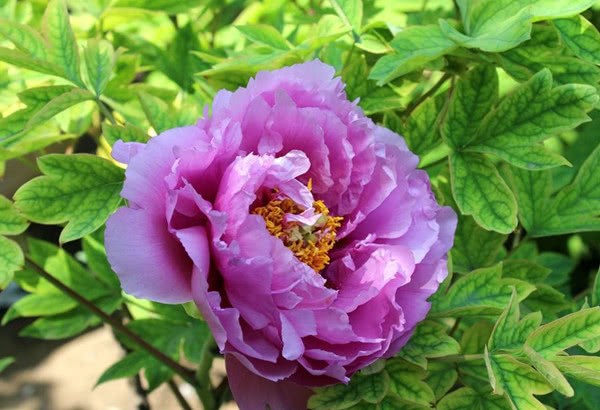
In the Tang Dynasty, Liu Yuxi wrote in a poem: "The herbaceous peony in the courtyard is bewitching but lacks character; the lotus on the pond is pure but short on feeling. Only the peony is truly national beauty; when it blooms, the whole capital is stirred." In the late Qing Dynasty, the peony was once regarded as China's national flower. The peony is hailed as the king of flowers, is widely cultivated in China, and was long ago introduced around the world.
The work that records the peony is the Shennong Bencao Jing (2nd century AD);
The earliest imperial garden to plant peonies was the "West Garden" in Luoyang (6th century AD);
The earliest monograph on the peony is Ouyang Xiu's Luoyang Peony Record (Northern Song);
The earliest ancient capital where the peony was "first under heaven" was Luoyang (late Tang to Song Dynasty);
The earliest peony expert was Song Danfu (Tang);
The earliest foreigner to study Chinese peonies was Darwin (he discussed Chinese peonies in his writings);
The southernmost peony in China is the Taiwan peony;
The easternmost peony in China is the Mudanjiang peony;
The westernmost peony in China is the Urumqi peony;
The highest-altitude peony is the Tibetan big-flowered yellow peony (average altitude above 3000 m);
The lowest-altitude peony is the Fujian Xiapu peony (average altitude 100-200 m);
The earliest peony legend is "Wu Zetian demotes the peony" (Ming);
The oldest surviving peony variety is "Dry Branch Peony" (planted in the Song Dynasty and still growing today);
The peony with the most petals is "Wei Zi" (about six to seven hundred petals);
The peony with the smallest flower diameter is the "wild yellow peony" (diameter 3-5 cm);
The greenest peony is "Dou Lu" (nearly the same green as leaves);
The blackest peony is "Guanshi Moyu" (deep purple shading to black);
The reddest peony is "Huolian Jindan" (flag red);
The whitest peony is "Yeguang Bai" (white with a translucent glow);
The bluest peony is "Lantian Yu" (pink with a hint of blue);
The yellowest peony is the "wild yellow peony" (the same color as gold);
The strangest peony is "Jiaorong Sanbian" (the flower color can change);
The flower most similar to the peony is the "herbaceous peony" (same genus as the peony);
The "peony" best able to pass as the real thing is "bleeding heart" (its leaves resemble a peony's, but it is not a peony);
The best bicolor peony is "Erqiao" (two colors on one flower);
The largest commercial peony base is Heze, Shandong (first in the country in area, quantity, and sales volume);
The largest ornamental peony destination is Luoyang, Henan (the annual peony festival receives more than a million visitors);
The largest mountain peony viewing base is Danjing Mountain in Peng County, Sichuan (an entire mountain is covered with peonies);
The largest peony sales base is Guangdong (including Hong Kong, China and Macao, China; more than one third of the country's commercial peonies are sold here each year);
The most waterlogging-tolerant peony is the Ningguo Nanji peony (it survives being soaked in floodwater for more than a month);
The peony with the highest medicinal yield is "Feng Dan";
The tallest peony plant is one at Wannian Temple on Mount Emei (3.1 m tall);
The peony with the largest crown spread is one at the Longxi County printing factory (crown spread of more than 4 m);
The largest peony seeds are those of the big-flowered yellow peony (largest diameter up to 1 cm, 3-5 times larger than ordinary peony seeds);
The peony with the narrowest leaves is the Sichuan narrow peony (leaves like those of Buddhist pine);
The largest peony garden is Caozhou Peony Garden (covering a thousand mu);
The country to which the most Chinese peonies are exported is Japan;
The farthest country to which China exports is the United Kingdom;
The first country to which Chinese peonies spread abroad was Persia.