What to Do About Grape Berry Cracking in Protected Cultivation? Cause Analysis and Preventive Measures
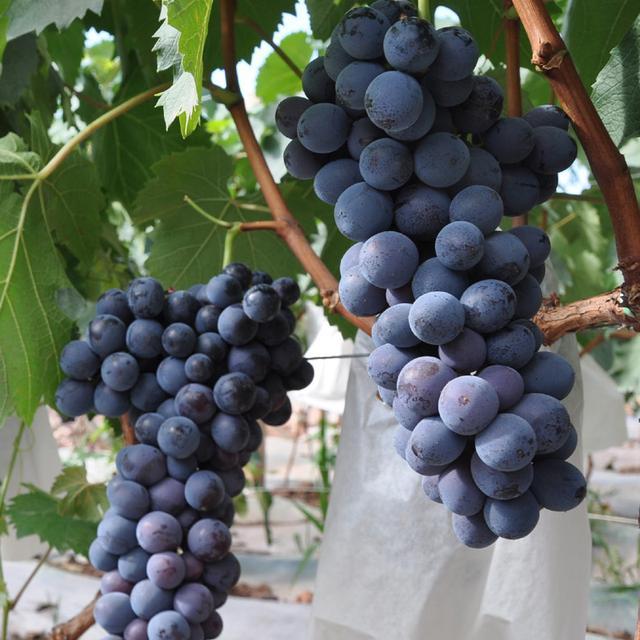
Causes and Preventive Measures of Grape Berry Cracking in Protected Cultivation
① Variety characteristics. Varieties with tightly packed berries and thin, brittle skins are prone to cracking, such as Zana, Xiangfei, Zhengzhou Zaoyu, Victoria, Kyoho and other varieties. Preventive measures: choose crack-resistant varieties, such as Red Globe, Summer Black, Beauty's Finger, Autumn Black and others.
② Excessive variation in soil moisture. If there is drought in the early stage of fruit growth and heavy rain or flood irrigation occurs during the coloring stage, because the fruit has a high sugar content and high osmotic pressure, the water content of the flesh suddenly increases; as the fruit turgor pressure rises, it bursts the skin and cracking occurs. Preventive measures: regulate soil moisture well, so that there is no water shortage in drought and no water accumulation in waterlogging. Reduce the difference between wet and dry soil; when the soil is dry in the later stage of fruit growth, water promptly, and do not use flood irrigation. If drought occurs after the fruit begins to color, water once every 7-10 days to prevent cracking caused by rain after prolonged drought. Maintaining soil moisture content at 60%-70% can effectively prevent the occurrence of cracking.
③ Berry compression. Large clusters with too many berries retained and berries set too closely together can, during fruit expansion, press against one another and become deformed, leading to cracking. Preventive measures: thin flowers and fruit, regulate fruit setting density, and maintain an appropriate fruit load; generally, a load of 2500-3000 kg per 666.7 sq m is suitable. If too much fruit is retained, nutrient supply is insufficient, berry development is poor, and the flesh is soft and the skin thin; if too little fruit is retained, cracking is likely when rain occurs.
④ Fruit diseases or improper pesticide use. When powdery mildew or downy mildew occurs on the berries, continuous spraying of pesticides such as Tuzet for control will weaken leaf transpiration, and a large amount of water in the tree will flow to the berries, increasing berry turgor pressure and causing cracking. Using ethephon or abscisic acid for ripening, with too high a concentration or spraying too early, also often leads to cracking. Preventive measures: apply pesticides in the early stage of disease; when diseased berries are found, first prune off the diseased fruit, then spray for control. During the growing season, apply Tuzet no more than 3 times per year. The suitable concentration of ethephon is 500 mg/kg, and of abscisic acid 100 mg/kg, and it must be applied when 5%-10% of the berries have colored, to prevent the occurrence of cracking.
⑤ Shaded trellis surface. If the plant has too many branches and vines and too large a total leaf area, ventilation and light penetration are poor, the water metabolism between leaves and berries is unbalanced, and after the fruit ripens the skin is thin and brittle, making cracking likely. Preventive measures: regulate the load by thinning branches and clusters, keep the distance between shoots at about 10 cm, and maintain a leaf-to-fruit ratio of 15-20:1; retain 2 clusters on strong shoots, 1 cluster on moderate shoots, and none on weak shoots. Remove secondary clusters promptly and pinch off the cluster tips so that the cluster size is moderate.
⑥ Spray 500 mg/kg rare earth during the second fruit swelling stage, spraying the clusters once every 7-10 days for 2 consecutive sprays, to prevent cracking. To prepare the rare earth solution, use edible vinegar to adjust the water to slightly acidic (pH 5-6), add the rare earth and mix evenly. Spray on a clear day when it is cool.