Fuding white tea illustrated: how to tell real aged white tea from fake
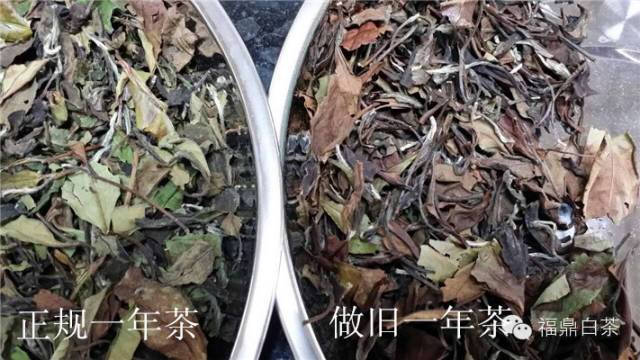
In the image below, the left is a one-year-old white tea made by the traditional process, and the right is a one-year-old white tea that has been artificially aged. The difference in color between the two is obvious.
In the image below, the left is a three-year-aged white tea made by the traditional process, and the right is a one-year-old white tea that has been artificially aged.
The two are similar in color and appearance, making it almost impossible to tell real from fake.
In other words, judging by appearance alone, it is difficult to tell whether aged white tea is real or fake.
So is there any way for us to clearly distinguish real from fake? Read on.
First, we sense it with the tongue.
Aged white tea made by the traditional process: the liquor is clear, with an aged charm, smooth and lubricating, full of pekoe fragrance and honeyed charm.
Artificially aged white tea, on the other hand, has a heavy bitter and astringent taste.
If you feel your tongue is not sharp enough, is there another way to tell them apart? We can identify them by comparing the brewed leaves.
We can identify them by comparing the brewed leaves.
In aged white tea that has undergone natural oxidation and slow fermentation, the veins of the brewed leaves are clear and the leaves are lively; whereas in white tea that has been processed later and artificially aged, the veins are not clear, and the leaves fall apart at a pinch of the hand.
Summary: if you judge the authenticity of aged white tea by appearance, it will be relatively difficult to distinguish, but if we then supplement this with tasting and comparing the brewed leaves, the truth about real and fake will come to light.