What are the characteristics of Taizhou bonsai? A detailed guide to care and maintenance methods
At the mention of the name Taizhou bonsai, we can probably guess that it mainly grows in Taizhou and developed from Taizhou. Taizhou bonsai has now become a bonsai school. So since it has been passed down from ancient times to the present without being eliminated, it must have its own unique style as well as cultural history. Let us take a look below.
Taizhou belongs to the Subei region, so Taizhou bonsai is also one of the schools of Subei bonsai. Yangzhou bonsai in Jiangsu also originated from Taizhou bonsai. The plants selected for Taizhou bonsai are generally relatively small but graceful in posture. This kind of bonsai not only pays attention to external modeling, but also pays attention to inner artistic beauty. As early as more than ten years ago, Taizhou was already listed as a provincial-level intangible cultural heritage. It was selected in the second batch of the national-level intangible cultural heritage list.
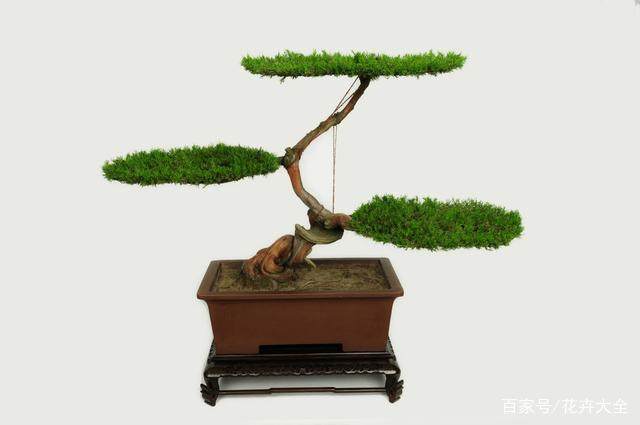
When making Taizhou bonsai, it does not blindly pursue rigid modeling; it is made according to local geographical environment, climate and other factors. Its works have three characteristics: rolling bends, cloud slices, and the palm method. Rolling bends depict a form of branches and create a kind of artistic beauty. Cloud slices are deliberately cut into this shape during pruning, giving people a clear sense of layering. The palm method is also called binding skill, so from the term binding skill we can also know that it mainly talks about binding, which is nothing more than checking its trunk. But the palm technique is flexible and does not follow a certain template.
In selection, Taizhou bonsai mainly chooses foliage-type plants, which are easy to prune and easy to transplant. After the founding of the People's Republic of China, Taizhou bonsai received strong support from the government. The government trained a group of talents in this area. A master of Taizhou bonsai preserved a thousand-year-old tree during the Cultural Revolution. This period of history can be said to be a dead tree coming back to life.
Now that we understand the history of Taizhou bonsai, how should we view its future? How can it continue to be preserved and developed? There is a group of Taizhou horticultural masters who have always been doing this work and have never changed their original aspiration. With the development of the times, society is constantly progressing, and people's aesthetic requirements are also constantly improving. If it wants to continue to develop, remaining unchanged cannot last long, so it needs to adapt to development to improve itself. Therefore, Taizhou bonsai needs to absorb the good parts of other bonsai schools, integrate them, and then pass them down from generation to generation, forming its own unique style.
Looking at Taizhou bonsai, we can see the epitome of the Su school of bonsai. Taizhou bonsai culture represents Su school bonsai culture and incorporates the gentleness of the Su school. Jiangnan, small bridges and flowing water with households, bring Taizhou bonsai home.