Rose bonsai is gorgeous and charming and can also freshen the air, making it suitable for growing at home
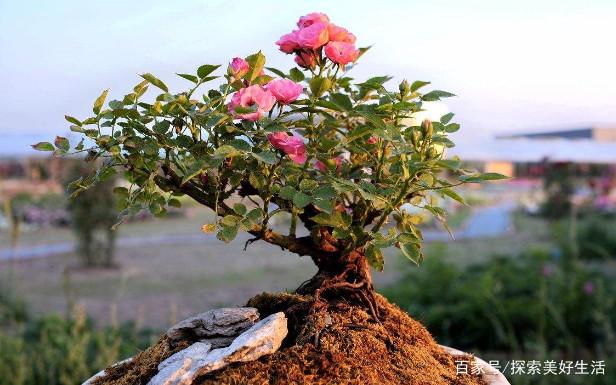
Rose (Rosa chinensis), known as the queen of flowers, also called yueyuehong, changchunhua, shengchun, shouke, douxuehong, etc., is a plant of the genus Rosa in the family Rosaceae. According to the definition of the American Rose Society in 1966, the cultivar group that appeared after the first hybrid tea rose (la France) in 1867 is called modern rose, while varieties before 1867 are collectively called old garden roses. Most of those now used in landscaping and cut-flower applications are modern roses. The science and technology group of the China Rose Association rectified the name "yueji," meaning that "yueji" broadly refers to modern roses.
Roses prefer warmth, love sunlight, and dislike intense heat. They have high light requirements and can only grow robustly in places with good light conditions. The soil is best if loose and fertile, rich in organic matter, well-draining, and slightly acidic. The optimum temperature is 10-25°C, so the three months of June, July, and October are most suitable for growth, producing large and brightly colored flowers. When the winter temperature falls below 5°C, they enter dormancy; when the summer temperature stays above 30°C, they enter semi-dormancy, and the plants grow poorly. Although they can still form buds, the flowers are small, have few petals, and are dull and lusterless in color, losing their ornamental value.
Because potted roses grow in pots, the volume inside the pot is limited, and the nutrients in the potting soil can hardly meet the needs of plant growth. To overcome the innate shortcomings of pot cultivation and meet the growth and development needs of roses even with a small pot and little soil, the potting soil should use 4 parts vegetable garden soil, 3 parts humus soil, 2 parts rice husk ash, and 1 part river sand mixed into nutrient soil. First spread it out to sun-dry for 2-3 days to kill pathogens, then sprinkle with water to moisten it before use.
The current cultivation process for rose bonsai requires regular fertilization. Too much or too little fertilizer has adverse effects on the growth of roses, the amount of fertilizer is difficult to control, and there are too many traces of artificial intervention. In the cultivation process of using roots instead of trunks, it is not easy to control and coordinate, nutrient supply is not easy to concentrate, and it is also very difficult to cultivate bonsai in different styles with cloud-like layered pads.