Hui-style bonsai comes from ancient Huizhou, do you know about its unusual shapes?
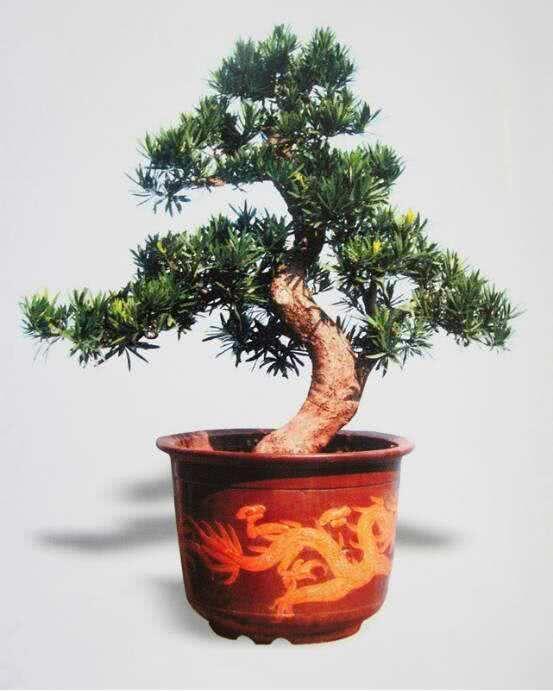
When people hear about Hui-style bonsai, most probably assume it is from Anhui, but that is not actually the case. The Hui-style bonsai referred to here is the bonsai of ancient Huizhou. The types and shapes of Hui-style bonsai are also diverse, including plum, pine, cypress and so on. Now let us take a closer look at Hui-style bonsai.
Bonsai represents a culture, so Hui-style bonsai represents Hui-style culture. Within such a broad culture, it contains many smaller cultures. For example, the landscape bonsai within Hui-style bonsai represents a culture of landscape.
The shapes of Hui-style bonsai are extremely varied, but they are also full of distinctive features. For example, its representative work, the plum dragon stump, mainly grows plum, but its shape resembles a dragon's claw, which is how it got its name. The reason it became its representative work is certainly that other schools of bonsai do not have it, so its requirements for plum and for the tree stump in terms of shape are fairly strict. Of course, besides the plum dragon stump, it has many other representatives, such as the three-tier bonsai, the knob-style bonsai, the knot-style bonsai, the wild-style bonsai and so on.
The reason Hui-style bonsai holds such a high place in the history of bonsai is that its artistic realm is also extremely high, and many bonsai cannot reach it. It has three levels of realm. The first realm starts from our vision, where its beauty can be seen intuitively. Its beauty is the beauty of nature; whether from its outward appearance to its structural form, or its colour and its overall whole, it is a particularly beautiful effect, and what it conveys to people is the beauty of life. The second realm is at the artistic level, processing nature and raising the beauty of nature to the beauty of art. It is not only from our visual angle, but must also be elevated to the inner heart. It uses a dialectical approach, combining movement and stillness. The third realm is its highest realm; this kind of beauty of artistic conception is ideal beauty, and its beauty contains our pursuit of society, of ideals and of character. This is a beauty of character, and this is what people seek. It is precisely for this reason that Hui-style bonsai has been widely loved by people.
As for the future of Hui-style bonsai, in a certain sense it is a miniature of the future of Hui-style culture, and we can look ahead to its future, just as we are optimistic about
Hui-style culture. In recent years, Hui-style bonsai has developed better and better. It has abandoned some of the old rigidity of the past, retained the beauty of nature, and gone further and further on the path of development. I believe that not only in people's hearts, but the government will also strongly support it. For such a tradition, we should pass it on. After reading this article, with its introduction to Hui-style bonsai, do you also feel like growing a pot of Hui-style bonsai? If you need to learn more about Hui-style bonsai, you are welcome to leave a comment below.