A tree farmers would cut down on sight becomes a scarce commodity in Japan, and picking its leaves can make you rich
Friendly reminder
Hemu Report aims to share and popularize information about various plants and their uses, for reference only. If medicinal use is needed, it is recommended to consult a professional physician to avoid problems!
The Dragon Boat Festival is approaching, and it is once again the season for eating zongzi. When it comes to eating zongzi, the north and south not only have a "sweet vs. savory battle," but also differ greatly in their choice of zongzi leaves. In the south, people generally use reed leaves or bamboo leaves to wrap zongzi, while in the western part of Henan in China, people prefer to use the leaves of a certain tree to wrap zongzi. This tree does not grow tall, and its wood is crooked. In the past, farmers would cut it down on sight and haul it home for firewood. Now times have changed, and the leaves of this tree have soared in value. Some people have made a fortune by picking its leaves.
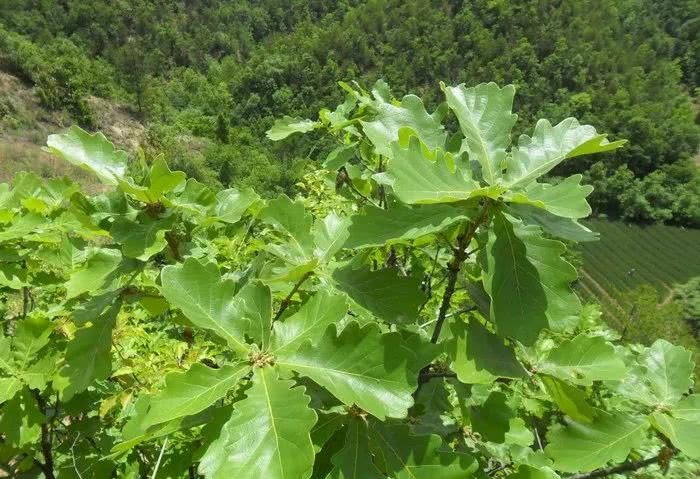
This tree is called the Mongolian oak, and its leaves are called Mongolian oak leaves. Mongolian oak leaves are very broad and have a special fresh fragrance. Every year around the Dragon Boat Festival, the fragrance of the leaves is at its strongest. After the Dragon Boat Festival, the leaves grow old and the fragrance gradually fades. So farmers go into the mountains before the Dragon Boat Festival each year to pick Mongolian oak leaves for wrapping zongzi. Locals call the zongzi wrapped in Mongolian oak leaves "huobao," and the filling is mainly made of glutinous millet and foxtail millet. After steaming, it gives off an overflowing aroma and is full of local character.
In the past, Mongolian oaks grew in the mountains unattended. Apart from using them to wrap zongzi and as firewood, farmers basically let them grow and fall on their own, but some quick-witted people saw a business opportunity in them. In Japan, Mongolian oak leaves symbolize "good fortune and happiness, health and longevity." During the Dragon Boat Festival, Japanese people eat a festive food called "namagashi," which must be wrapped in Mongolian oak leaves to carry this meaning of blessing. However, Japan produces very few Mongolian oak leaves, making them a scarce commodity in great demand, and every year it must import large quantities from China to meet demand.
In the mountainous areas of southwestern Henan in China, there are large tracts of high-quality Mongolian oak resources. Since the 1990s, people have exported large quantities of Mongolian oak leaves to Japan every year. Based on export quality grade requirements, farmers in the mountains pick leaves of the same size and specifications, and after a series of processing and packaging, they are sold as far away as Japan, South Korea and Europe. Some people who work quickly and diligently have made a fortune by picking leaves, increasing their income by more than 4,000 yuan each year.
It is unexpected that leaves farmers once cut down on sight have now transformed into a "money tree" for earning income. Dear readers, have you ever seen Mongolian oak leaves?
Text/Hemu Report, images/Internet
If you like Hemu's articles, you are welcome to follow