Pothos and spider plants are not as pretty as these 6 flowers; grow any one of them and it will be beautiful
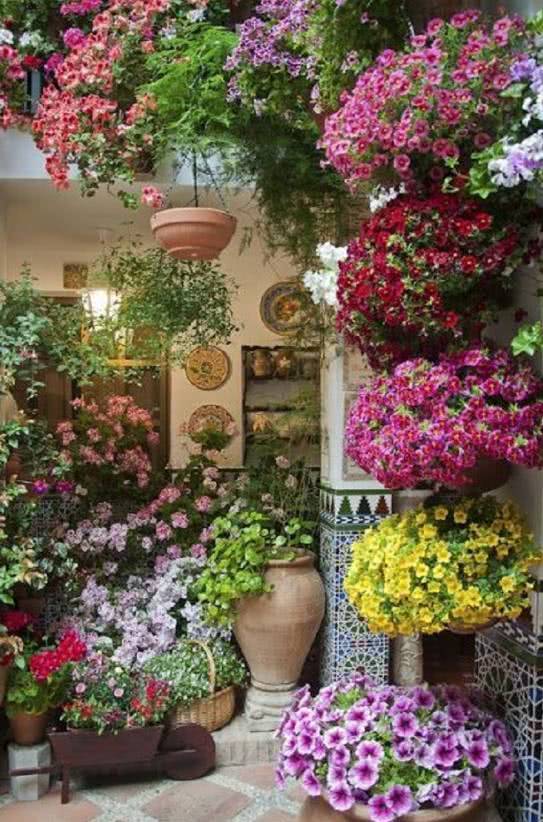
Are there so many flowers in your home that there is no room left on the floor? Have you started growing them upward into the air? Still thinking about pothos and spider plants? Stop wearing the same thing as everyone else. Here are 10 super beautiful trailing flowering plants for you, guaranteed to make you happy to plant them year after year.
"Super beautiful trailing plants"
Petunia
Petunias are very common in households abroad, often used to beautify windowsills and for urban landscape displays. Petunia is not morning glory. Petunia has large and abundant flowers, blooms profusely, has a long flowering period, and comes in rich colors. It is an excellent ornamental flowering plant, can be planted in natural clumps, and can also be used as a cut flower.
Many gardening enthusiasts say it is easy to care for and very easy to bring into good condition. Petunias can bloom from April to November, and with suitable climate or greenhouse cultivation they can bloom in all four seasons. They are very beautiful for home decoration.
Petunias like a warm environment with plenty of sunlight, are not tolerant of frost, and are afraid of rainlogging. A loose, fertile, sandy soil with good drainage is suitable. The suitable temperature for growth is 13-18°C, and the wintering temperature is 4°C; below this temperature, frost damage will occur.
In summer they can tolerate high temperatures above 35°C. In summer they need sufficient water, especially during the high-temperature summer season, and should be watered in the morning and evening to keep the potting soil moist. During the plum rain season, be careful not to let it become too wet, otherwise the roots easily rot and the flowers fade or rot. During the flowering period, they should get plenty of sunlight, and in summer pay attention to shading.
Lipstick plant
The lipstick plant is a perennial evergreen trailing herbaceous flower of the genus Aeschynanthus in the family Gesneriaceae. Its shape closely resembles a lipstick, and the calyx is tubular, much like the tubular casing of a lipstick, so it is called "lipstick plant." Its deep green leaves paired with bright red, unusual corollas make it very popular, and it is an excellent choice among trailing flowering plants for home interiors.
The lipstick plant is very easy to care for and has low requirements. A loose, fertile sandy loam is suitable, placed in a semi-shaded, ventilated spot. The suitable temperature for growth is about 15-25°C, and the wintering temperature in winter should be above 12°C. From March to September, during the vigorous growth period, it needs a relatively large amount of water, so it should be watered and misted frequently to increase humidity, while in autumn and winter the amount of watering should be reduced and controlled.
Apart from appropriately shading the strong light at midday in midsummer, it should not be kept in shade for a long time, otherwise the leaves will easily turn pale green or yellow-green, lose their vitality, and lose their proper ornamental value. In summer, water mist can be sprayed to reduce the occurrence of dry scorching.
Tuberous begonia
Besides the commonly grown wax begonia, potted begonias also include Rieger begonia, trailing tuberous begonia, and foliage begonias such as rex begonia. Among them, tuberous begonia can trail, and its shape is very beautiful, while care is also relatively simple. Among tuberous begonias, the Kimjongilia won a gold award and a special award at the 12th International Flower Show.
Tuberous begonia likes a cool, moist, semi-shaded environment. The soil should be loose, fertile, well-drained, slightly acidic soil. Tuberous begonia likes a warm environment, with an optimum growth temperature of 16°C to 21°C, and is not tolerant of high temperatures. When the temperature exceeds 32°C, it easily causes stem and leaf wilting and flower bud drop, and above 35°C the tubers easily rot and die. The suitable storage temperature for tubers is 5°C to 10°C. During the growth period, keep the potting soil moist; if the water supply is insufficient, the stems and leaves of the plant easily wilt and lodge, directly affecting growth. Do not let water accumulate, as waterlogging easily causes tuber rot. During the tuber dormancy period, stop supplying water and keep it dry.
Fuchsia
Fuchsia, also known as lantern begonia or hanging-bell begonia, is a plant of the genus Fuchsia in the family Onagraceae. The flowering period is April to June, with flowers growing in the leaf axils. The flower shape is unique, especially like an upside-down golden bell, hence the name fuchsia. It is suitable for growing at home because the flower itself is a medicinal material, and during its growth it can provide air purification for the room and effectively prevent mosquitoes, making it a rare household flower.
Fuchsia likes a warm and humid environment, is afraid of high temperatures and strong light, and avoids severe summer heat, stuffiness, rain, and sun exposure. It likes fertile, loose, humus-rich, well-drained, slightly acidic soil.
In winter it requires warmth, humidity, plenty of sunlight, and air circulation; in summer it requires dry, cool, semi-shaded conditions and a certain level of air humidity. When the summer temperature reaches 30°C, growth becomes extremely slow, and at 35°C large numbers wither and die. In winter the temperature should not be lower than 5°C; below 5°C it is prone to frost damage.
Ivy geranium
Ivy geranium, also called shield geranium, is a perennial climbing or twining herbaceous flower of the genus Pelargonium in the family Geraniaceae, suitable for hanging. It is native to southern Africa and is widely cultivated around the world. Ivy geranium has a long flowering period and strong adaptability to the environment. Its plant size is suitable for home potting, and it propagates easily. It is very popular and is one of the common potted flowers in homes, as well as a commonly used flower for flower beds in warm winter regions.
Ivy geranium is native to southern Africa. It likes a warm, humid, and sunny environment. It has poor cold tolerance and is afraid of waterlogging and high temperatures. The optimum growth temperature from March to September is 13-19°C, and the winter temperature is 10-12°C. From June to July it enters a semi-dormant state, and watering should be strictly controlled. A fertile, loose, well-drained sandy loam is suitable. In winter the temperature should not be lower than 10°C, and it can tolerate short periods at 5°C.
Purple necklace
Purple necklace, also known as purple string of pearls, has the official Chinese name yellow-flowered crescent, and belongs to the genus Othonna in the family Asteraceae. It is one of the succulent hanging plant varieties. Under sufficient sunlight, the stems change from green to purplish red. It blooms small yellow flowers, which look very beautiful paired with its own purplish red. Among various trailing succulent plants, it should be the fastest growing.
It is suitable to be added as an accent to combination potted plants, especially in baskets placed outdoors in courtyards and terraces, or in flower vessels such as wrought-iron baskets. Growing it alone is also good; its growth rate is super fast, and it will quickly fill the pot. When there is sufficient sunlight, it is very beautiful, and the whole plant turns purple. When planting, try to choose a slightly larger flower vessel.
The suitable growth temperature is 15-28°C, and in winter not lower than 10°C; for soil, a mixed soil of peat, vermiculite, and perlite can generally be used; during the growth period, water thoroughly after the soil dries out; during the growth period, fertilize generally once a month; propagation methods include sowing, division, and cuttings. Cuttings are generally used for propagation, and they root extremely easily. The cutting time is chosen in early spring or late autumn during the vigorous growth period.
Aren't they quite pretty?
Buy a pot and plant one~
Show it to gardening friends who need it~