Sphagnum moss is an essential material for growing orchids and for air layering propagation, and it can ensure the survival rate.
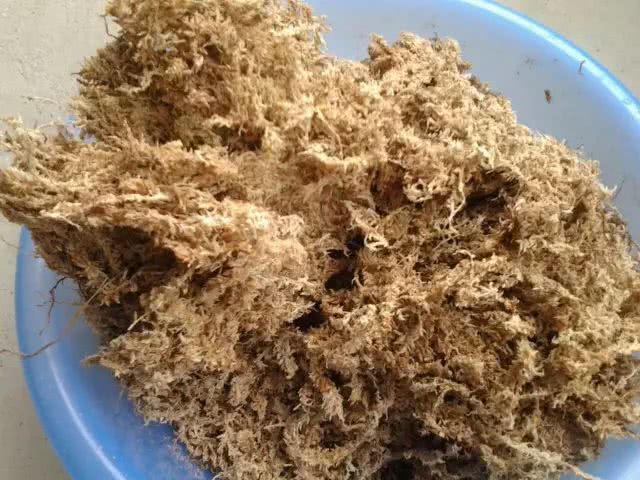
What we are going to introduce below is sphagnum moss. Many friends have asked me what sphagnum moss is. It is a great thing for growing flowers. The sphagnum moss we buy from the market has all been processed. It is made from peat moss and is suitable for growing Phalaenopsis orchids, and it can also be added in appropriate amounts when growing other orchids.
The function of sphagnum moss is to retain water and allow air through. Phalaenopsis roots really like moisture, but they are also afraid of being too wet, and the growing medium needs to be breathable, so sphagnum moss becomes the best growing medium.
Sphagnum moss growing in nature is shown in the picture above. It is a type of peat moss that grows in swamps or low-lying areas.
Sphagnum moss can produce oxygen in water and provide the conditions for plant roots to grow and develop, which makes it easier for plants to take root. Let's take a look at the various uses of sphagnum moss below.
1. Plant transplanting
For plants with well-developed root systems, you can wrap the roots in sphagnum moss when potting them up. Before transplanting, you can wrap them in sphagnum moss to keep them moist, which helps avoid the roots drying out. Of course, when the plant is planted into soil, the sphagnum moss should be removed. Sphagnum moss also has a shelf life.
2. Air layering propagation
As shown in the picture below, after making a ring cut through the bark on a one-year-old softwood branch, once the plant's callus tissue has formed, you can wrap soaked sphagnum moss around it, and after it is moistened, wrap transparent plastic film around it.
As shown in the picture below, after wrapping it with plastic film, both ends should be tied tightly. This creates a moist and warm environment, which helps promote rooting.
Afterward, the air-layered spot should be properly shaded to avoid strong sunlight. Of course, it is best to also protect it from strong wind and keep the sphagnum moss slightly moist. After a few weeks, it will be full of roots. At this point, you can cut it off 2~3 cm below the ring cut.
Notes on using sphagnum moss:
If the sphagnum moss you are using turns green, then it has reached the end of its shelf life and needs to be replaced promptly. Ordinary sphagnum moss can generally be used for about half a year, and good-quality sphagnum moss can be used for one year. After that, it will rot and needs to be replaced promptly.
Sphagnum moss also has other uses, such as being laid at the bottom of a pot, which can retain water and allow air through.
It can also be used to make succulent miniature landscapes. As shown in the picture above, with just any rack, after covering it with succulent plants, you can plant the succulents, and then regularly replenish water and let them gradually get light.