Ivy is perfect for indoor hanging basket care, and you would never guess it has so many uses
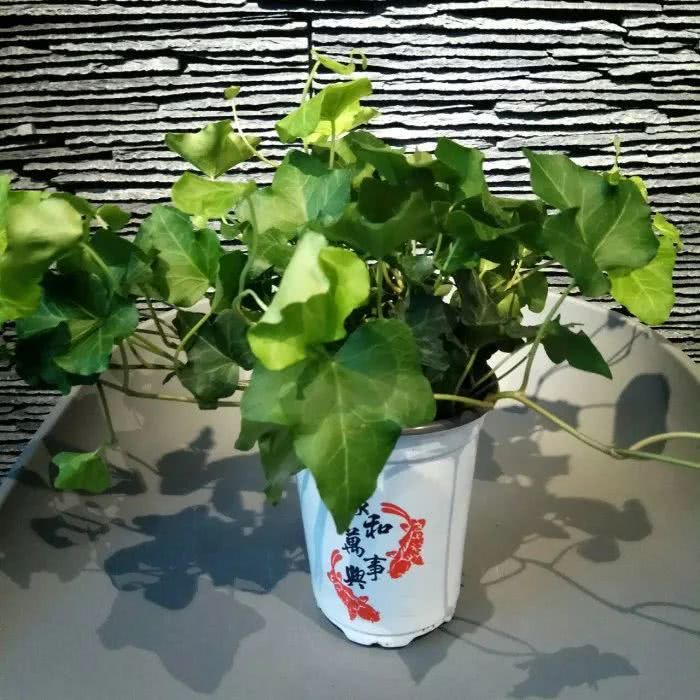
Ivy is known as a beautiful yet troublesome plant. It grows especially easily and has a strong air-purifying ability, making it suitable for growing in all kinds of environments. Many people want to grow some ivy on walls or trees, usually caring for ivy indoors in hanging baskets, but some people consider it a troublesome weed that can even harm the environment. Why is that?
Ivy is a plant native to Asia, Europe and North Africa, and now it can be found in every part of the world. Besides the year-round ornamental varieties, it has a great many cultivars. Once some cultivars are introduced to certain places and accidentally grow in the wild, they easily become invasive plants. They spread rapidly and can even harm local plants, so of course they damage the environment.
Ivy has a relatively mild toxicity, and some people develop dermatitis after touching its sap. But ivy is also good for health, as it can effectively purify indoor air and increase oxygen levels.
These are the small berries produced by mature ivy plants
Ivy like the one above can stay evergreen all year round. Its ability to adapt to the environment is extremely strong, and its cold tolerance is excellent too, so it easily becomes an invasive plant. It has thick, fleshy leaves and a particularly strong climbing ability, making it suitable for growing in all kinds of environments.
In fact, besides the common green-leaved varieties, ivy also comes in dark green, light green, yellow or white varieties. They can also produce yellow-green flowers, and black berries can be seen in winter and spring.
Some variegated ivy leaves make people think the plant is diseased
Ivy is a plant that can climb and grow by attaching itself to other things. It can grow very long stems, and as the ivy gradually grows stronger, it becomes very dense and robust.
Ivy produces many underground roots and some aerial roots. On the branches it grows some adventitious roots and aerial roots, and these roots can attach to other plants to climb and grow.
An old ivy covered in vine roots, with a great many adventitious roots clinging to its branches.
The above are some ivy plants climbing on a wall, so do not mistake them for Boston ivy.
1. Does ivy damage walls?
Some people say ivy is destructive and damages walls, that clinging to the wall will break down the wall, but others say ivy protects the wall.
Some friends say that ivy's aerial roots take hold in the wall, causing it to crack, making it easy for water to seep in and leading to damage to the wall.
However, after research some people found that ivy only attaches to places that are already starting to crack, and on a smooth wall it has no way to get into the gaps.
Some people think that ivy attached to a wall can keep it cool and fresh in summer and provide warmth in winter. But the branches, leaves and roots covering the wall can cause the wall surface to fall off or the structure to deform, and will also leave ugly marks.
A bee pollinating the yellow-green flowers of ivy
2. Growing environment
Ivy does not need much light, and when grown in pots it still needs some shading to avoid scorching sun. But in a natural environment its ability to adapt is especially strong, and it can grow rapidly in all kinds of environments, thriving both in shady spots and in places with plenty of sunlight.
The yellow-green flowers of ivy
Although ivy climbs up other trees to grow, it does not absorb nutrients from those trees, which is a good thing, but ivy's branches and leaves grow so vigorously that they indirectly harm other trees. Ivy may also block trees, preventing other plants from photosynthesizing normally. Ivy may also smother wildflowers and ferns.
3. Purifying effect
Ivy can absorb particles from polluted air. Ivy growing beside very busy roads can remove fine particles from the surrounding air.
When caring for ivy, also be careful not to eat it by mistake. All ivy varieties are toxic, though the toxicity is relatively mild. Eating it by mistake easily causes stomach upset, and eating too much can lead to symptoms such as muscle weakness, difficulty breathing or fever.
Some people have more sensitive skin and develop dermatitis easily after contact with ivy sap, so it is recommended to wear protective gloves when taking cuttings or repotting.
4. The uses of ivy
But ivy has other uses too. In Europe, English ivy extract is used as an expectorant in the UK. An expectorant is a substance that relieves coughs by thinning mucus, and English ivy extract helps with coughs that develop under certain health conditions, but ivy does not seem to be better than other expectorants.
Besides acting as an expectorant, English ivy may have other health benefits for humans. Like other plants, ivy contains many chemicals in different concentrations. Some of these chemicals may have potential anti-cancer effects.