Rose yellow leaves right after buying? Add some nutrients and flower buds keep sprouting
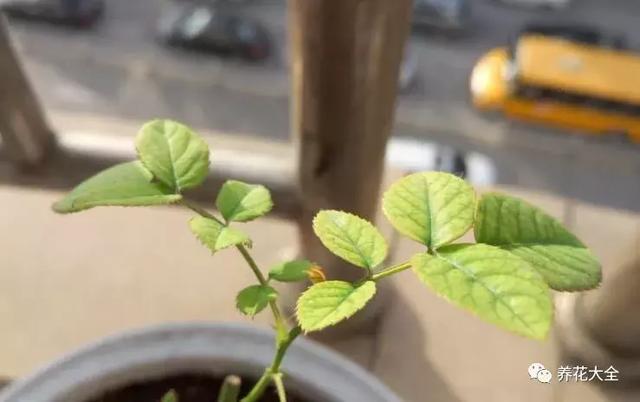
Roses really live up to their name as a "medicine jar." Some gardeners haven't even seen a single rose bloom before the plant is already seriously "sick." Don't rush to spray chemicals - some of it isn't disease, but nutrient deficiency. The more you spray, the faster it dies. Hurry up and supplement!
New leaves turning yellow
Gardening Encyclopedia
Some gardeners find that within a few days of buying a new rose, it starts turning yellow from the "top" - mainly the new leaves, while the old leaves are fine
Causes: 1. Overwatering; 2. Iron deficiency
Use the process of elimination to figure out which cause applies to your rose. Generally, roses bought together with their soil won't immediately develop iron deficiency - it's probably just overwatering
Solutions:
1. Reduce watering - only water when the potting soil is dry
2. Water with ferrous sulfate solution, or ferment rice-washing water for 1-2 weeks, dilute with 70% clean water, and pour it into the potting soil - don't pour it on the rose plant itself
Old leaves turning yellow
Gardening Encyclopedia
When gardeners see leaves this yellow, they panic - what to do? Haha, this is actually needless worry - your rose doesn't have any disease at all
Causes:Normal metabolism, natural replacement of old and new leaves
Roses grow fast, with new leaves constantly emerging, so the old leaves at the bottom naturally "retire"
Solutions:
Simply pick off the old leaves - don't leave them in the pot, to avoid rotting and breeding bacteria that could cause other diseases
Old leaf tips turning yellow and drying up
Gardening Encyclopedia
If the rose's old leaves aren't completely yellow, but instead start yellowing and drying from the leaf tips, this isn't natural aging - it's nutrient deficiency!
Causes:Potassium deficiency
A rose with potassium deficiency not only has abnormal leaves, but the whole plant's growth is also stunted and relatively weak. Generally, if the potting soil is mostly peat moss and sandy soil, potassium deficiency is likely
Solutions:
1. Add some leaf mold to increase comprehensive nutrition
2. Water with potassium sulfate solution 1-2 times per month
3. Pick off old leaves - don't leave them in the pot, to avoid rotting and breeding bacteria
Leaves turning yellow with uneven, bumpy surfaces
Gardening Encyclopedia
If leaves turn yellow, take on an orange tint, have dark-colored veins, and the leaf surface is somewhat bumpy and uneven, it's also a nutrient deficiency
Causes:Magnesium deficiency, calcium deficiency
Magnesium and calcium deficiencies usually appear together. The rose begins to grow poorly or stops growing, then leaves yellow and drop - at this point, blooming is difficult
Solutions:
1. Water with magnesium sulfate solution (diluted to 0.1% concentration in water)
2. Mix 2-5 grams of bone meal into the potting soil each month; mix in crushed eggshells
3. Soak soybeans in water, ferment for 1-2 weeks, then dilute with water and pour into the potting soil (at 0.2% concentration)
Leaves completely yellow
Gardening Encyclopedia
Leaves that were growing vigorously completely lose their green color - even the veins turn yellow, and the yellowed leaves carry a hint of orange and red
Causes: Sulfur deficiency, nitrogen deficiency
Sulfur deficiency generally causes the upper leaves to yellow first, while nitrogen deficiency causes the lower leaves to yellow first. Gardeners can judge based on the position of the yellow leaves
Solutions:
1. Check whether the potting soil is loose, and loosen it appropriately
2. Remove yellow leaves and prune weak branches
3. Apply nitrogen fertilizer and urea - light applications, more frequently
4. Add manure fertilizer or soybean cake fertilizer
Leaves curling and turning yellow
Gardening Encyclopedia
Some gardeners grow their roses well, but as time goes on the leaves curl and yellow, and some even have scorched yellow leaf edges, as if they've been burned by fire
Causes:1. Excess fertilizer; 2. Fertilizer burn
The leaves are stillgreen and glossywith dark veins, and pests are ruled out - it should be excess fertilizer or fertilizer burn. This isn't good either - in severe cases it can directly burn the rose to death
Some gardeners wonder: I haven't even fertilized, so how could there be fertilizer burn? In some areas, rain causes the salinity and alkalinity of the soil to increase, so the rose roots can no longer absorb nutrients, resulting in the situation shown below
Solutions:
1. Stop adding fertilizer. If only a few leaves are curling, water more times to flush out the excess fertilizer
2. If using compost, remove some of the fertilizer appropriately
3. For more severe excess fertilizer, it's best to directly replace the soil
4. For fertilizer burn, scrape off the surface layer of potting soil, temporarily withhold water, and water only when the soil is dry. In severe cases, directly replace the soil
We also have a comparison chart of yellow leaves and nutrient deficiencies. Gardeners should save it quickly and use the yellow leaf conditions and positions on this chart to determine what exactly your plants are deficient in
Growing roses isn't actually that hard
Once you master these small details
With seedlings, there's no worry about growth